


Welcome to Theater News, a regular column by longtime reviewer Anita W. Harris. Look for it most Thursdays. Or sign up for our Eat See Do newsletter to get it in your inbox.
Like the rest of us, theater directors in Long Beach are looking forward to a new season in 2026, full of hopes and dreams and wishes, but also thoughts about where we are now and what truly matters.
Most expressed to the Long Beach Post the importance of communing with others in this digital age and how attending theater is almost a type of activism against the passive pull of streaming. Indeed, in ancient Greece, democracy and the theater flourished together, where comedies and tragedies addressed social issues and theater was seen as a space of transformation.
Here’s what they had to say when we asked them about the upcoming year.
Community counts
Most local theater directors said that creating and supporting community is paramount to them and something theater facilitates, especially in tumultuous times.
“Theater is more important now than ever,” says Holly Leveque, Long Beach Shakespeare Company’s producer. “It’s a way for us to experience something in someone else’s shoes, to witness the highs and lows, to feel something powerful and potentially life changing, to process the awful and powerful realities of the human condition.”
International City Theatre artistic director and producer caryn desai — who stylizes her name in all lowercase — agrees, adding that her theater’s mission is not only to entertain but “educate, inspire and provoke thoughtful dialogue.”
“We are more divided as a society than any other time that I recall in my lifetime,” she said. “I will never choose a show that divides us further. Maybe you won’t always agree with the perspective of the story, but it will make you think, and it’s okay not to agree.”
Moreover, the people who put on those shows are also your neighbors, says Madison Mooney, executive director of the Long Beach Playhouse.
“Our volunteers are also your vet techs, baristas, real estate agents, teachers, bankers,” she said. “Even if an audience member doesn’t know a performer personally, there is still that community connection.”
Better than streaming
Theater directors are aware they’re competing with digital entertainment and streaming services for their audience’s time, but believe theater offers a visceral experience that’s “more important than ever,” as one said.
Matthew Anderson, co-founder of The Garage Theatre, said theater spaces, more so than movie houses, allow people to connect.
“You’re literally in the room with us, where it’s happening, not in some big ol’ cold space where you are removed from the story,” he said. “The laughter, the tears, the gasps of surprise from the audience are truly felt by everyone in the room — the actors, crew and other audience members.”
Leveque, too, said theater offers a space that “mirrors humanity and the powers that be” in an immediately felt way.
“You get the chance to see performances that are mere feet from you and feel that feeling that you can only get when watching something along with a group of people — the wonders of laughter, gasps and human reactions happening right before your eyes,” she said. “There is nothing like it.”
Sean Gray, artistic director of the Long Beach Playhouse, said attending theater “requires us to commit to being a community” by leaving home to engage with other people for a common purpose.
“It requires our presence, not just physically, but mentally,” he said. “There is an energy you can’t get sitting alone at home or being distracted by a simulated world on your phone.”
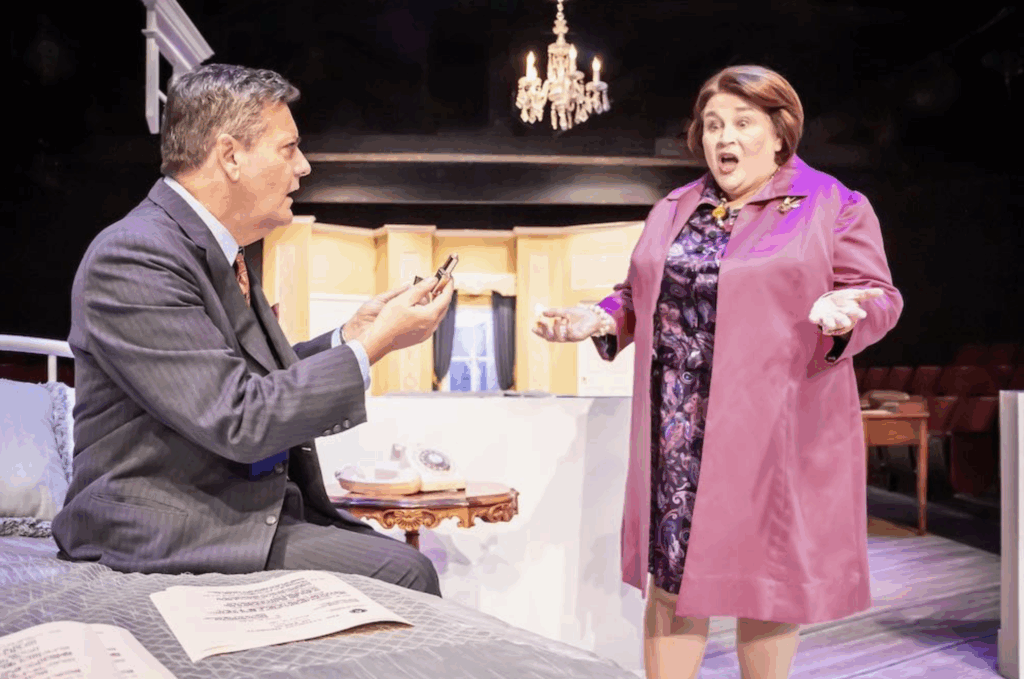
desai agrees, saying what most of us know — that we spend too much time on our devices instead of communicating and connecting with each other in person.
“We need community, which you don’t get by staying home and streaming,” she said. “That adds to our isolation, which concerns me for our future, especially with our youth. Face-to-face communication is much more effective in relaying thoughts and feelings as you witness reactions that you will not see through email, text and social media.”
She also said being able to communicate effectively enhances civil and civic engagement, one of the reasons International City Theatre offers youth education programs that she says “enhance creative and critical thinking, require working together with others, reinforce literacy and language arts and aid self-confidence.”
“If we cannot communicate effectively and compassionately with each other here at home, how do we connect with the rest of the world where they are also spending too much time on devices?” she asks. “It is vital for the future of this art form and for a healthy society that we keep live theatre going and growing. Theater is free speech and critical to our democracy.”
Anderson said live theater’s “greatest strength” is getting people in a room to create and share an experience that is “different and unique every single night,” helping us remember “who we are as humans, as people, and what it means to feel something from the inside out, not just watch it from the outside in.”
Anderson added that he senses a backlash against ubiquitous on-demand entertainment and screen worlds.
“We as a society have gotten so comfortable on our couches, and in our caves and bubbles, binge watching, absorbing, streaming, whatever,” he said. “People coming together for a shared purpose is incredibly powerful, and the only way we can create change.”
Tad Fujioka, marketing associate for Musical Theatre West, which brings Broadway shows to Long Beach, agrees that live human connection “has never been more important.”
“When you go to theatre, you’re experiencing the same thing at the same time as those around you,” he said. “That feeling is so rare in the streaming age.”
Keeping theater alive into the future
By offering entertainment and education, Long Beach theater directors believe the art can continue to thrive — but only with the help of community patrons.
“We depend so much on people coming through our doors for us to keep those doors open,” Anderson said, despite grant money and donations that also help. “People walking in the door is really where the magic happens and allows us to keep making that magic year after year.”
desai said International City Theatre tries to be forward-looking in supporting new voices in theater through staging premiere productions.
“It is important that we support new works that are relevant to our world,” she said. “It is also important for the future of this art form as well as for future generations. Look at the plays of the past and you will understand the issues and concerns of society at that time. This is our legacy.”

Fujioka said Musical Theatre West is committed to helping the art form endure by “building theater lovers from a young age” through performance classes and free school matinees, supported by patron tickets and donations.
“The world would be a much sadder place without theater,” he said. “Whether the audience wants to get away for a few hours or wants to feel something deep, theater is where you go. Even in our beautiful city, living today is hard enough. That theater magic helps you escape.”
Gray agrees, noting how theater is essentially ritual and an important part of being human.
“Like all things, some things will change, and some will stay the same,” he said. “But theater as an experience that people want with each other will remain.”
Leveque also agrees that live performance is an integral part of any society.
“What beast will it look like in 50 years? I don’t know,” she said. “But there is nothing like the rush of seeing a group of people utterly enthralled and solely focus on the stage before them.”
Above all, fostering a sense of community is what drives these theater directors’ passion for their art.
“We love Long Beach,” says Anderson. “Our company was born here — for and from the people here — and we wouldn’t have it any other way. We have the best audience in the world, and their voices are hopefully represented and reflected back to them in the shows we create.”
Editor’s note: This story was updated to correct Matthew Anderson’s last name.