

This article was originally published by LAist on Feb. 25, 2026.
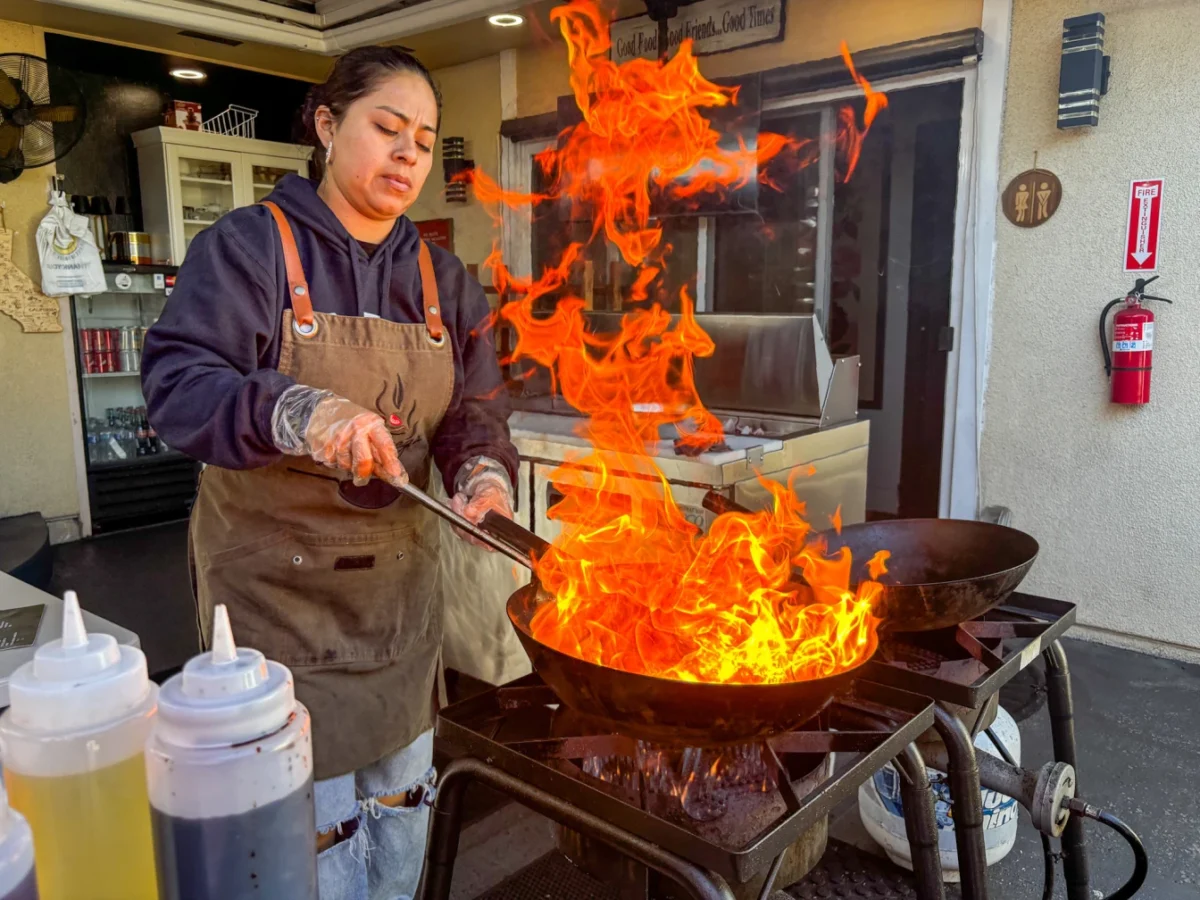
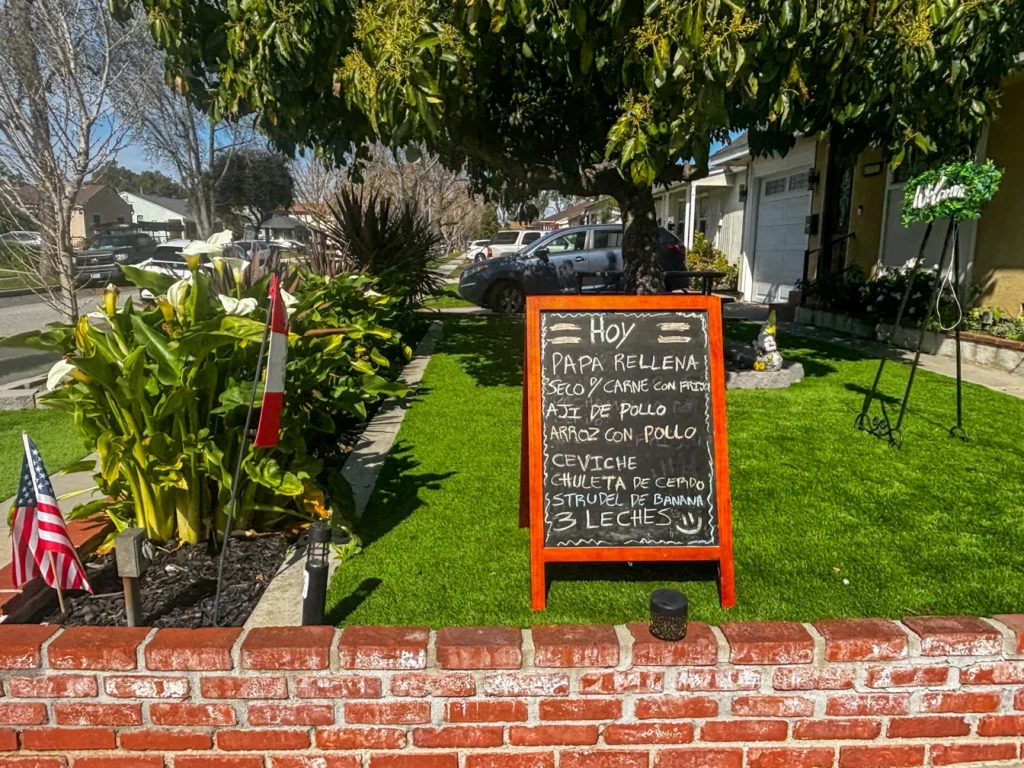
On a Friday afternoon on a quiet suburban block in Lakewood, the only sign that something special is happening is a small handwritten chalkboard with a small Peruvian flag and an American flag placed nearby, listing the day’s specials — Papa Rellena, Aji de Pollo, Lomo Saltado. This is Lomo Fuego, a fully licensed Peruvian restaurant operating out of a family home, and it’s part of a quietly growing movement reshaping how Los Angeles defines a restaurant.
Since launching in January 2019, L.A. County’s Microenterprise Home Kitchen Operation (MEHKO) program has issued more than 200 permits, transforming residential kitchens into licensed restaurants.
Lomo Fuego’s founder is Heidi Randolph, a Peruvian immigrant and former interior designer who left her career to be closer to home. With a new mortgage and no income, she found an unlikely business partner in her brother — a trained chef who had just arrived from Peru — and an idea: turn the backyard into a restaurant. Her husband, William Armando Rios, a truck driver, had his doubts, but Randolph pushed forward anyway.
Randolph wanted to do things right, so she called the city of Lakewood. They told her it was impossible. She kept researching anyway and eventually found MEHKO.
What Is MEHKO?
MEHKO — short for Microenterprise Home Kitchen Operation — is a program administered by the L.A. County Department of Public Health that allows residents to run licensed food businesses from their primary residences. No commercial kitchen required, no landlord to answer to. Operators are capped at 30 meals a day and $100,000 in gross annual revenue — guardrails designed to keep the businesses appropriately scaled to a residential setting, but also the kind that make brick-and-mortar the natural next step for a thriving operation.
The permit process, she says, was surprisingly accessible.
Her total startup investment came in under $2,000 — a fraction of the $30,000 to $40,000 it typically costs to open even a modest commercial kitchen.
“My savings from my previous job helped me, and my husband supported me in everything — in the beginning, he was like, what are you doing? But he believed in me.”
Finding their footing
Starting a restaurant is never easy, especially when it’s in your backyard.
Randolph said the early days were filled with uncertainty, when she’d find herself cooking only to have nobody come, leftovers piling up, credit cards creeping toward their limits, social media posts going largely unnoticed. She pushed through anyway.
“You just have to be patient — posting on Facebook Marketplace, Instagram, TikTok. Little by little, it started getting somewhere,” she said.
The turning point came from an unexpected source. Cook Alliance, a nonprofit that works alongside the county to support MEHKO operators, reached out and offered to connect Randolph with an influencer. The creator, from the account LA OC Eats, came out and shot a video.
Overnight, everything changed.
“It was a line of people outside — way outside,” she said.
Neighbors, to Randolph’s relief, couldn’t have been more supportive.
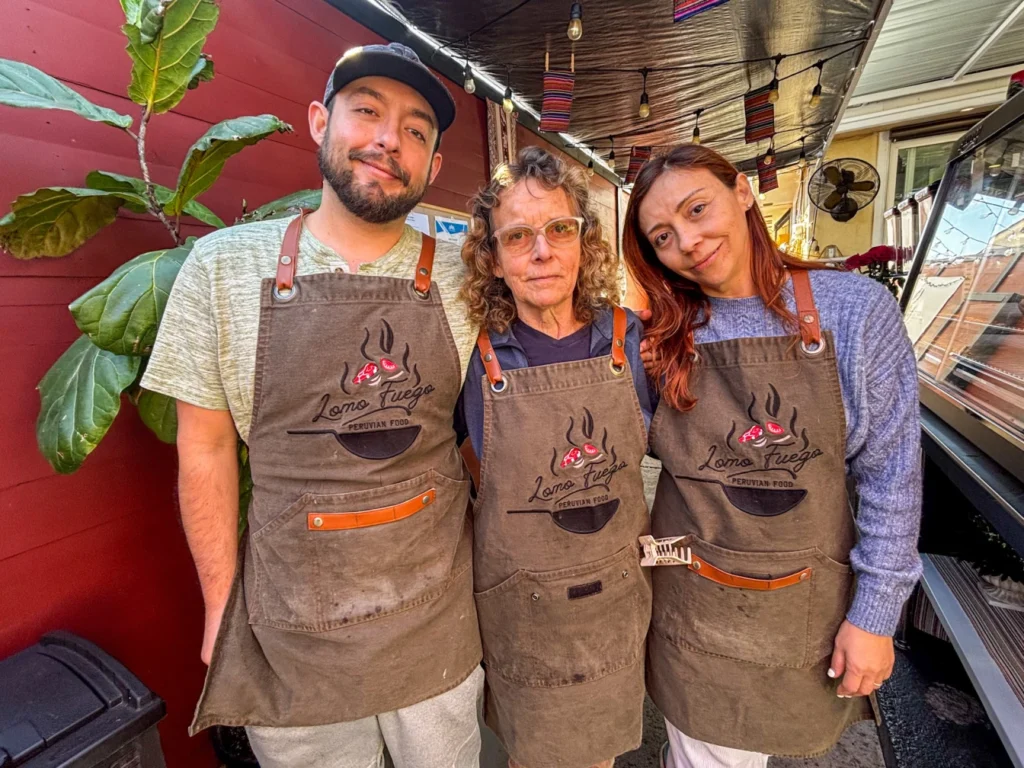
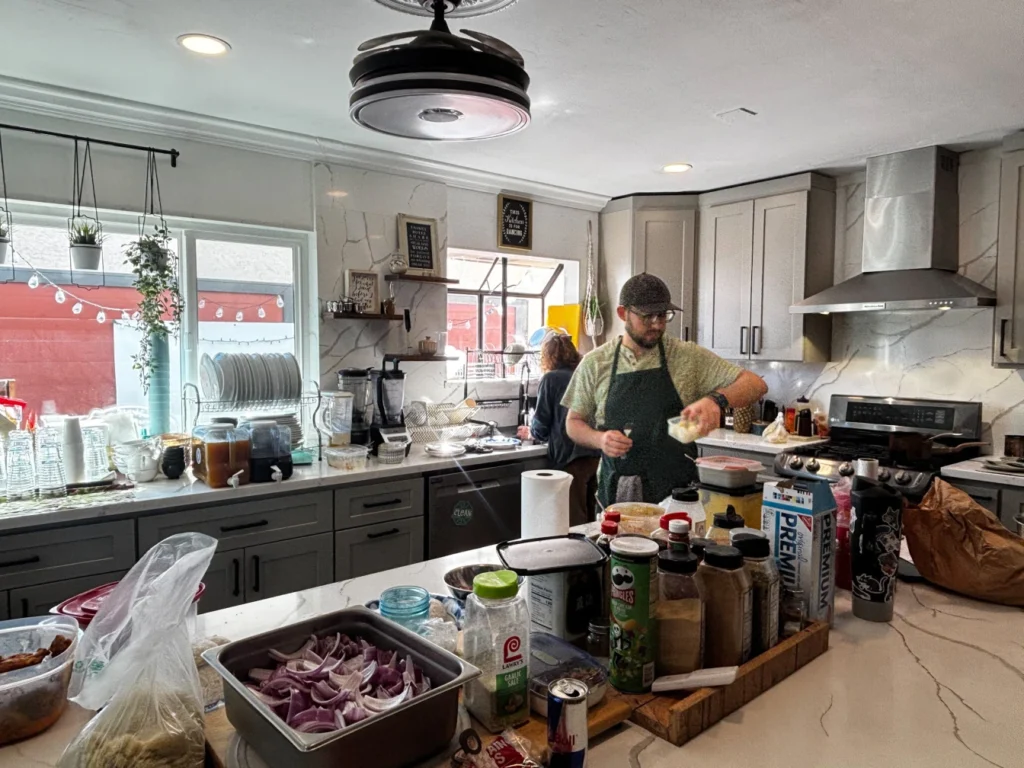
Behind the scenes, it’s a true family affair — Randolph’s brother handles the bulk of the cooking while her mother, Fritz, who still works as a housekeeper at the VA on her days off, pitches in wherever she’s needed. The family has since brought on additional kitchen and waitstaff to keep up with demand. It’s exactly the kind of scene Randolph had always envisioned.
The Jungle, the Germans and Aji amarillo
To understand Lomo Fuego’s menu, you have to understand where Heidi Randolph comes from.
Randolph grew up in Oxapampa, a small town in Peru’s high jungle — tucked into the Pasco region about five hours east of Lima, where the Andes begin their descent toward the Amazon — founded by German and Austrian immigrants in the mid-1800s. It helps explain why the menu at Lomo Fuego includes schnitzel and a plantain-based strudel alongside the lomo saltado.
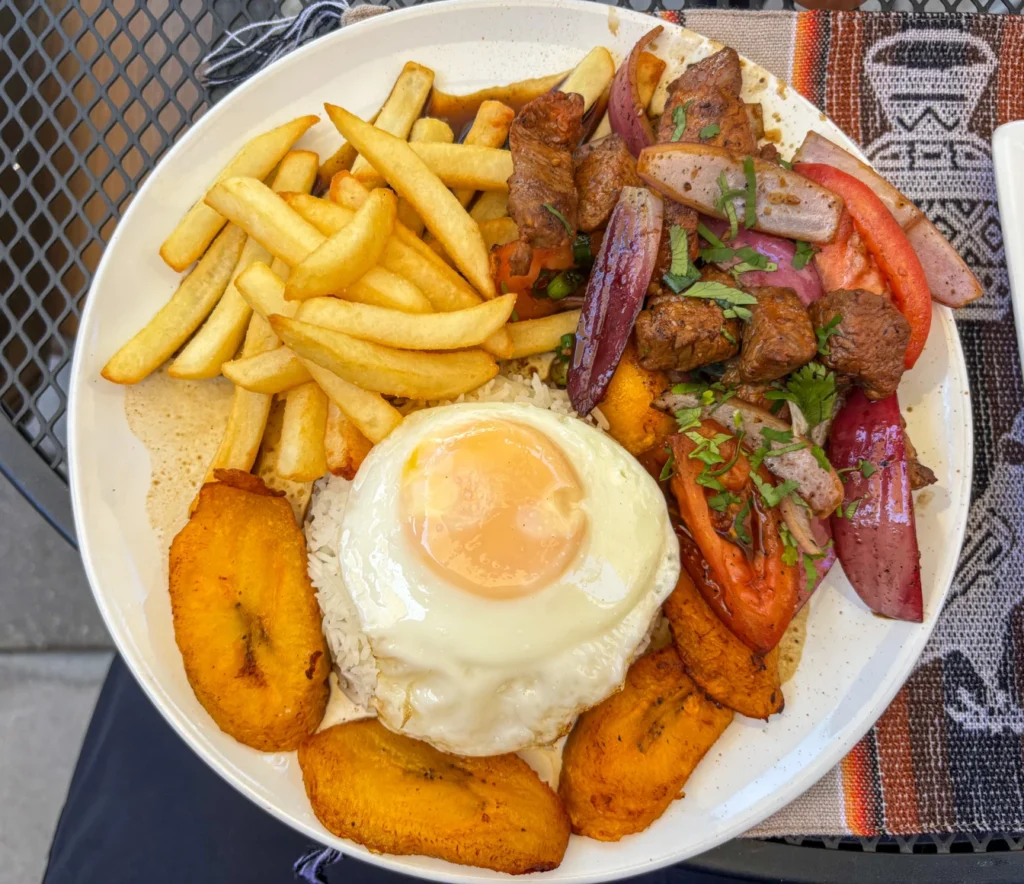
Peruvian cuisine has long absorbed outside influences — Chinese laborers brought the wok and soy sauce that make lomo saltado possible, and the stir-fried noodle dish Tallarín Saltado is essentially Peru’s answer to lo mein, so deeply rooted in Chinese cooking it belongs to its own culinary tradition known as Chifa.
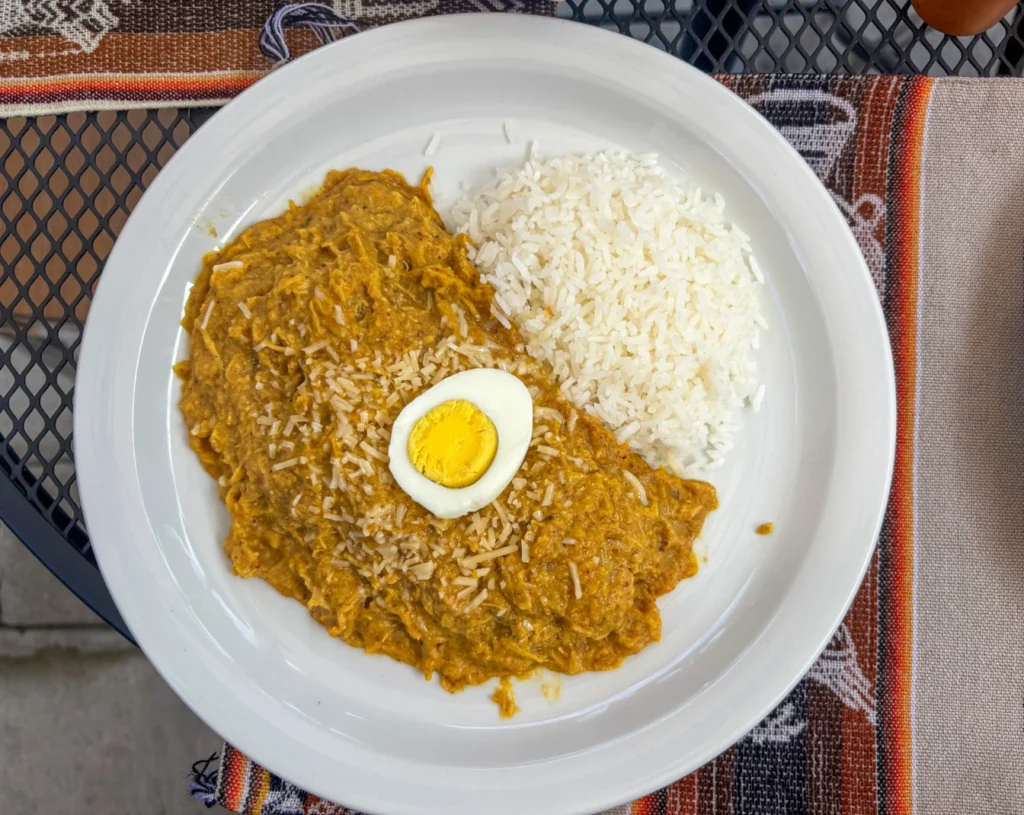
Being the ever-curious food writer that I am, I passed on many of the well-known dishes and went straight for the daily specials, landing on the Aji de Gallina — a stewed chicken dish built around ají amarillo, the foundational “soul” of Peruvian cuisine. Alongside garlic and red onion, it forms what many cooks consider the holy trinity of Peruvian cooking. The pepper itself is deceptively complex — fruity, vibrant, and slightly sweet, with tropical notes and a moderate heat that never overwhelms. In Randolph’s version, it announces itself immediately through its creamy textures, highlighted by the savoriness of the stewed chicken with chunks of boiled potatoes and white rice.
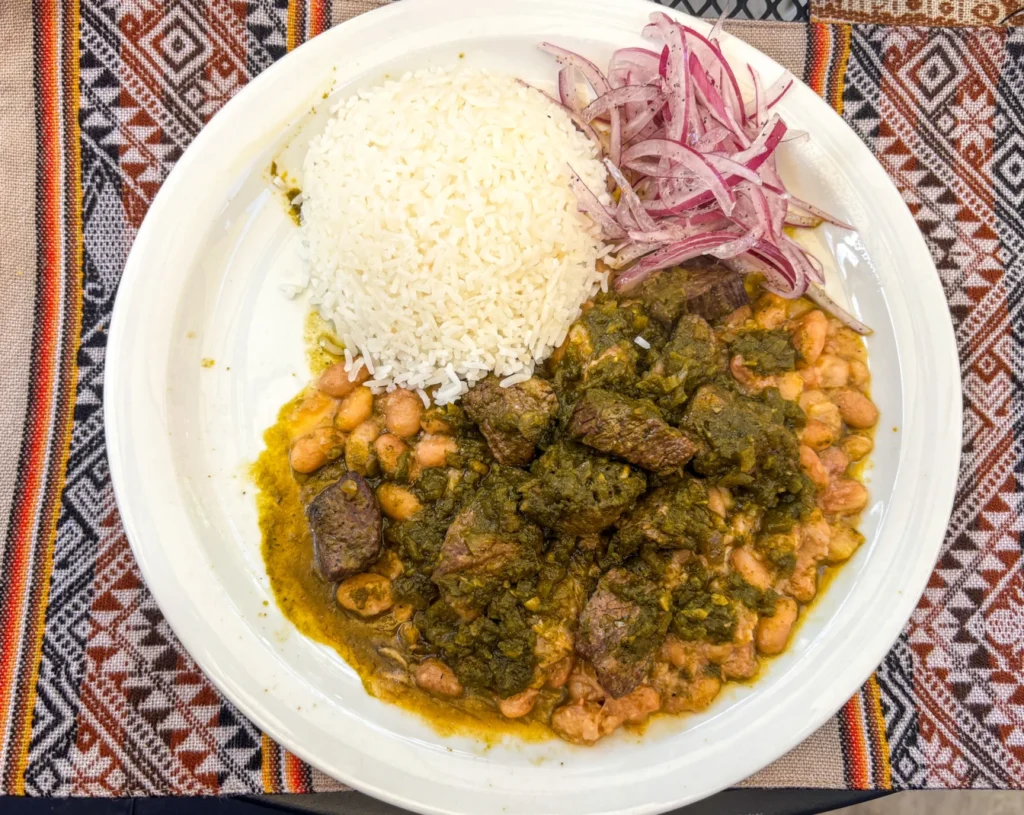
I also tried the Seco de Res con Frijoles, which tells a different story — tender beef braised in chicha de jora, an ancient Andean corn beer once consumed ceremonially during Inca religious festivals. With a sauce built on cilantro and ají amarillo, it’s served over white rice and canario beans, a Peruvian staple prized for its creamy, buttery texture. It’s a dish that wears its history openly, with Spanish, African, and Indigenous traditions folded into every bite.
Pull up a chair
One of the things I noticed about dining at Lomo Fuego was its intimacy — eating in someone’s backyard has a way of softening people. I arrived right when they opened, and soon thereafter, families of all ages stopped by, along with coworkers grabbing lunch and a neighbor checking in on an upcoming catering order.
“Seeing the people excited when they have that first bite — that’s what motivates me every day,” she said.
Outgrowing the Backyard
Lomo Fuego has grown beyond what Randolph ever imagined when she was cooking in a void in those early days. She’s now pursuing a loan and scouting locations for a brick-and-mortar restaurant — the natural next step for a MEHKO kitchen that has outgrown its backyard. But she’s clear about what she’s taking with her.
“I hope in the future people can say, this still tastes like food from home.”