

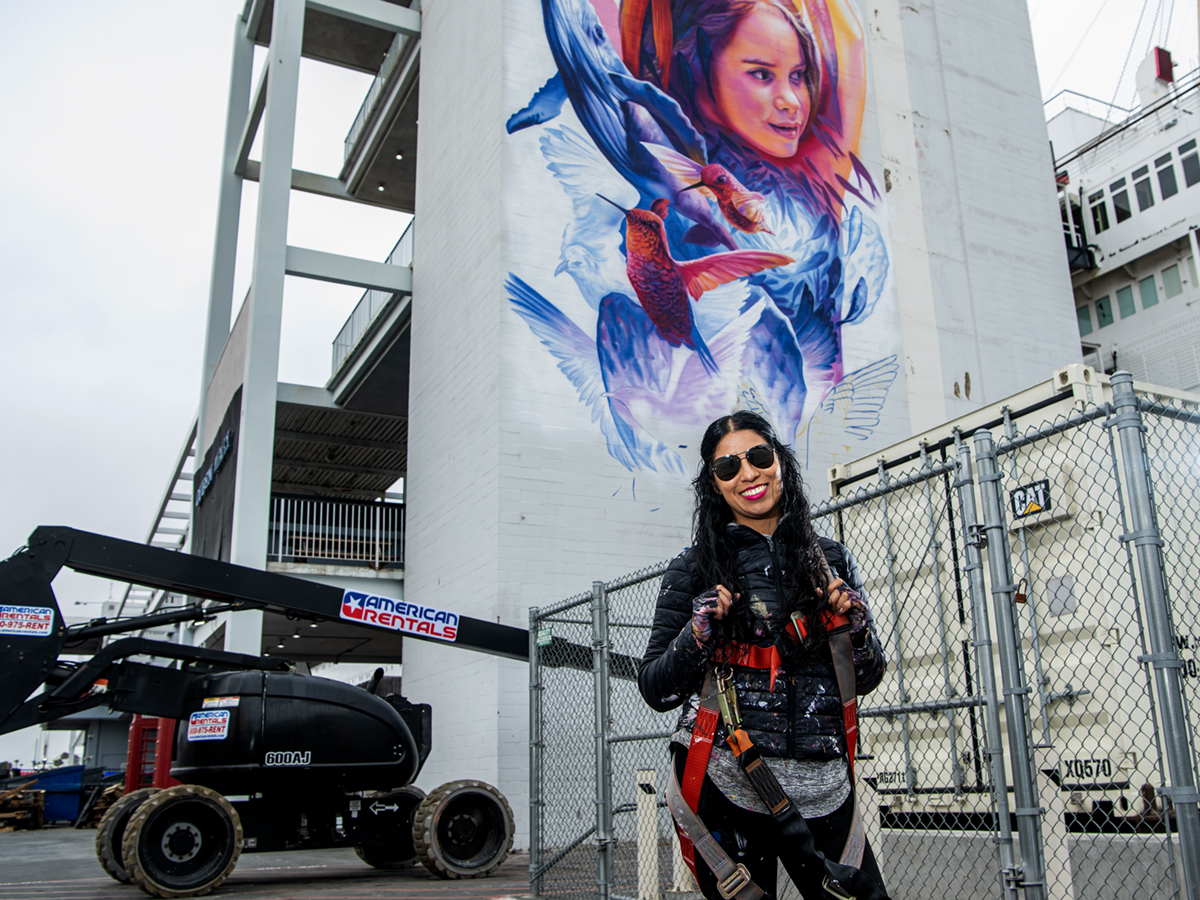
There’s a particular kind of courage required to stand before a blank wall the size of a building and believe you have something worth saying. Adry del Rocío has been doing exactly that for most of her life and has rarely ever been at a loss for words.
Last week, the Guadalajara-born muralist transformed the Stern Entrance Tower of the Queen Mary, one of Long Beach’s most iconic landmarks, as part of the 2026 Long Beach Walls & Art Renzei festival that brought seven new murals to the city.
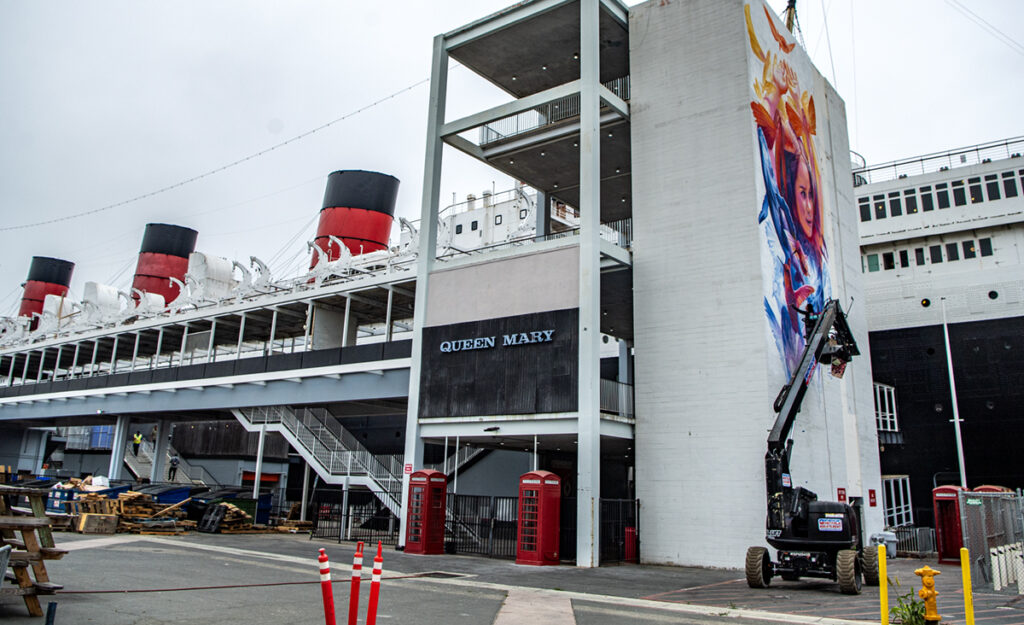
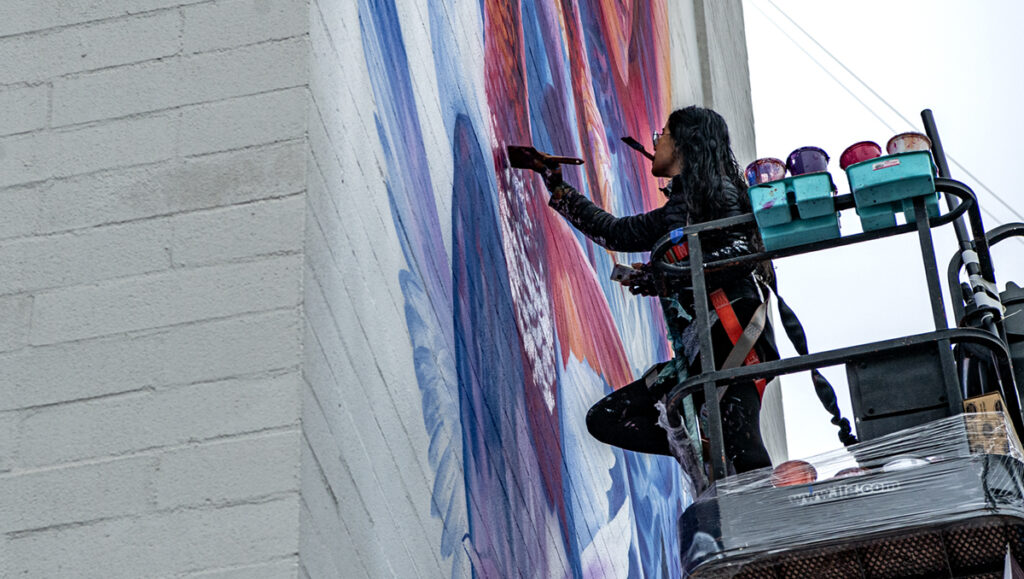
For del Rocío, before a single brushstroke, she spent weeks studying Long Beach. “I’ve never been here, so sometimes it’s difficult when you have to do research yourself on the internet, but I have to investigate and get inspiration from the place,” she said. “And then I combine my style with the message I want to develop in the painting.”
This piece was inspired by the city’s identity as a coastal community and its relationship with marine life. Another prominent element is the hummingbird, abundant throughout California, and a strong symbol of resilience and joy. Whales, fish, and birds in flight all reflect the natural landscape of Long Beach, as well as the themes of freedom and nature she aims to express through the piece.
At the center of it all is a child, the daughter of a close friend. Del Rocío wanted a face she knew, one with real life in it; that personal connection, she feels, makes the work more honest.
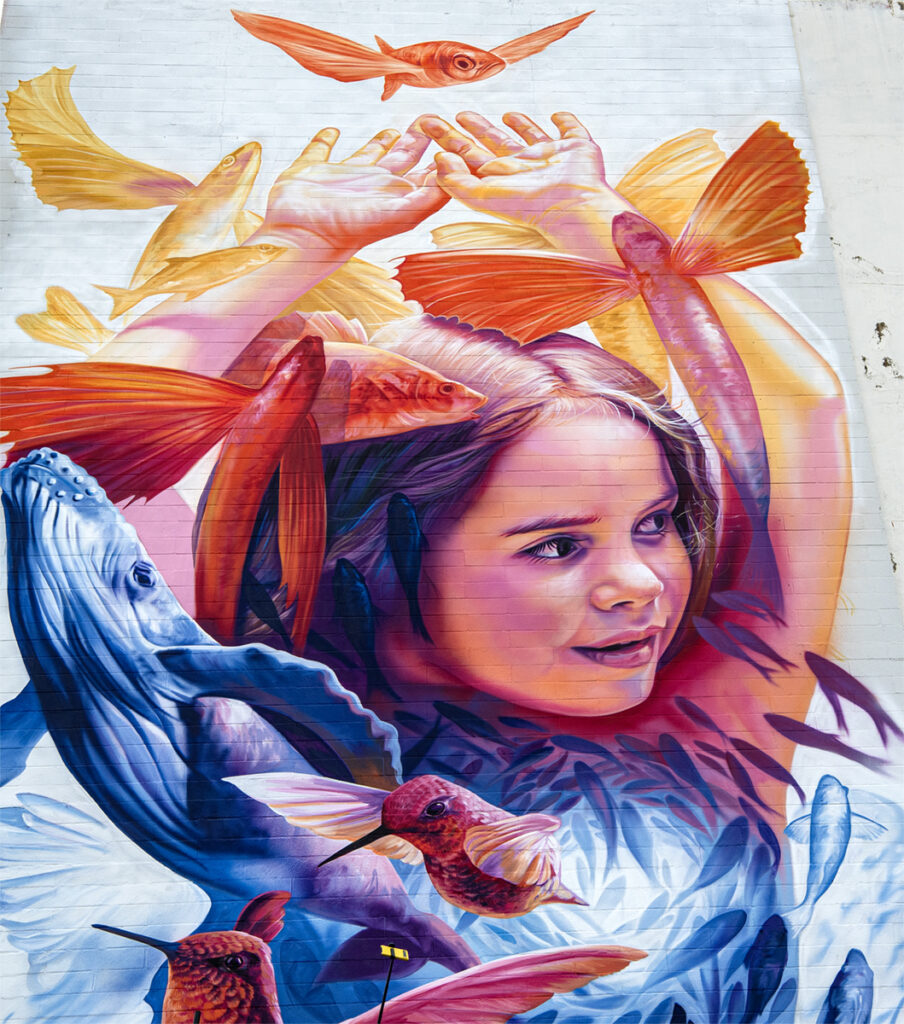
The child in her piece symbolizes the generation she’s been painting for ever since she became a mother five years ago. Before then, Rocío said, she was painting about the world she wanted to exist, but now, she’s dedicated to painting for the child who will grow up in whatever world gets built.
“Now it’s more clear,” she said, “I want to give this message to the new generation, because of course I care about the reality we are living, and the reality we are creating for young people.”
del Rocío’s story
Born Adriana del Rocío García Hernández in 1984 in Guadalajara, Jalisco, she grew up in a city that produced one of the world’s greatest muralists, José Clemente Orozco. As she walked past his work as a girl, the scale of the pieces, the ceilings, the walls, and the ambition of his work began to impress her more deeply. “I was like ‘wow,’” she says, “but I never thought that I could do it.”
She began competing in art contests by age 4, and by 13, she had made up her mind to pursue painting and build a life from it. She practiced, took lessons, and had a level of determination that many teenagers would struggle to sustain.
Street art wasn’t one of del Rocío’s original goals. It found her almost by accident. She was one semester into university when she spotted a chalk street-painting competition and thought, “Why not? I want to try,” and entered. She won, and the experience she gained working on the ground in public, with people passing by admiring her work in progress, inspired a new trajectory.
She began traveling to various chalk art competitions and soon experimented with 3D techniques, practicing the geometry and illusions in her own apartment before trying them out on the street. Then came the walls, and as the size and complexity of her projects increased, her recognition did as well.
She has earned the respect from the most notable street art communities in the world, competing and achieving numerous accolades and awards, and participating in projects for big companies like Disney.
Working for these major brands and companies, she approaches projects with a thoughtful appreciation, acknowledging that they push her to try things she wouldn’t otherwise try. But her instinct is always to relate it back to her own voice, “I always prefer to do my own,” she says. “I love to do my own art. I feel like I have a lot of things to say, and I don’t have enough time to do all of them.”
In October 2025, del Rocío had what she described as one of the more defining moments of her career. She, along with fellow Mexican muralist Carlos Alberto GH, unveiled the Hiroshima-Mexico Friendship Mural for a World Without Nuclear Weapons at Hiroshima Airport.
It was unveiled before an audience of hibakusha atomic bomb survivors, peace advocates, and local officials, during the 80th anniversary of the bombing. With hands extended, flying doves and a scenic sunrise, the design combined the bold colors of Mexican culture with the imagery of unity and hope. As with all projects, before developing the vision, the artists sat with the survivors and listened to the message that needed to be translated.
“I had this interview with the survivors of the nuclear bomb, and it definitely touched my heart, changed my life, and my vision,” del Rocío says. “These people gave me so much peace, and it’s a big example to give and act for a bigger world.”
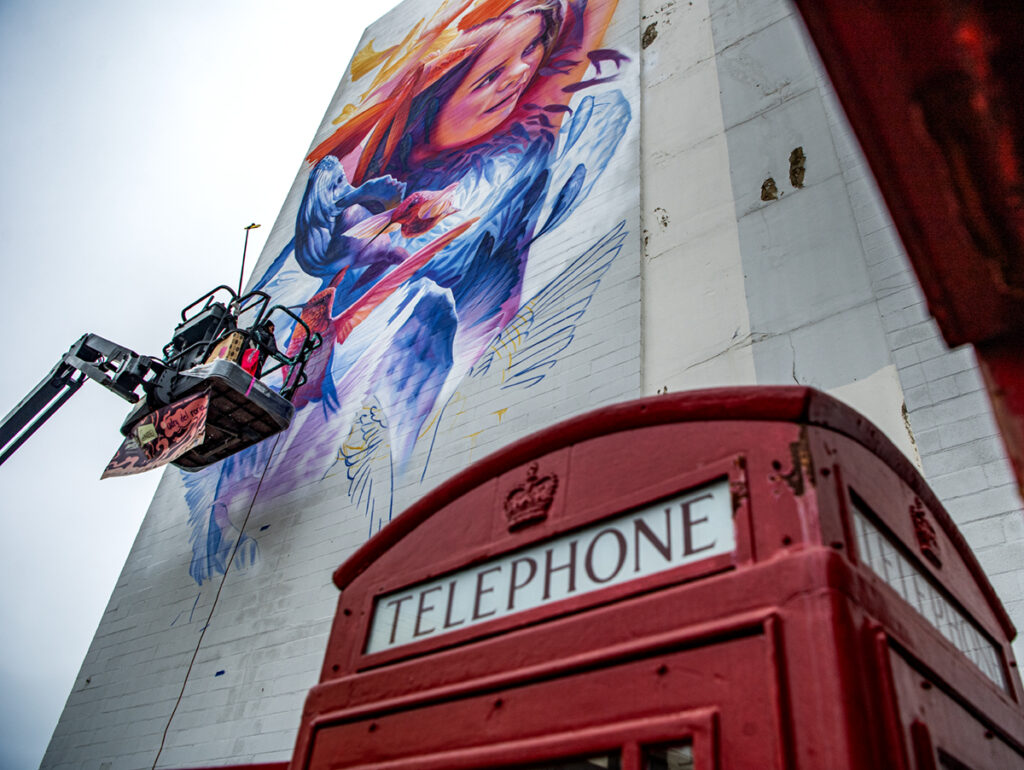
Rocío said she prefers to work on larger-sized pieces like these and the one at the Queen Mary.
“For me, it’s much easier and much more fun to paint bigger pieces,” she said.
Beyond the simple preference of scale, there’s the impact of size; the bigger the piece, the more people it reaches. The more people it reaches, the more it contributes to her main goal of not simply decorating or impressing viewers, but making someone pause for a moment to think.
“With my work, I want to give to the people conscience,” said del Rocío. “Because that is the first step. If we want to make something better, if we want to change something, it is to be conscious. My art is focused on opening the eyes of the people.”
And while del Rocío may have a particular message she wants to share, she doesn’t want to impose those lessons on anyone.
“I want people to have the freedom to feel whatever they want and not be directed by me,” she said. “Something I would really like is for them to enjoy it and ask themselves, ‘What is this about?’”