

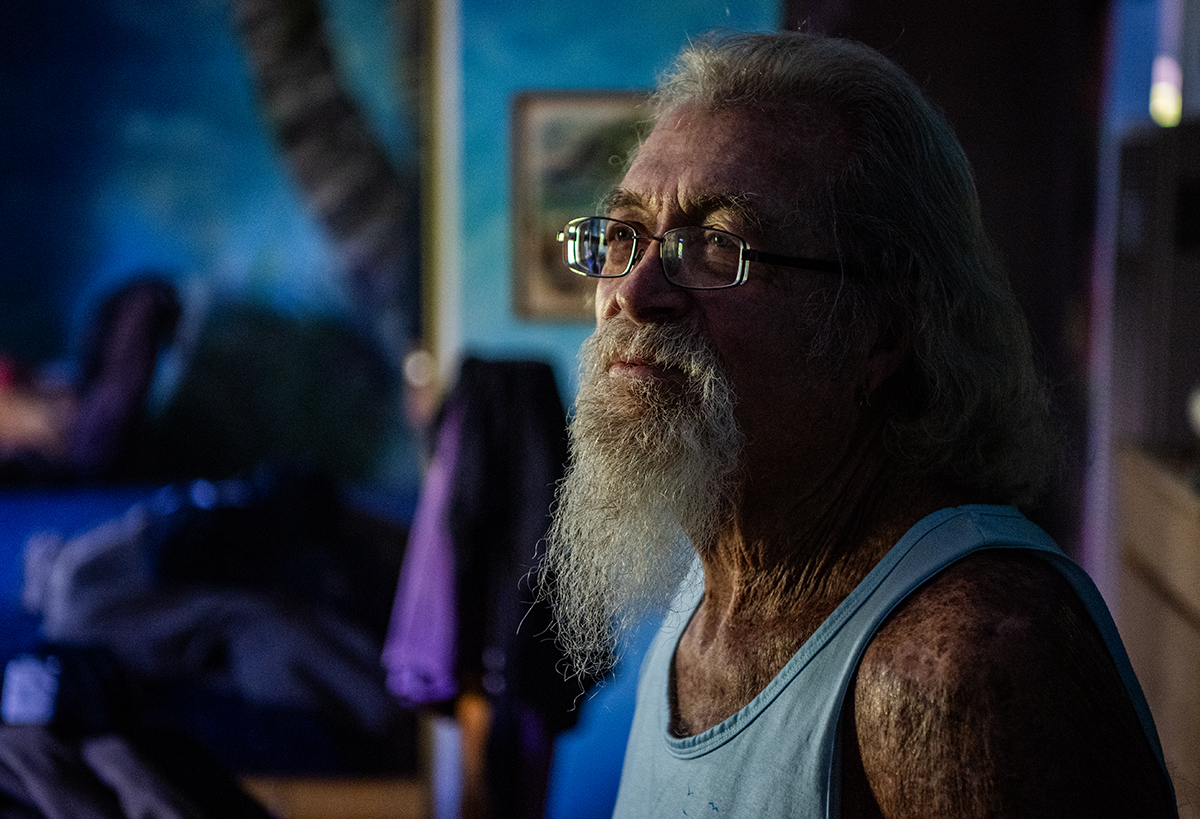
After 46 years of living in the same Long Beach home, Dennis Anderson is suddenly running out of options.
The 79-year-old veteran can’t hold most jobs because of the shrapnel in his arm and anxiety from his service in Vietnam, but he’s made a good life for himself. He patched together landscaping work and disability payments to afford the $1,200 a month he’s paying for a two-bedroom bungalow in Alamitos Heights.
It could easily go for more than twice that amount, well outside Anderson’s budget. But thanks to discounts from his landlord, he’s been able to spend more than half his life there. In that time, he’s become a fixture on the block, known for walking around with a pet parrot on his shoulder or large, floppy-jowled Newfoundland dogs.
In March, Anderson received an eviction notice. The reason was not unpaid rent or rowdy practice sessions for his cover band. His landlord, who lived two doors down, had died.
Karla Bartley, 91, owned about 10 properties scattered around the neighborhood. Many of them were longtime tenants like Anderson. Almost all received letters demanding they leave by the end of May.
Except for the few properties given to close friends, Bartley’s will instructed the homes be sold, necessitating the evictions, according to the attorney overseeing her estate.
“All of a sudden, we (have) to pack up 30 years of living here, and get out,” said another one of her tenants, Ed Lippert. “It’s nothing that’s never happened to anybody else. It just really, really sucks.”
Many had been paying generously low rent for years. Bartley, “was very mindful of people’s situations,” often giving them a break, said Sayla Calderon, whose family took care of Bartley for decades, even as her health declined.
Some residents saw the cheap cost as a trade-off for the home’s conditions, with some claiming they dealt with vermin or unresolved repairs on their own.
Lippert says he and his wife reported theirs to the city a few months ago, citing rodents and cockroaches. But many, like Anderson, never minded the conditions, saying the serious repairs were always handled, and it was only ever small issues.
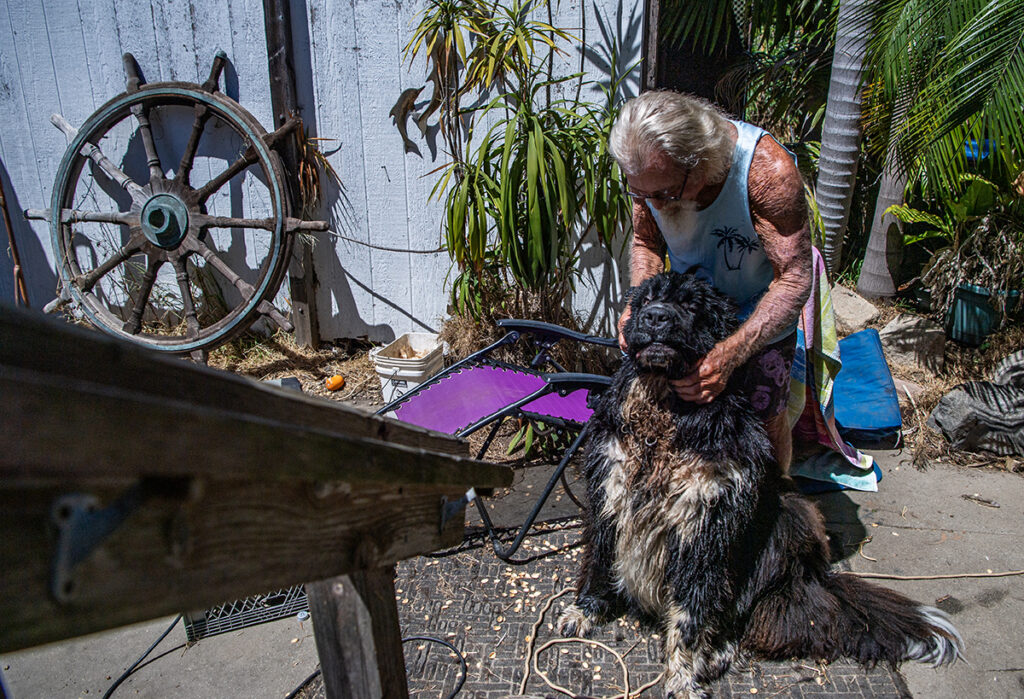
“She’s been a great person to me, a great landlady,” Anderson said. “She was good people.”
It was a shock, he said, to be told he must depart, and quickly, leaving him feeling overwhelmed with the task of uprooting his life. In his time in Alamitos Heights, he has inherited heirlooms from his late father, late sister and a childhood spent in Hawaii, accruing a century’s worth of belongings that now engulf the room and surround him in every direction.
Given his income and his only family being far flung — a surviving cousin lives in Utah — Anderson’s limited options leave him unsure if he can even afford to move, let alone be out by May.
Bartley’s attorney, Jim Davis, says there’s a reason for the urgency. With no living close relatives, he’s been left to handle Bartley’s affairs and to settle her many debts.
According to Calderon, Bartley was an only child who grew up near a refinery in El Segundo and struggled with chronic lung disease. Her health declined after a fall in 2020 and she was unable to leave her bed in the last few years of her life, Calderon said.
“We were told she was going to live only two weeks,” Calderon said. “And she was with us until 2026.”
Her condition came with climbing medical expenses. When Bartley eventually tried to raise the rents because of this, some tenants refused to pay, Calderon said. So instead, Bartley took out loans to cover her medical bills.
There are also hundreds of thousands of dollars in unpaid taxes, according to public records.
Davis said he wants to work with renters like Anderson, offering free or reduced rent to help them save for the move, but if the homes aren’t sold quickly, he fears creditors — including the state and mortgage lenders — will come after the estate. If properties are repossessed, the tenants will have to vacate the homes anyway.
“I’m trying to be nice about it, but there’s no but there’s no sugarcoating it,” Davis said. “It’s got to be done.”
The situation, for both Bartley and Anderson, has become the talk of the neighborhood. The two were friends, sharing a love for animals and having a reputation for taking in strays. “Like Karla, Dennis is a bit of a neighborhood legend,” said Jill Unze, a neighbor who’s tried to rally support for Anderson.
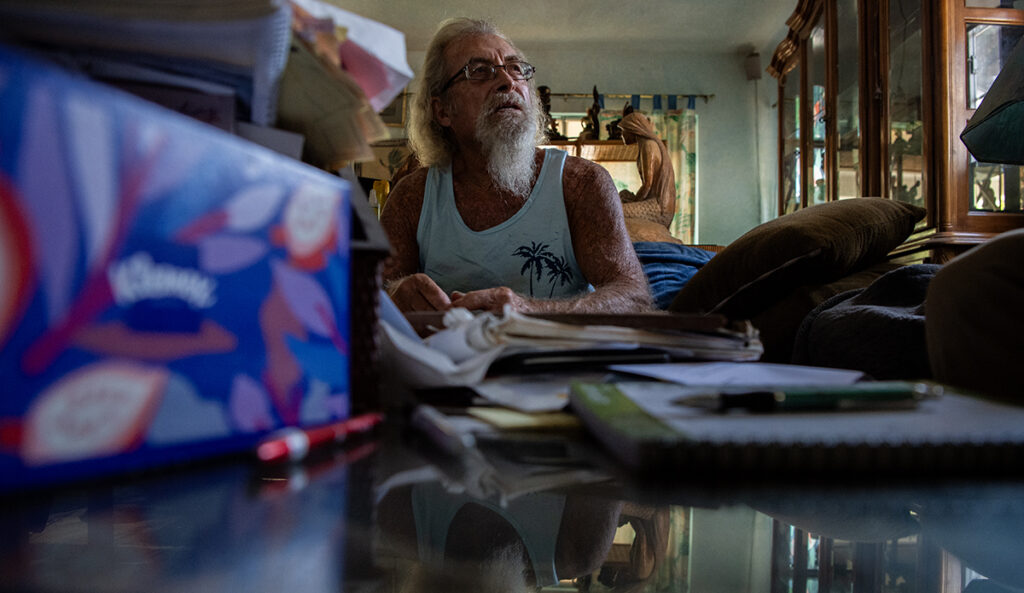
As he sits on the couch in the home he’ll soon have to leave, sunlight shows the scars lining the crown of his shoulders. His newest bird, a Senegal parrot, chirps for feeding time from the kitchen while his Newfoundland pup — about 3 years old and weighing easily 100 pounds — looks in from the backyard waiting for their afternoon walk.
He searches for words. “I don’t want to cause trouble,” he said. “I just don’t have any way to get out of here.”