

Long Beach officials are investigating why a new tax on local power plants hasn’t raised the millions of dollars they said it would, a major blow to the city budget that has exacerbated the need for deep cuts.
Tax Measure LB passed in November 2024 after being pitched to voters as an easy win, one that would draw $15 to $18 million a year from two natural-gas-burning facilities in East Long Beach. But according to Kevin Riper, the city’s financial management director, the money never fully materialized.
At a City Council meeting on Aug. 11, Riper said his department made “a big forecasting miss for reasons we do not yet understand.”
Long Beach had to nearly exhaust its reserves to cover a $27 million budget deficit this year, largely driven by a $14.7 million overprojection in utility taxes, which are levied on local energy use. Most of that, more than $12 million, is due to gas tax revenue that never arrived, Riper said.
And “the vast majority” of that $12 million, he added, “is in all likelihood tied to Measure LB.” The city is now worried the underperformance will continue into future years, further straining the city’s finances at a time when it’s already announced cuts to libraries, police, the fire department and other critical services to close a $58 million deficit next year.
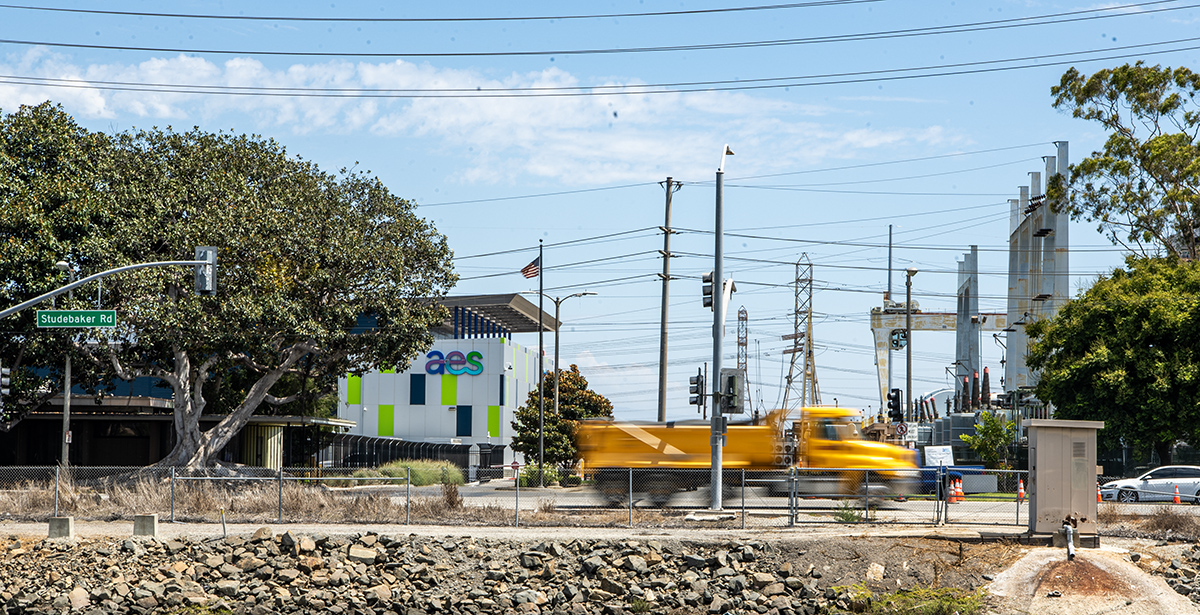
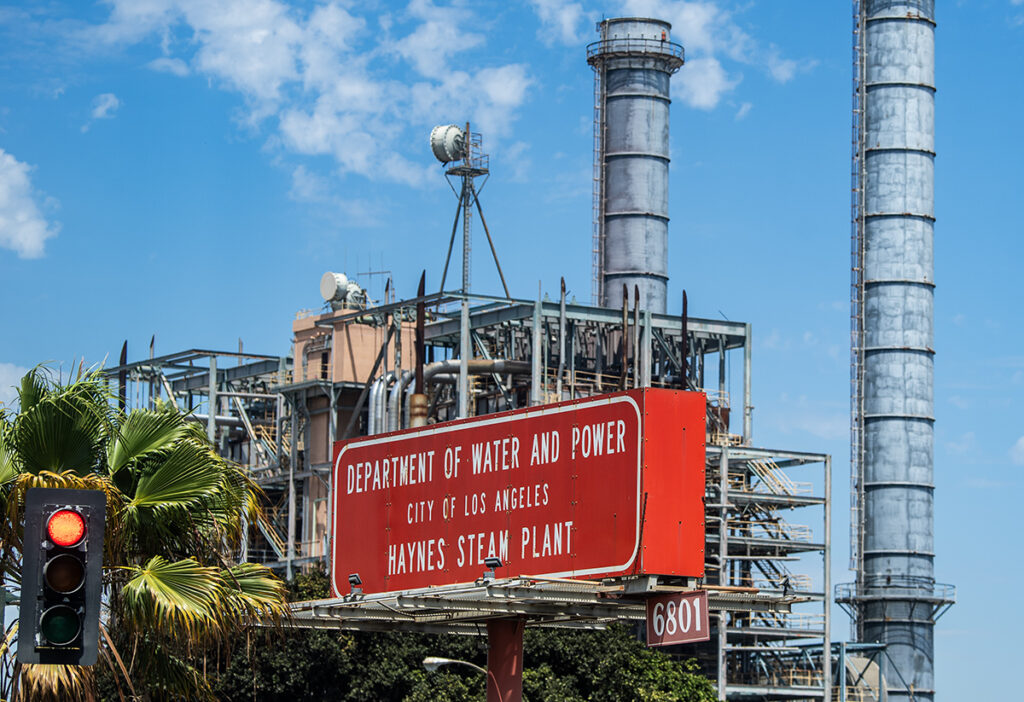
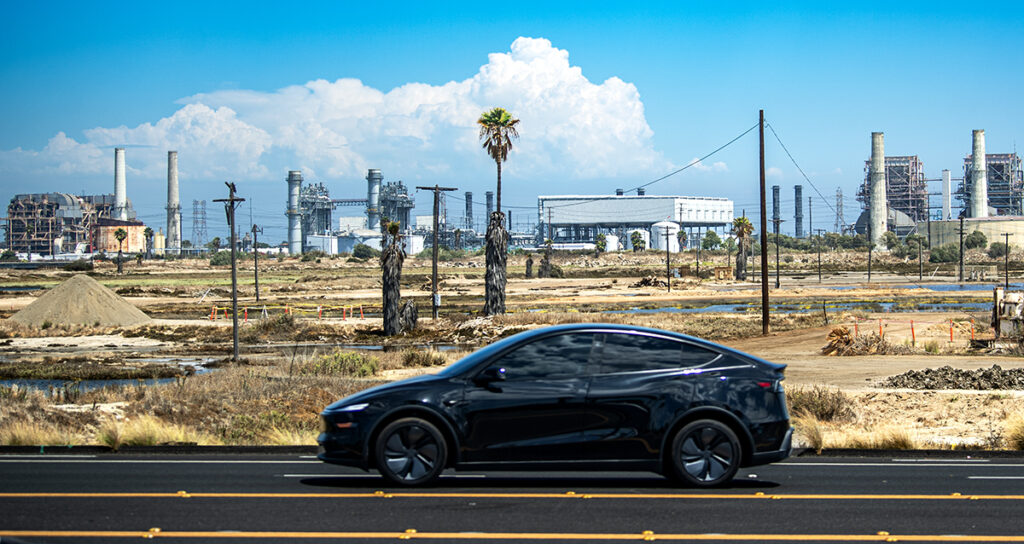
For the 80% of voters who passed it, Measure LB seemed a reasonable way to help stabilize Long Beach’s budget. It eliminated a longstanding carve-out that exempted natural gas burned at the AES Alamitos Energy Center and the Los Angeles Department of Water and Power’s Haynes plant from the 5% utility tax that residents and businesses already pay. Politicians at the time argued it was only fair that the plants, which spew soot and other pollutants into Long Beach’s air, should at least pay their fair share into city coffers. The money, they said, could go toward anything from potholes to parks to police officers.
But now, city leaders are in the dark about how much money Measure LB has actually raised, Riper said. He explained that the city knows broadly how much money it brings in across all of its various utility taxes, but state privacy rules bar them from narrowing down how much a single ratepayer, company or facility is being charged.
Out of options, leaders have asked Long Beach City Auditor Laura Doud to find out more.
In a statement last week, Doud said this is “a high priority” for her office, and she is in the process of “obtaining supporting documentation needed” for an audit that will “ensure that the appropriate gas user utility tax is being applied, collected, and remitted.” She wasn’t able to provide further comment.
But documents submitted to state regulators appear to give some early insight, showing how at least one utility company has avoided paying the full amount Long Beach argues it owes.
The LADWP runs the Haynes plant and sells its electricity to ratepayers in Los Angeles, but the AES facility is more complicated. It’s owned by Applied Energy Services Corporation, which sells the electricity it generates to Southern California Edison, which in turn sells it to ratepayers across the region. (Edison used to own the plant but sold it to AES Corp. for $781 million in 1998 following state deregulation.)
In an April 2025 letter to state regulators, SoCal Edison explained that under a 20-year agreement with AES Corp., the two companies take turns buying the gas that powers the plant, and Edison argues AES Corp. is exempt from the new tax because it does not meet Measure LB’s definition of an “electrical corporation or governmental agency.” (On its website, AES describes itself as a “global power company.”)
Edison contends that means no tax is owed by either company in years when AES Corp. purchases the gas, even though the end result of burning it to generate electricity remains the same.
In 2025, that appears to be exactly what happened: AES Corp. bought its own gas, and SoCal Edison said it owed nothing under Measure LB, according to Edison spokesperson Diane Castro. For 2026, the arrangement flipped, and SoCal Edison says it has begun paying.
Without a publicized schedule for when SoCal Edison purchases the gas (Long Beach says it has never been allowed to see the terms of the agreement, even in redacted form), the city has been unable to verify how often the gas changes hands and if the required taxes are being paid.
SoCal Edison has said only that the arrangement runs on a year-by-year basis, and the two organizations must agree on who is buying two years in advance.
Long Beach’s city attorney disputes SoCal Edison’s reading of the law entirely, arguing in an April 2025 protest letter to state regulators that AES Corp. plainly is an “electrical corporation” under California law and should owe the tax regardless of who buys the gas in a given year. If the city’s interpretation is correct, the revenue gap tied to this dispute disappears. If SoCal Edison’s interpretation prevails, the tax may simply go uncollected on the Alamitos plant in any year AES Corp. handles its own gas purchases — with no guarantee that will change.
Resolving that disagreement may ultimately require legal action. The California Public Utilities Commission, which is currently weighing whether to let SoCal Edison pass on the tax to its Long Beach customers, has said in past rulings that it has no authority to interpret how a city’s own tax code applies to a private company like AES Corp. That leaves the question of whether it counts as an “electrical corporation” — the crux of whether the city can ever collect on those off years — to be fought out separately, potentially in court.
SoCal Edison, for its part, says it has been paying its share when required and is waiting for the Utilities Commission’s decision.
If regulators approve the surcharge, Castro said, it would add about $1.29 a month spread across bills for 278,120 Long Beach customers.