

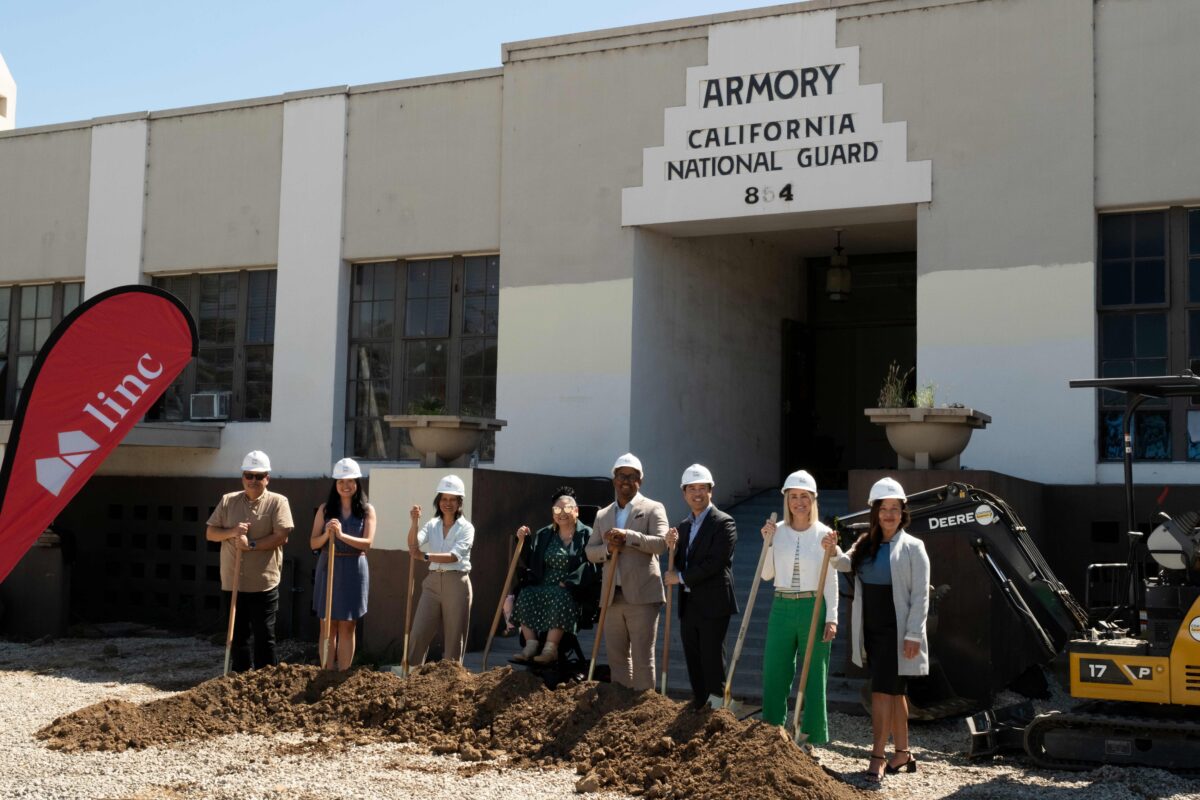
Having outlived its usefulness as a National Guard station, the 96-year-old Seventh Street Armory is set for reincarnation.
A groundbreaking was held Tuesday to begin the reconstruction of the historic structure, once used to quarter troops and weapons during World War II, into affordable homes for seniors.
According to planners, the five-story building will hold 56 one-bedroom apartments and eight two-bedroom units, meant for those 55 and older who earn 30% to 70% of the area’s median income. Project-based rental vouchers will be provided by the Housing Authority of the City of Long Beach.
The multi-million dollar facelift was paid for using $6.5 million from the Long Beach Community Investment Company, a $5.2-million city loan and $6.2 million from the state’s Multifamily Housing Program, among other donor support.
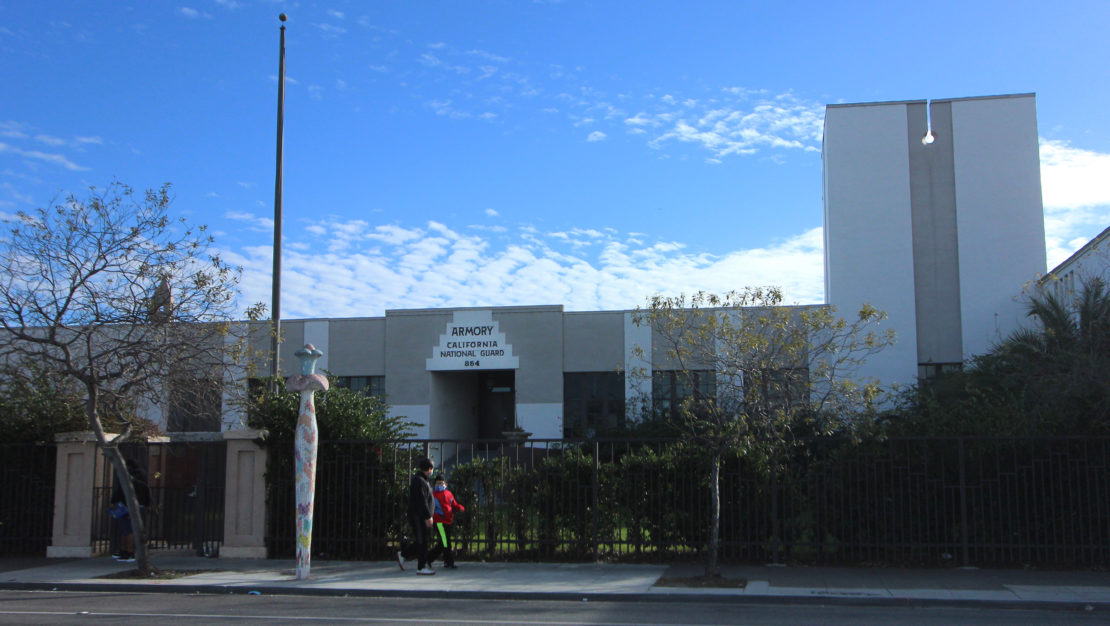
It’s a new chapter for the historic building at 854 E. 7th Street, which was opened in 1930 as one of ten California Army National Guard stations ahead of the Second World War.
It served as home to the 2nd Battalion, 251st Coast Artillery unit, an anti-aircraft regiment, and was called into service in September 1940, over a year before the attack on Pearl Harbor.
In later years, the armory served a number of roles outside its traditional use as a military storehouse, including as a winter homeless shelter and staging area for National Guard troops during the 1992 Los Angeles Riots. The guard decommissioned it in 2018 and relocated troops to the Joint Forces Training Base, Los Alamitos.
The rebirth of the since-abandoned building is typical of the architectural recycling occurring citywide, called “adaptive reuse,” which preserves solidly built and often historic structures that carry a sense of the city’s past.
The project, dubbed the Armory Arts Collective, “demonstrates how we can preserve Long Beach’s historic legacy while delivering high-quality, affordable homes for seniors who are increasingly priced out of the communities they helped build,” wrote Suny Lay Chang, president of developer Linc Housing.
Permutations of adaptive reuse are growing in Long Beach: the 1929-era Walker Building at Pine Avenue and Fourth Street into apartment lofts; two former bank offices, one at 111 W. Ocean Blvd. and another at 115 Pine Ave., that will combine for more than 460 units downtown; a seven-story office tower that will be made student housing; and buildings that once held Verizon and city employees will now host families.
What propels the movement, officials say, is a mix of sentiment and economic sense to save the buildings that remind the city of its former self. It can also mean the radical updating of a building’s original function to satisfy contemporary needs.
At the armory, half of the apartments will be wheelchair accessible, while some will include accommodations for those with hearing or sight impairments. Amenities will include a community room, courtyard, crafts studio, wellness center and storage for bikes.
Officials say the rehab will retain and restore the building’s 1930s Art Deco architectural character. Linc Housing, which manages the site, also plans to pursue a historic landmark designation.
“By reactivating a historic landmark and adding new density near transit, we’re expanding affordable housing options for older adults on fixed incomes, while strengthening the long-term livability and economic resilience of the City of Long Beach,” wrote Mayor Rex Richardson.