

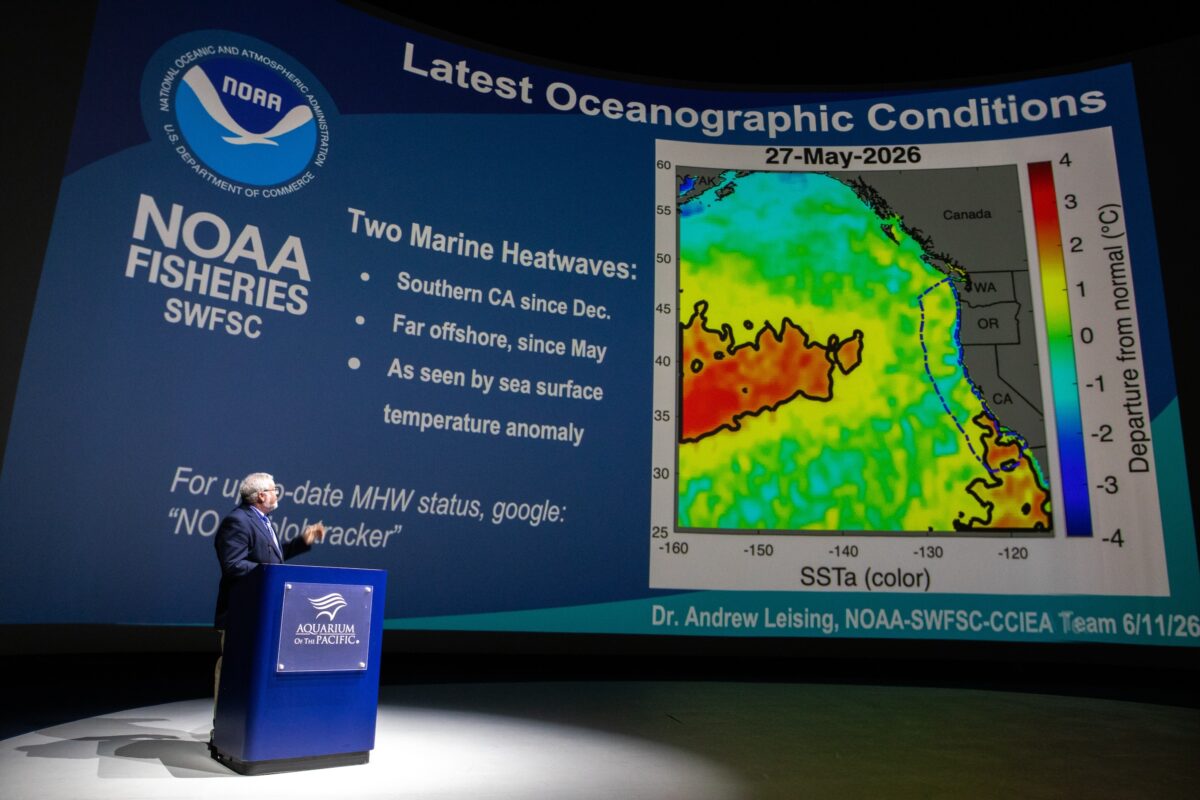
Forecasters say a powerful El Niño weather pattern is here and could strengthen later this year into one of the most formidable in decades. Its shifting winds could redirect trapped oceanic heat to California’s coast, bringing with it a cascade of torrential rain and warmer tides that endanger marine life.
During a press conference at the Aquarium of the Pacific in Long Beach Thursday, experts with the National Oceanic and Atmospheric Administration said this year’s still-growing El Niño could be the strongest of the century, with a 63% chance to develop between November and January into one of the worst events since 1950.
El Niño is the name given to powerful shifts in Pacific Ocean winds and water temperatures that can transform global weather patterns, sparking droughts and heat waves, tropical storms and flooding. It can also harm or kill marine life, as weakened winds slow the upwelling of cold, nutrient-rich water for plankton and send populations elsewhere for food.
Experts say the current marine heat wave is about one-third the size of the 2015 “Super” El Niño, with nominally high temperatures and sequestered to Southern California’s coast, but it could build into a bona fide El Niño pattern this fall.
For Long Beach and much of Southern California, this could mean stronger rains and sea level rise — about six inches expected statewide — during the winter season, which spans December to February, as storms normally originating from the northwest instead move directly into the state.
Surface water temperatures, which range between 55 and 72 in the summer, could reach 2 to 3 degrees higher on average.
Nate Jaros, the Aquarium of the Pacific vice president of animal care, said even a few degrees can set the ecosystem off kilter, leaving marine life at risk of starvation or exposure to toxic algal blooms.
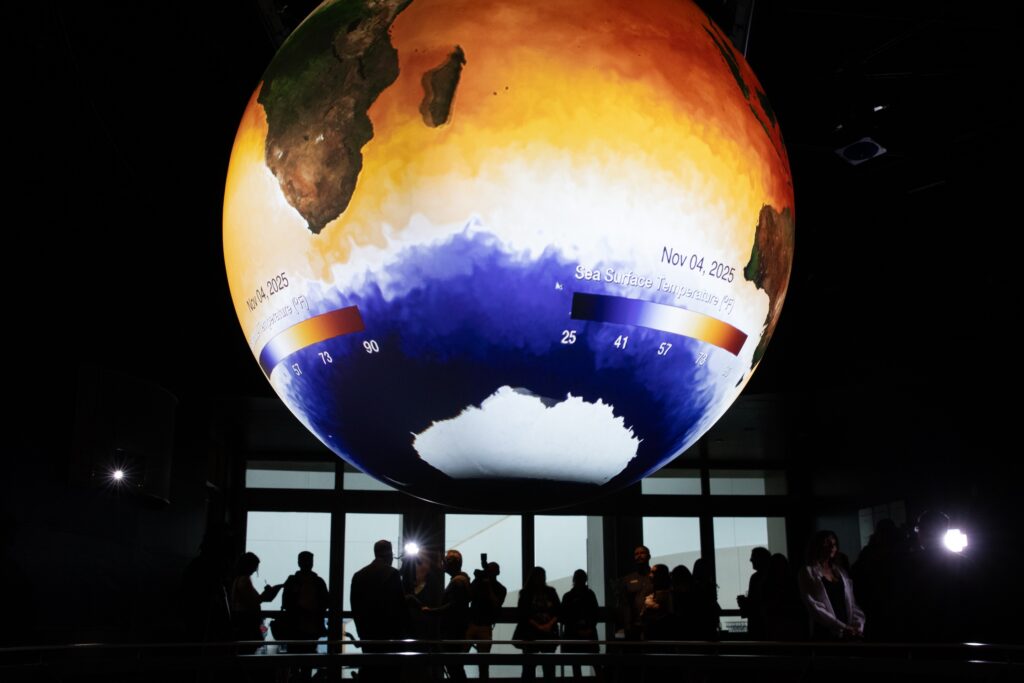
In Long Beach, warmer waters will likely cause disoriented marine life to venture closer to shore in search of food. This includes mako sharks, yellowfin tuna, mahi mahi, yellow-bellied sea snakes, seahorses, red crabs and maybe even some whale sharks, Jaros said.
Aquarium officials warn that sea lions are at an especially high risk, and said people shouldn’t be surprised if they find one stranded on the beach. The public should call the NOAA West Coast Marine Mammal Stranding Network hotline at 866-767-6114 if they spot an animal in distress.
“We’re going to likely see nutritionally challenged animals hitting the beaches,” said Brett Long, an aquarium vice president of animal care. “Or if there is a harmful algal bloom that leads to the molecular acid toxicity, we’re going to see animals either looking very sick on the beach, seizing, which tends to be very not easy to watch.”
Projections are mixed about how large this El Niño will be. Ariel Cohen, a meteorologist with the National Weather Service in Los Angeles, said it is in the early stages of formation and might not live up to the hype.
Stronger El Niños don’t always deliver for Southern California; the 2015–2016 Super El Niño — with an exceptionally large mass of heat — failed to produce the wetter-than-average winter the region expected.
But if the most recent forecasts prove accurate, Cohen added, this year’s will be a whopper, and its consequences would play out across a region already battered by declining marine life and kelp populations. This season could also give Long Beach residents a preview of what life on the coast will be like in just a decade or two if global warming continues at its current pace, he said.
“I know folks may want to have an exact vision for how things are going to evolve in terms of weather patterns, but we just don’t have the scientific basis to give full confidence at this point,” Cohen said. “We’re already seeing the conditions favoring this El Niño pattern come into light here now.”