

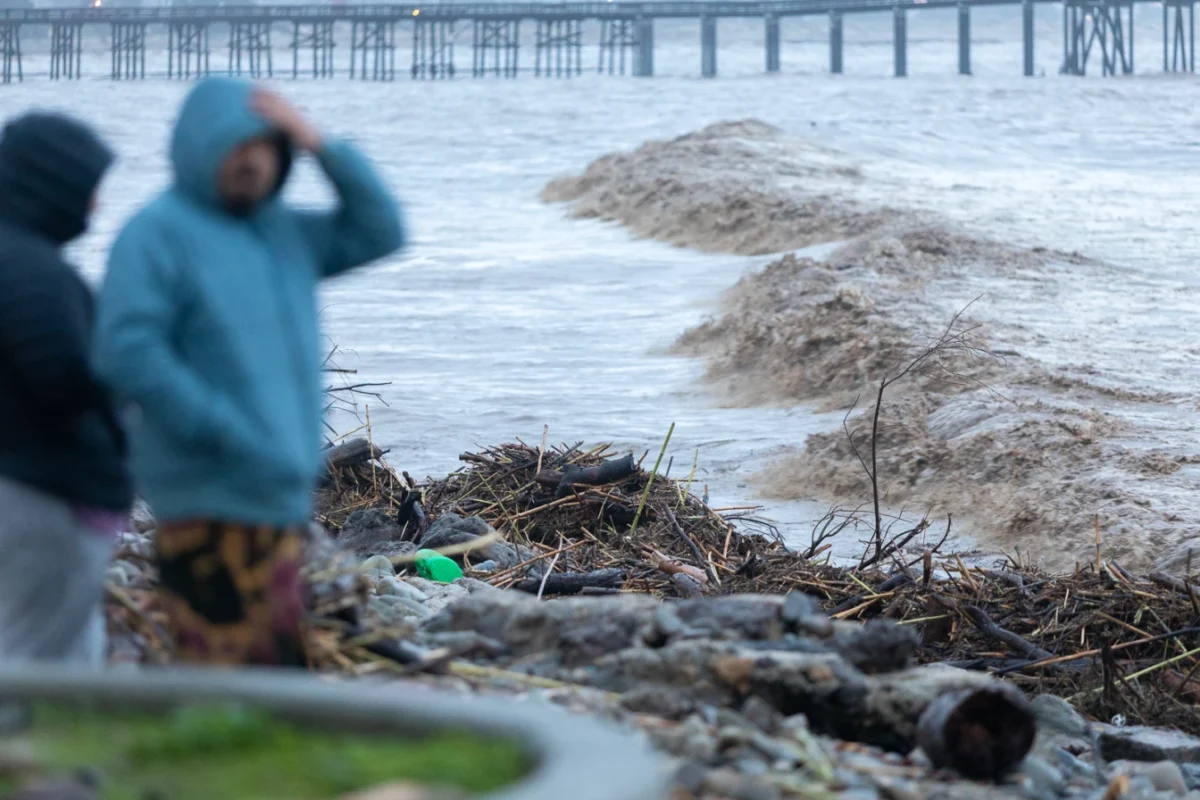
Learn more about what El Niño means for Long Beach and how you can be prepared at LBPost.com/elnino. Support useful, community-centered reporting like this with a donation.
This story was originally published by LAist on Aug. 18, 2026.
El Niño is officially with us, and it’s looking like it’s likely going to be a doozy.
The natural global climate pattern temporarily warms the eastern tropical Pacific, causing extreme weather patterns across the globe. A strong El Niño has historically, though not always, been associated with very wet winters here in Southern California.
“ We are now explicitly expecting the strongest El Niño event ever observed,” said University of California climate scientist Daniel Swain. “ There will be a strong tilt in the odds towards wet, perhaps even very wet conditions in Southern California.”
Maybe you remember the very wet El Niños of years past — 1982 and 1997. Both were historic events that led to billions of dollars in damage and dozens of deaths. Though not a guarantee of a wet winter here, Swain says, this time, the ocean is likely to get even warmer than it was during those years.
“This is highly likely to exceed what occurred in [1982 or 1997], and by a considerable margin,” Swain said.
The good news? You still have time to prepare.
Experts emphasize that people need to develop an understanding of their personal risk, talk to neighbors who may have experienced flooding in the past and consider getting insured.
What you need to know about El Niño
El Niño years can be associated with lots of rain in Southern California, though there’s no guarantee of a deluge.
And wet winters aren’t always disastrous. What matters is how much water falls within how much time. In fact, going back to when modern records began in 1950, most of the years when we’ve seen the highest flood-related costs were not during El Niño events.
But there are concerns beyond rain for late 2026 and early 2027.
El Niño this time will coincide with another natural phenomenon — the highest tides of the year in a nearly two-decade cycle known as “the declination of the moon.” We’re reaching the max this winter, according to Scripps scientist Mark Merrifield.
Because El Niño warms the ocean, it also raises sea levels temporarily. On top of that there’s an unprecedented level of human-caused global warming in the mix — that has already raised sea levels by as much as a foot along California’s coast over the last century, and is making normal weather patterns more extreme.
“So we start adding these things up, and they’re actually not so small anymore,” said climate scientist Daniel Swain. “The risk of coastal flooding is actually very high and almost guaranteed.”
It’s not only the coast — inland areas, especially along creeks and rivers, are also at risk due to more extreme rainfall driven by El Niño as well as human-caused global heating, Swain and other experts said.
Know your risk
The Federal Emergency Management Agency, or FEMA, compiles flood risk maps (you can also use this L.A. County map here).
Be aware that they are not comprehensive and can be out-of-date. Also, they include only risk from coastal flooding, such as tides and waves, as well as from rivers, creeks, channels and levies, which risk spilling over after back-to-back severe storms.
But the maps don’t include flood risk from short, heavy downpours or mudflows in recent burn zones, said Brett Sanders, a professor leading UC Irvine’s Flood Lab. So even if your home is not within an official flood zone, you could be at risk.
“What used to be grasslands and open space has been covered more and more by asphalt and concrete,” Sanders said. “And so more and more water runs off and these flood risks are increasing.”
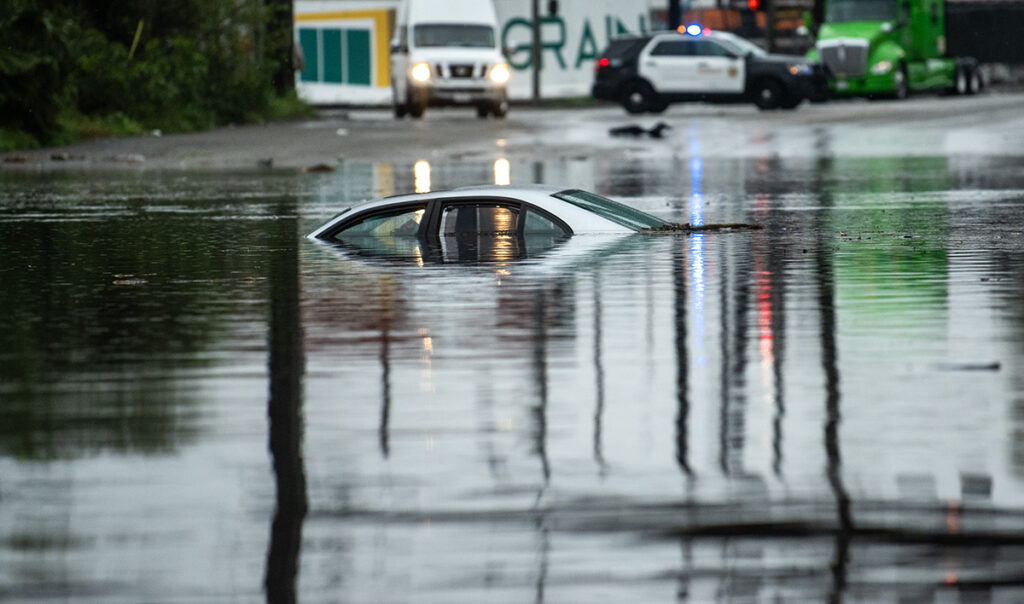
His lab has been working to figure out how to develop more comprehensive flood maps, to better determine risks and reflect changes brought on by a warming climate.
But Sanders said one of your best bets to prepare is low-tech: speak with neighbors or officials who know your local area, and remember how past severe rain events have affected your street or neighborhood. For example, if you live at the base of a hill, or in a basement or ground-level apartment, you’re more likely to see some water flow. That historical memory can help you develop a plan for a worst-case scenario.
“Some common sense local awareness from people is really valuable,” Sanders said. “Talk to somebody that’s been around for a while. Ask them, ‘Do you remember floods happening here in the past?’ Or, ‘What happened in 1997 when we had our last really wet El Nino?’”