


Street closures around the Colorado Lagoon in East Long Beach should end by the summer, but the major construction project building a new ocean channel to the popular inland beach has no clear end date in sight, city officials said recently.
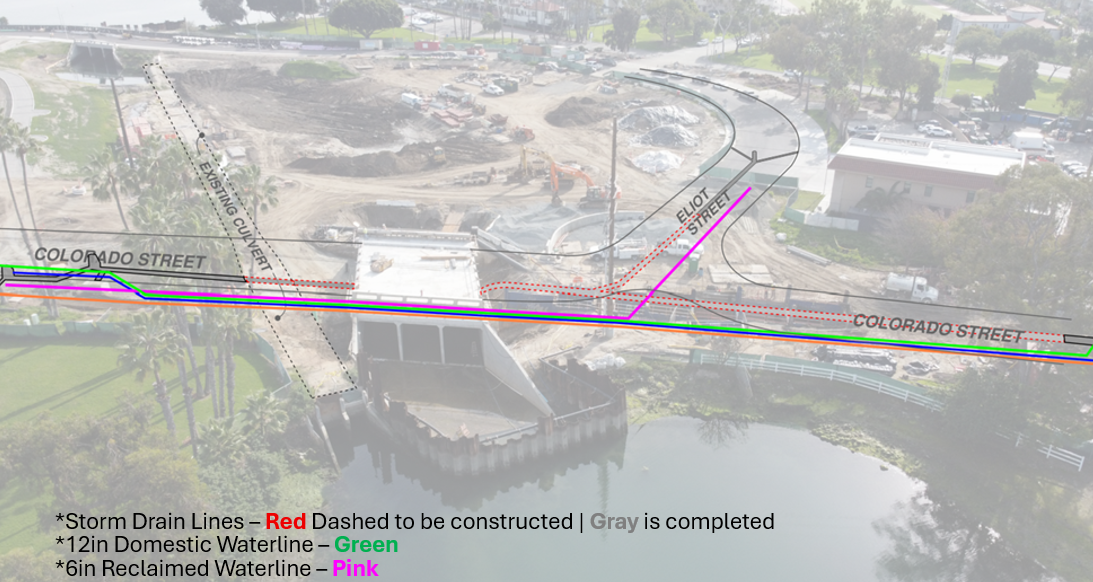
At a Feb. 25 town hall, city engineers told residents the project had entered a critical phase, in which crews are installing an intricate pipe system that will run under the new Colorado Street Bridge. But work has stopped several times, as crews excavating the path for new pipes continue unearthing old ones that, can contain hazardous materials like asbestos.
Project consultant Michelle Harati said crews have discovered utility lines — once used to carry oil, waste, water and gas through the area — somewhere between 17 to 20 times.
“Every time we put a shovel in the ground,” she said, “… we found more utilities that we didn’t know were there that we then had to investigate.”
It was common for old utility pipes like this to be lined with fire-resistant asbestos, but when disturbed or broken up, the carcinogenic material can endanger workers and commingle with the dirt.
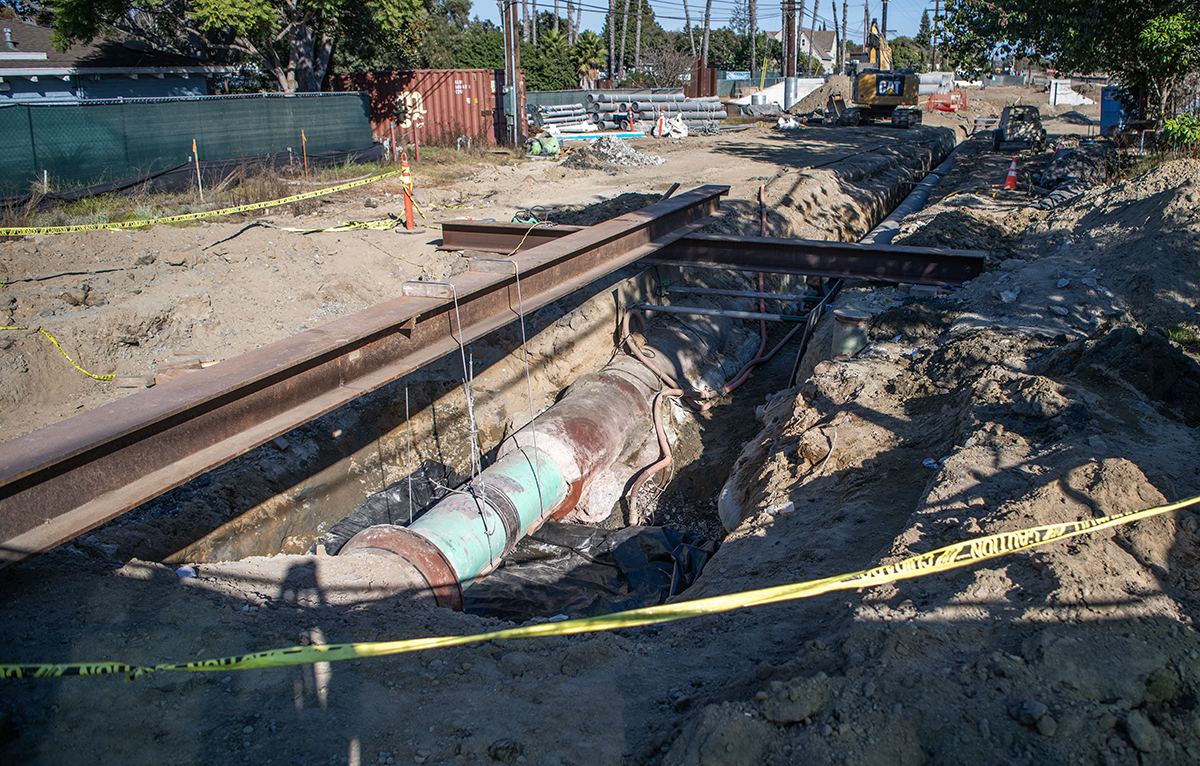
The city says it has spent at least $1.5 million surveying and abating asbestos after it was discovered more than a dozen separate times.
Each time, workers must go through a time-consuming cleanup procedure of testing, tagging, bagging and safely disposing of contaminated dirt or debris. It’s hard to tell how many more times this will happen.
“We wish we had a magic wand and a crystal ball, but unfortunately, we don’t,” said Long Beach Project Manager Charlene Angusco. “We are getting through the most difficult parts of construction now.”
Despite the delays, officials hope they can finish the pipe system, called a sewer siphon, and finish building Eliot and Colorado streets — which intersect the lagoon — by summer’s end. Crews will need 11 weeks after the system is finished before they can pave a final layer of asphalt on the two streets, officials say.
In the interim, commutes for those living in East Long Beach neighborhoods detoured onto nearby Seventh Street, Anaheim Street and Bellflower Boulevard. A temporary pedestrian path is currently the only through‑route.
But skepticism was rife among residents at the meeting, some of whom expressed disbelief that the project — already two years overdue — won’t face more delays, adding the city has not been forthright about the process.
This comes after investigations by the Post in late 2024 found whistleblowing workers who allege they were ordered to bury and hide asbestos-containing materials outside the city’s notice.
In the report, workers warned that far more asbestos remained throughout the site and would continue to be a problem throughout the project’s duration.
Officials insist the public should stay optimistic, assuring them the project is close to completion.
Crews last winter finished the Colorado Street bridge deck and sidewalk, and installed Caltrans’ barriers for motorcyclists. They also commenced major excavation and installed storm drain lines throughout the area. Eliot Street, meanwhile, needs only a final pavement, striping, guardrails and fencing.
Once the sewer system is finished, crews can decommission the lagoon’s small culvert, which currently connects it to the ocean, replacing it with a tidal flow connection. The open channel must also be excavated all the way to the Colorado Street Bridge.
It’s the final phase of the four-piece project that began in 2010 as an environmental endeavour to create a 12-foot-deep tidal channel between the 18-acre lagoon and Alamitos Bay.
This connection would establish a tidal flow between the saltwater bodies, improving the estuary’s health by replacing a 900-foot box culvert that offered poor circulation and accumulated bacteria, metals and other pollutants.
Originally planned to finish in March 2024, the project is at least $4 million over its original $32 million budget. Delays have been announced at least three times in rolling fashion, with officials tying the wait to heavy rainfalls in 2024 and the continued discovery of unmapped utilities and hazmat abatement.
You can stay up to date on the project’s progress here.