

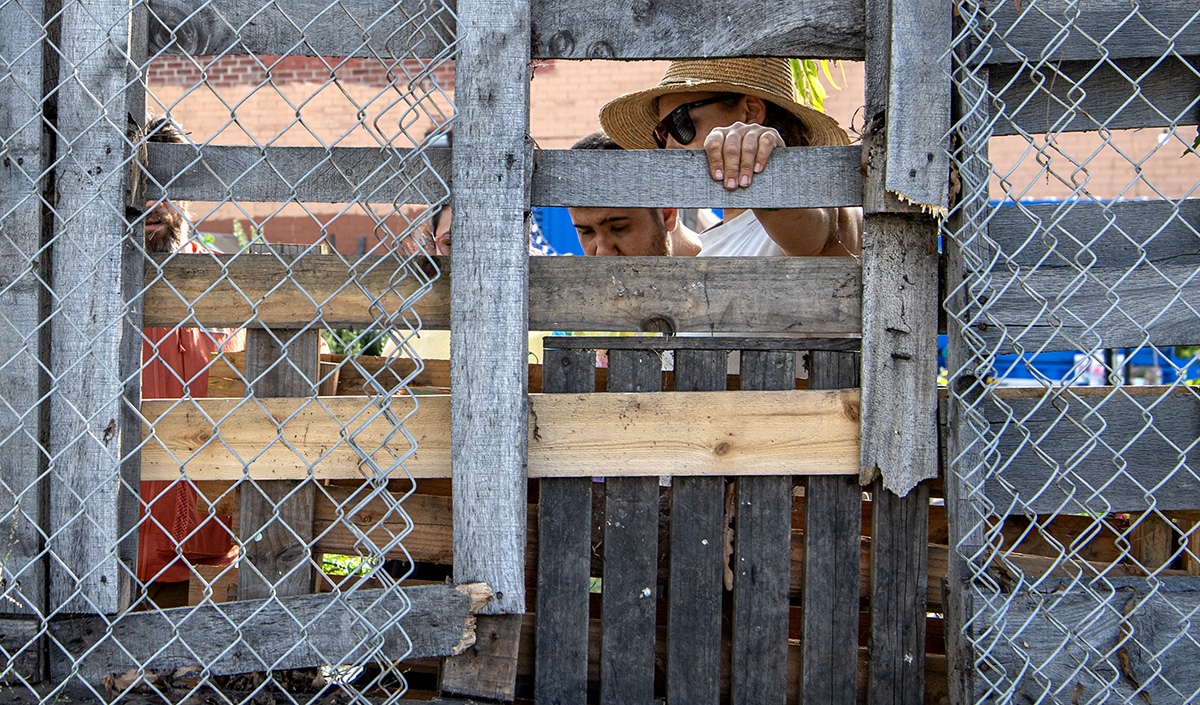
Volunteers at Sowing Seeds of Change, an urban farm in downtown Long Beach, have had to become experts in an unexpected subject: fence repair. And they’re starting to get fed up.
The small farm, which serves young adults with disabilities, has been broken into five times this year, said Lindsay Smith, the nonprofit organization’s executive director.
Each time, Smith and other volunteers patch the fencing that burglars cut through, but it’s been an inadequate deterrent.
Thieves have stolen a wheelbarrow, a spare set of wheels from another wheelbarrow, power tools, hoses, ladders, gardening tools and a generator.
Smith and her teams suspect the repeated break-ins have something to do with the farm’s location. It’s on San Francisco Avenue, just southwest of the 710 on-ramp from Seventh Street, creating easy access for people who may live nearby in encampments along the banks of the Los Angeles River.
Smith estimates the break-ins have cost roughly $20,000 over the past five years.
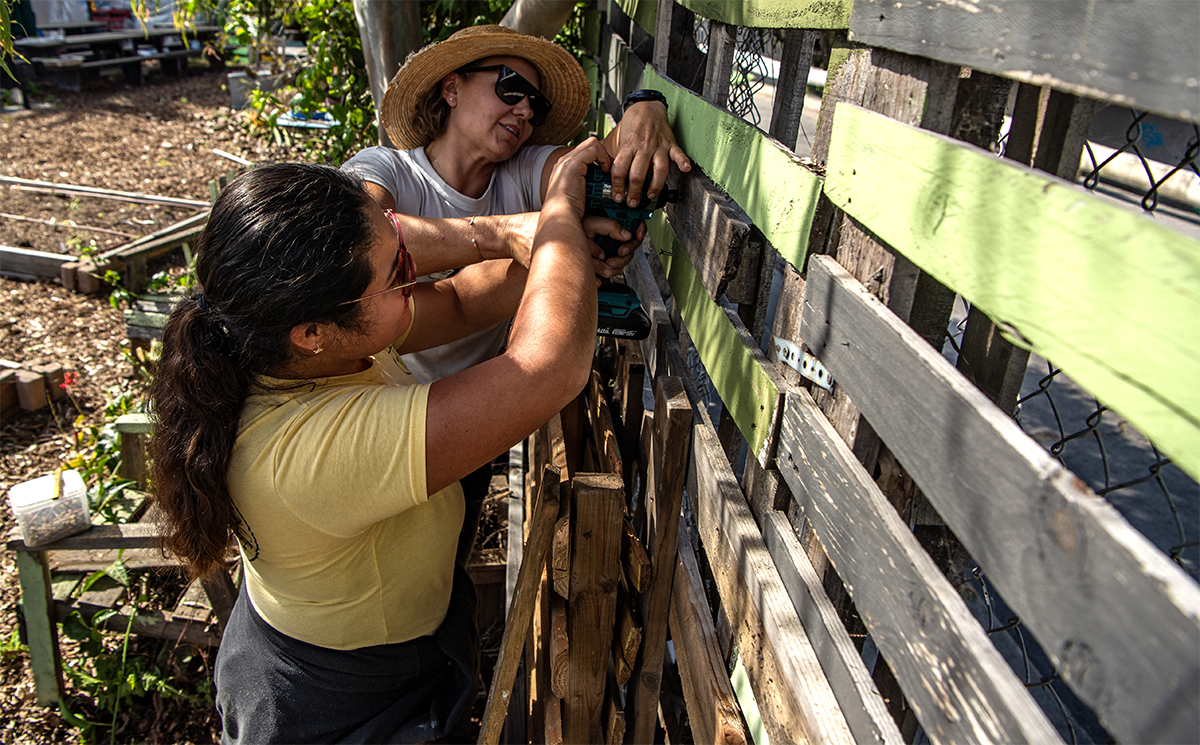
They’ve tried to get help from the city of Long Beach, from whom they rent, to better secure the lot, but their lease spells out that Sowing Seeds of Change is responsible for the “sole cost” of security.
This means that, while managing a vibrant garden with raw honey, leafy greens, herbs and edible flowers, Smith has also had to install razor wire, a steel gate and wooden pallets as a reinforced barrier around the property.
She would rather be working with the youth who tend to the farm.
She left her career as a special education teacher to found the nonprofit because she saw gardening as a hands-on way for young adults on the spectrum to build life skills and confidence by interacting with her and other volunteers on the urban farm.
Throughout the years, young adults have built planter boxes, run irrigation lines and spread countless pounds of mulch.
“It’s really been incredible to see them just bloom outside,” Smith said.
So far, Smith says, none of her efforts have managed to thwart the break-ins.
After making repeated pleas for help to District 1 Councilmember Mary Zendejas’ office, Smith said the city has offered a few solutions: pay to install a new fence or coordinate with city staff to access a nearby storage facility where they could keep tools that aren’t needed regularly.
The first option “would cost tens of thousands of dollars,” Smith said.
“We’re kind of stuck,” Smith said. “The fundraising that we do and the grants we receive are meant for youth programming.”
In a statement, Zendejas said she’s personally met with some of the students and “heard firsthand” the impact the break-ins have had.
“This is why I’m committed to helping them in any and every way possible,” Zendejas said.
It’s not clear, though, what comes next.
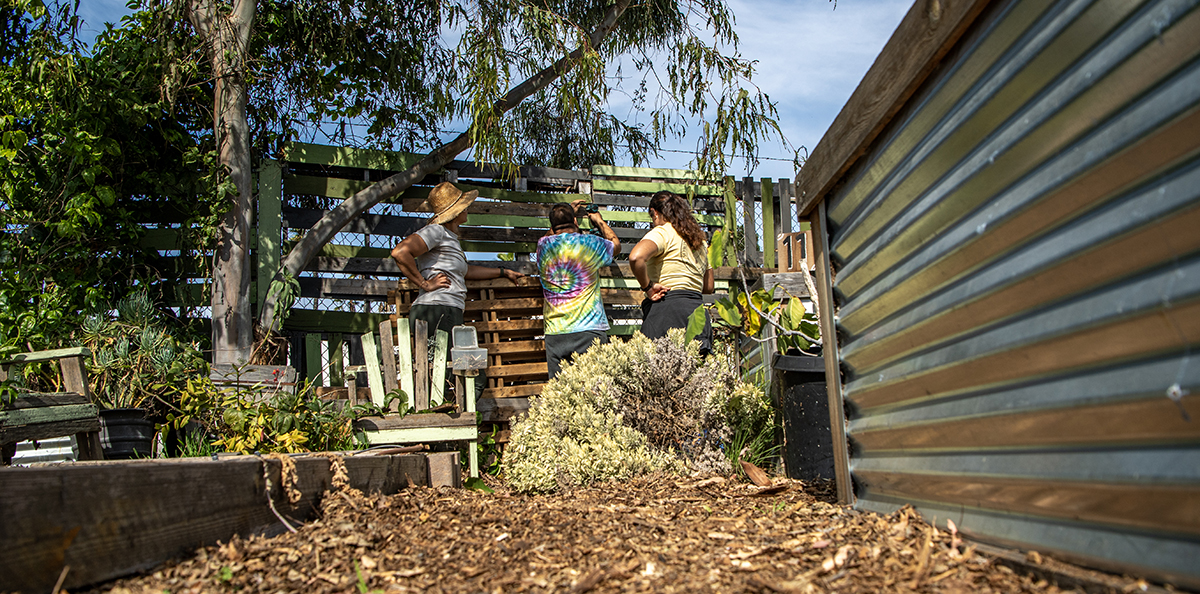
Sowing Seeds of Change has two years left on its lease at the current site, but Smith said she’s not sure if she’ll stay for the full term if the break-ins keep happening.
She’s hoping to get another farm space soon through Los Angeles County.
The farm’s current site was never meant to be the organization’s permanent home.
When Smith signed the lease for the vacant city parking lot in 2021, it was with the promise of a space in an expanded park that connects Chavez Park with Drake Park.
In the years since, that project has struggled to get fully funded. Current plans call for a design of the project to be finished this summer. There’s not yet a construction timeline.
You can learn more about Sowing Seeds of Change or donate to them here.