

As Hurricane Genevieve batters the Southern California coast with heavy swells this week, Long Beach city crews are busy reinforcing protective sand berms and taking extra precautions along vulnerable beachfronts ahead of elevated tides and a regional high surf advisory.
The worst will come at night, officials say. Forecasts show lunar tides will crest over 6 feet and waves will range 4 to 5 feet high on Wednesday and Thursday between 9 and 11 p.m.
It will then taper down through Saturday, with waves expected to drop down to 2 to 4 feet.
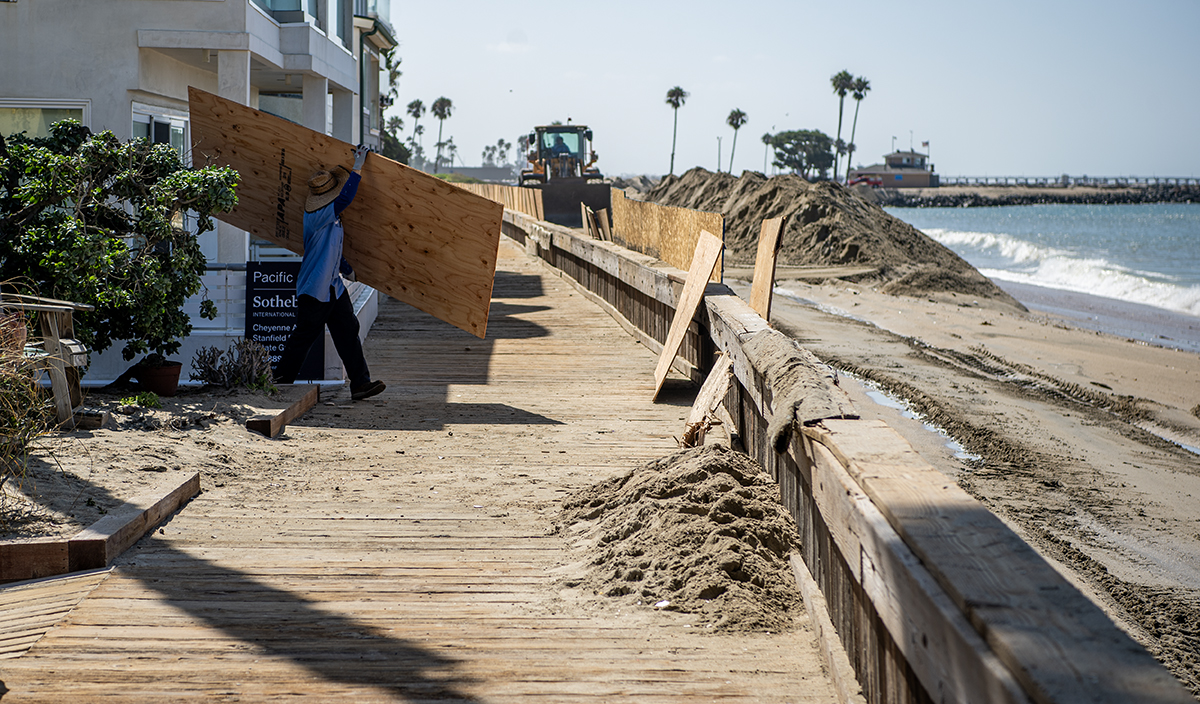
Nighttime crews will be on standby during the peak tides, while daytime staffers will spend the morning on frontloaders, reinforcing the sand berms along the Peninsula that forms Alamitos Bay and staging plywood along vulnerable parts of its boardwalks known to flood.
The swell is elevated but manageable, local officials say, noting the breakwater and Catalina Island naturally absorb a lot of the wave energy coming from Genevieve, now a Category 4 storm, which continued its stretch across the Eastern Pacific this week.
“We’re planning like we’ve always done,” said Marine Safety Chief Gonzalo Medina, adding: “I don’t foresee anything being different about this one in particular, but Mother Nature is highly unpredictable, especially at sea.”
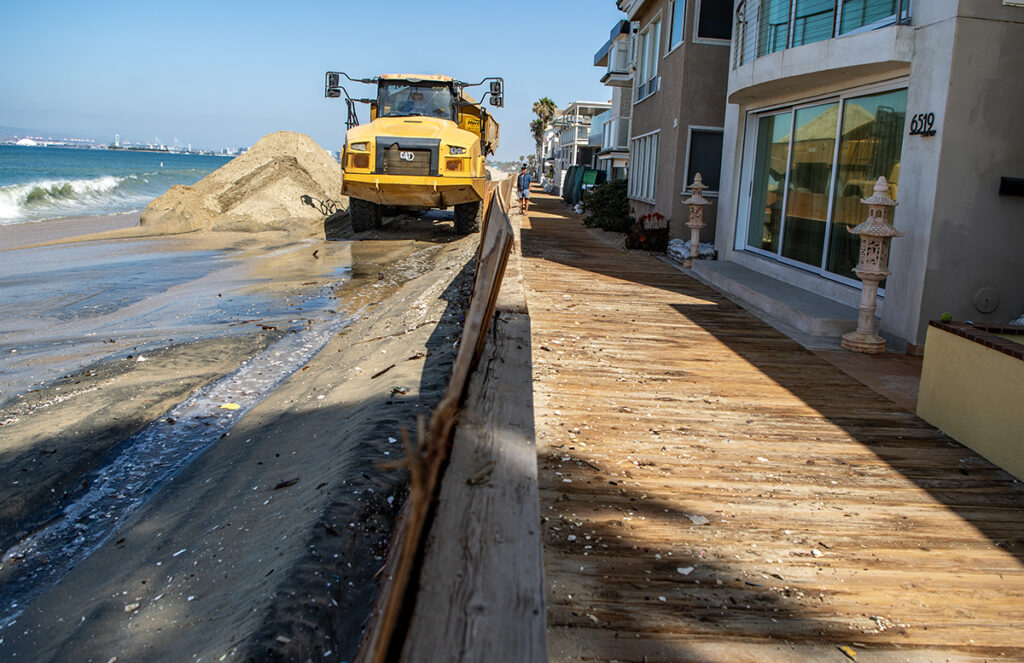
The city’s primary defense efforts are centered on a narrow strip of oceanfront homes along the Peninsula between 62nd and 69th places, which is exposed to swells that pass through the gap outside the breakwater and jetty that juts from the Alamitos Bay channel.
Dozers were seen early Wednesday, rebuilding a 40-yard stretch of the large sand berm — typically maintained at 7 to 8 feet high — after overnight waves breached a section on Tuesday and knocked over the raised line of plywood.
Kelly Armstrong, a city beach superintendent, said night crews will remain deployed over the next three days to fortify the beach as needed.
The expected tides are elevated but slightly lower than the three previously seen this summer, he said, with waves that were several feet higher. Prior events this summer did not result in any property damage or injuries.
A greater worry, officials say, is the frequency of high tides that trample through the city’s sand walls and flood streets, as changing ocean dynamics and El Niño conditions spurred by climate change create taller and warmer tides — above predictions this season, according to the National Weather Service.
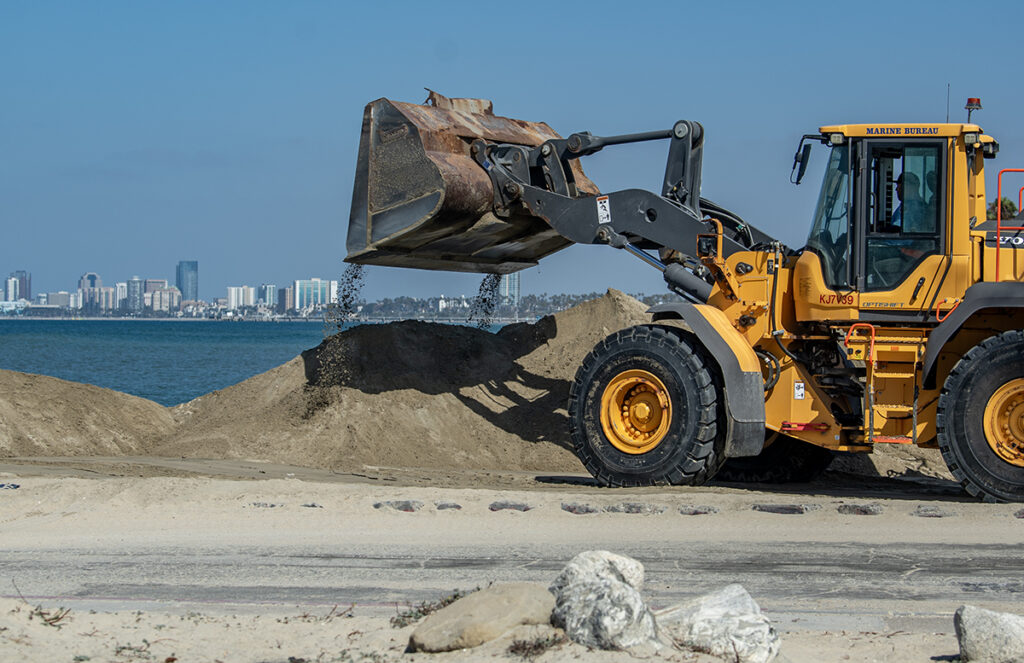
“The tides that we’re seeing now, we did not see in the past,” Todd Leland, manager of the city’s Marine Bureau, told LAist. “We used to not have to build berms year-round. We’d only have to do it on an occasional basis here on the peninsula.”
The city spends about $1 million annually trucking sand six days a week from the wider western beaches back to the Peninsula to replace what waves wash away.
Long Beach is nearing an awarded contract to commence a $14.5 million dredging project that, if approved, should start in late October and extend the beach out by 260 feet using 415,000 cubic yards of sand from the entrance channel of Alamitos Bay.
In the meantime, local life along the waterfront carried on largely as normal on Wednesday.
More than 600 youth aged 9 to 17 arose early in the morning to take part in the Ironguard race — a two-mile swim around the Long Beach Pier and a 4-mile run. It went off without a hitch, Medina said.