

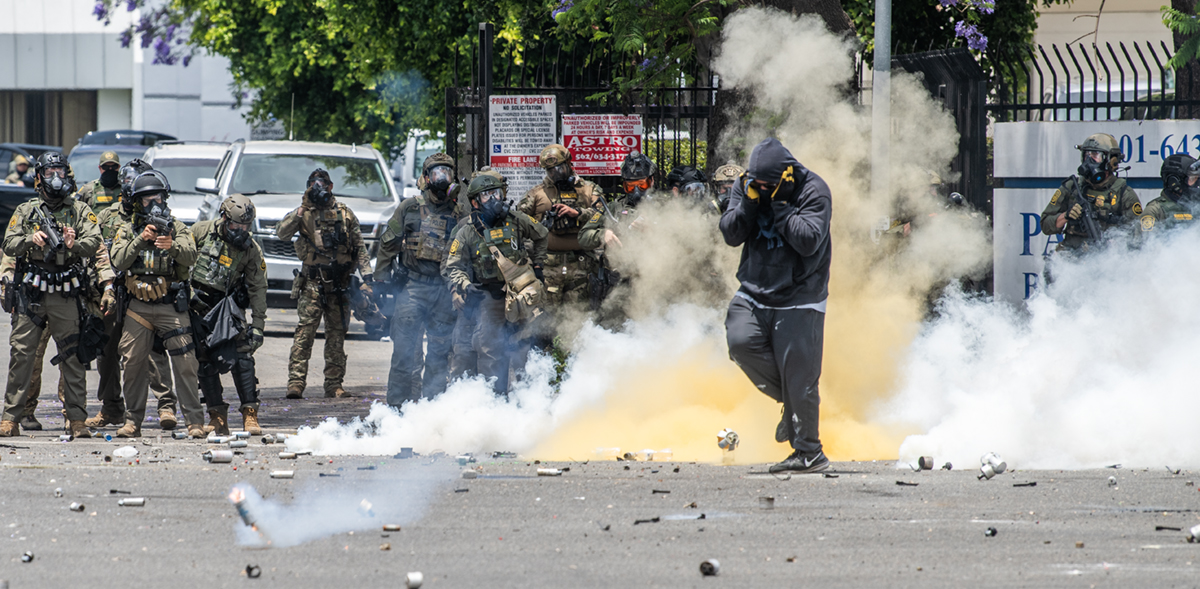
After high-profile incidents of immigration agents blasting their way into people’s homes, Long Beach’s state senator has proposed a law limiting when federal agents and other police can use devices like flashbang grenades, door-breaching explosives and chemical irritants such as tear gas.
If passed, state Sen. Lena Gonzalez’s bill would ban their use near schools, parks and areas where children might be present. They would only be allowed after de-escalation tactics failed and if an announcement were made in advance, giving bystanders time to leave the scene.
They would also be banned from use in immigration enforcement or on people solely for violating a curfew or verbally threatening officers. Afterward, authorities would be mandated to provide medical assistance.
It would also require the creation of a public reporting system where agencies that use the device must state their reasoning and justification within 60 days.
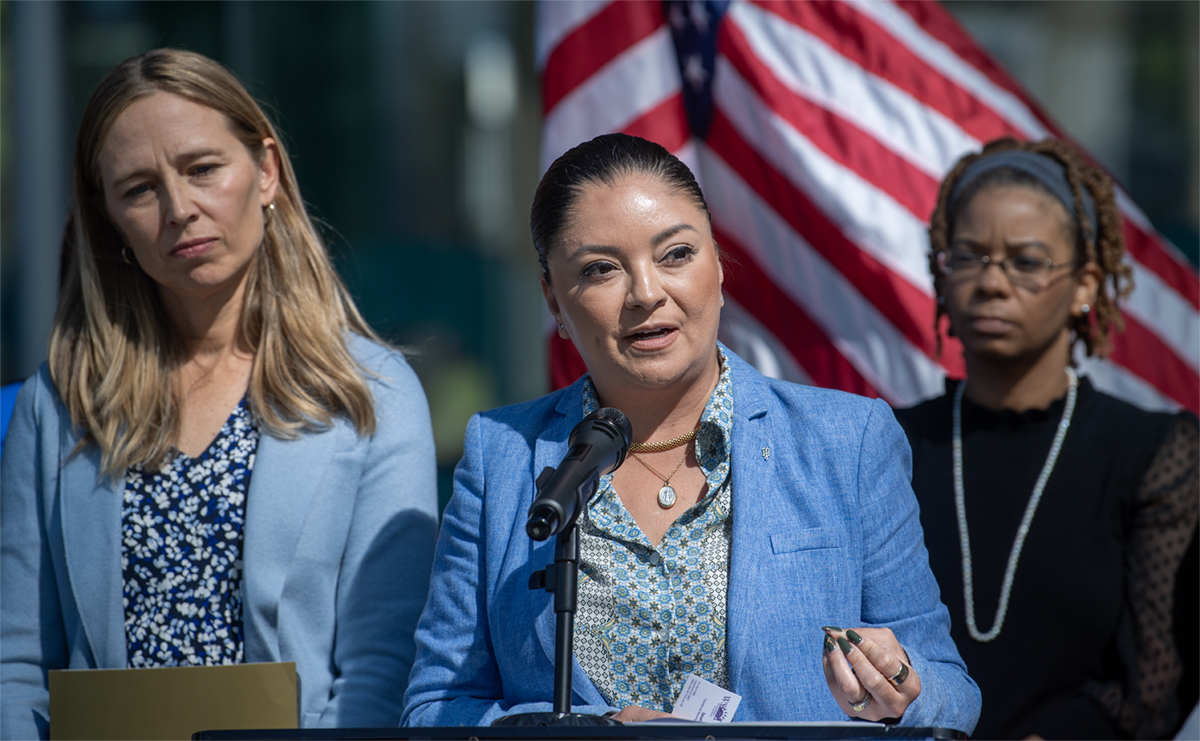
Gonzalez, who represents Long Beach and Southeast L.A., said lawmakers have been inundated by calls, emails and texts from constituents demanding they bring actionable changes to rein in the behavior of federal immigration agents in California.
Clamor has especially been concentrated in the state Legislature’s 38-member Latino caucus, she said, which has heard from countless residents about flashbangs, chemical agents and other explosives being used by agents in a gratuitous manner.
Gonzalez cited two instances she said were particularly egregious, one where agents blasted through the door of a Huntington Park home and later when a flashbang was used on demonstrators at a playground in Maywood.
Her bill, S.B. 937, expands on existing laws. spurred by the George Floyd protests of 2020, limiting how law enforcement can use force. It joins a groundswell of state legislation and lawsuits acting as the legal counterpunch to the Trump administration’s ongoing federal immigration raids in the state.
This legislative session is “like no other session that I’ve ever dealt with in the almost seven years that I’ve been here,” Gonzalez said.
Other bills, many of which were signed into law last fall, have mandated judicial warrants before agents enter places like schools, hospitals and non-federal government buildings.
New ideas are more specific: Proposals to tax for-profit detention companies, prohibit local police from moonlighting as federal agents — or federal agents from taking jobs as teachers — and halt courthouse arrests, among other examples, are moving through the state legislative floor.
“Last year was a reaction to a lot of what happened,” Gonzalez said, referring to the blitz of immigration enforcement that began in the Los Angeles region in June. “Now we feel like we’re not in reaction mode anymore. We are on offense, and we’re going to continue on offense.”
Will it work?
Whether any of these laws can change the reality on the ground remains to be seen. Nowhere is this more apparent than in county and state lawmakers attempting to ban immigration agents from wearing masks.
Both the LAPD Chief Jim McDonnell and L.A. County Sheriff Robert Luna have already said they would not instruct their officers to enforce such a ban, citing the risk of armed conflict between law agencies.
“If local cops tried to force that on them, then you’re going to end up having a struggle that will probably turn into a fight, and it’s a fight of very strong-willed people that are armed,” said Jim Bueermann, a retired police chief now with the Future Policing Institute think tank. “That is a recipe for tragedy.”
The Long Beach Police Department has told its officers it can’t enforce the ban while it works its way through the court system. Most recently, a federal judge temporarily blocked all agencies from enforcing it, saying it discriminates against federal officers because it doesn’t apply equally to all police in the state.
The judge, Christina Snyder, added in a footnote that the law would pass constitutional muster if it were amended to apply the same rules to federal, state and local police. (Snyder did uphold a similar law that requires agents to display identification.)
Even if the law is updated, Bueermann is skeptical.
“You’re not going to see Long Beach cops … tell ICE agents, ‘Hey, you guys, got to take off the mask.’ They’ll just laugh at them, you know, or they’ll ignore them,” Bueermann said. “And if the Long Beach cops try to do something about that, there’s going to be a fight.”
In response to such opposition, legislators are now looking for ways to systemize their collection of evidence, to bank instances of wrongdoing and abuse that can be referred to in court proceedings, congressional hearings and future legislation.
It’s important, Gonzalez said, to establish a public record, even if rules cannot be immediately enforced.
Just because it can’t be enforced now doesn’t mean that we shouldn’t do this type of work,” Gonzalez said.
“At some point there (are) going to be repercussions,” she added.