

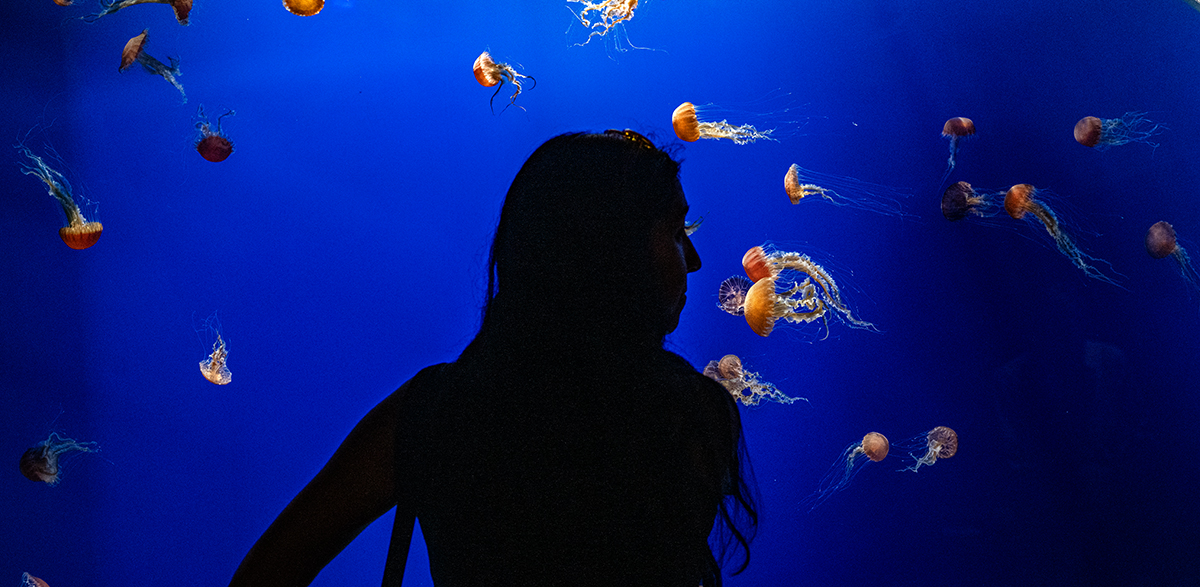
There’s not much dignity in being a jellyfish.
Yet the spineless, brainless, heartless sea creatures — which can be torn apart by a tide current — have lasted more than 500 million years, appearing well before dinosaurs and outlasting them by a wide margin, too.
It’s a mystery how these hypnotic, gelatinous blobs have made it this far, one that an exhibition in Long Beach is more than happy to explore.
The Aquarium of the Pacific in Long Beach is set to open more than 7,700 gallons of saltwater habitats housing hundreds of jellyfish sourced from around the world.
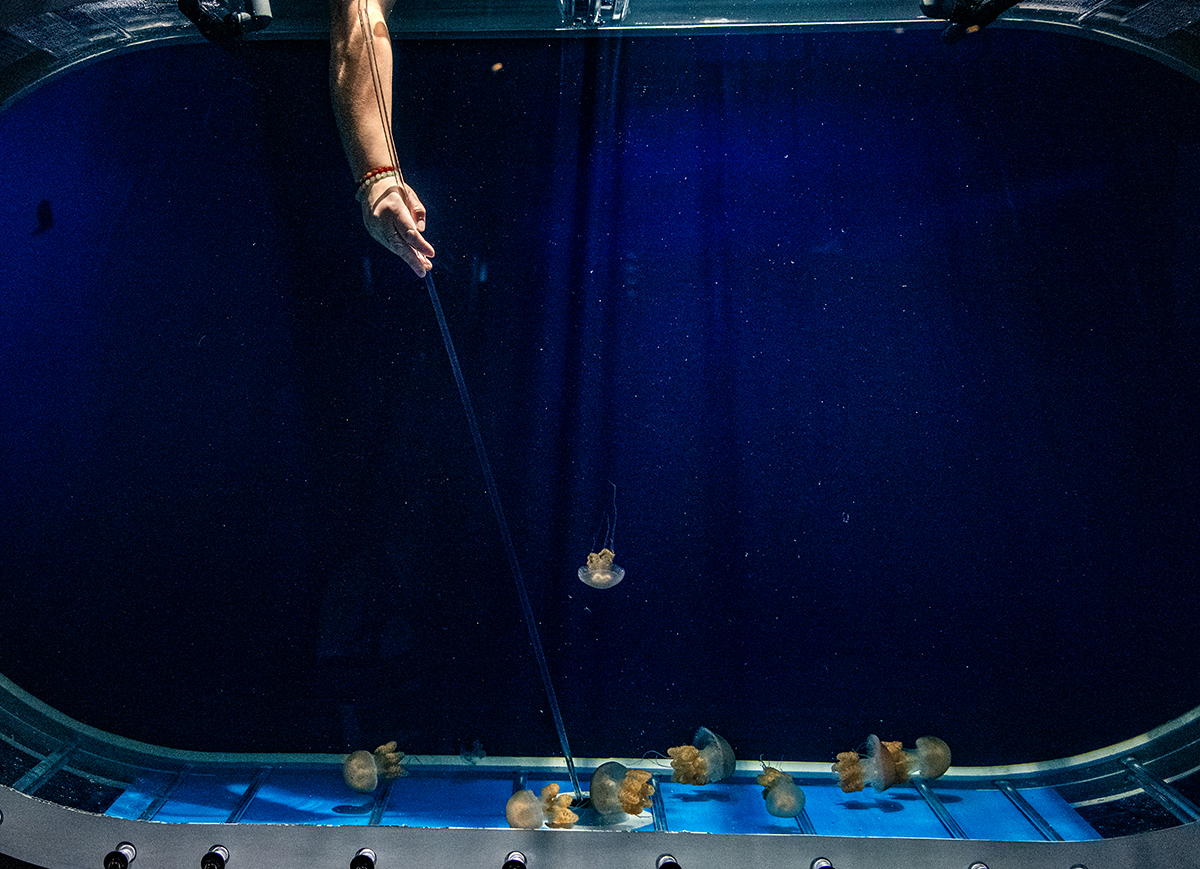
Sea jelly varieties are nearly endless, ranging in size from microscopic to more than 100 feet long, and new species are discovered all the time. Not a true fish, the translucent jellies are related to coral and sea anemones.
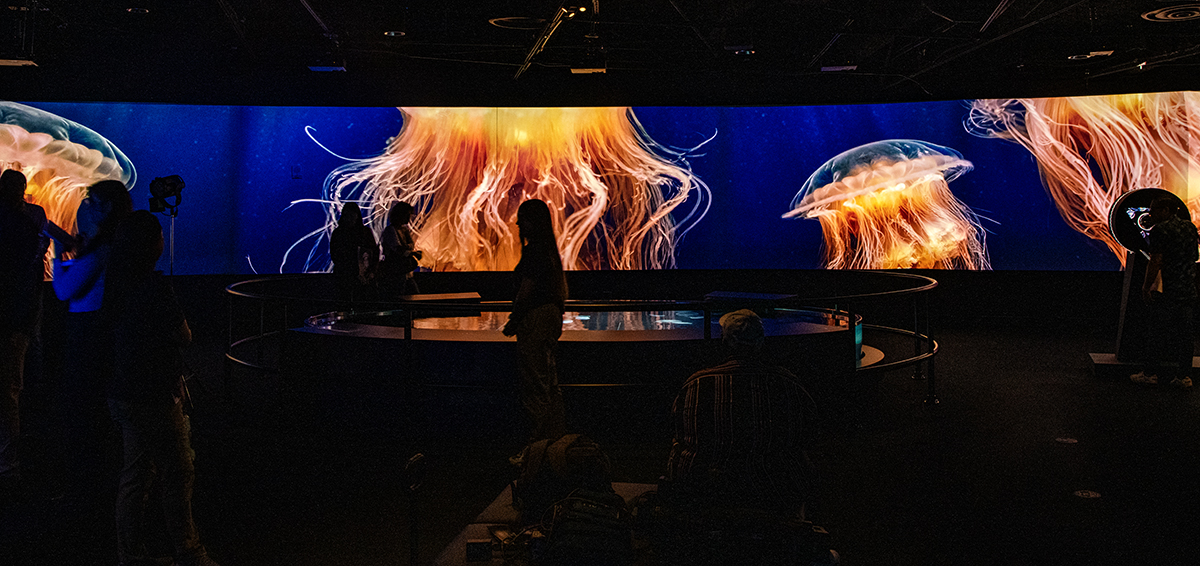
The new exhibit, called Jelly Dreamscapes, is darkened like a theater. Light emanates from the overhead starlike illumination, kaleidoscopes, holograms and a massive end-to-end projection. Across 25 tanks — some built into walls and others freestanding — and several interactive displays, visitors can view and learn about each species’ origins, diet and anatomy.
Staff will rotate more than 40 species through the tanks, depending on which varieties are reproducing enough. “That’ll keep it really dynamic for returning visitors and our members, that when they come, they may or may not see the same jellies on display,” Jaros said.
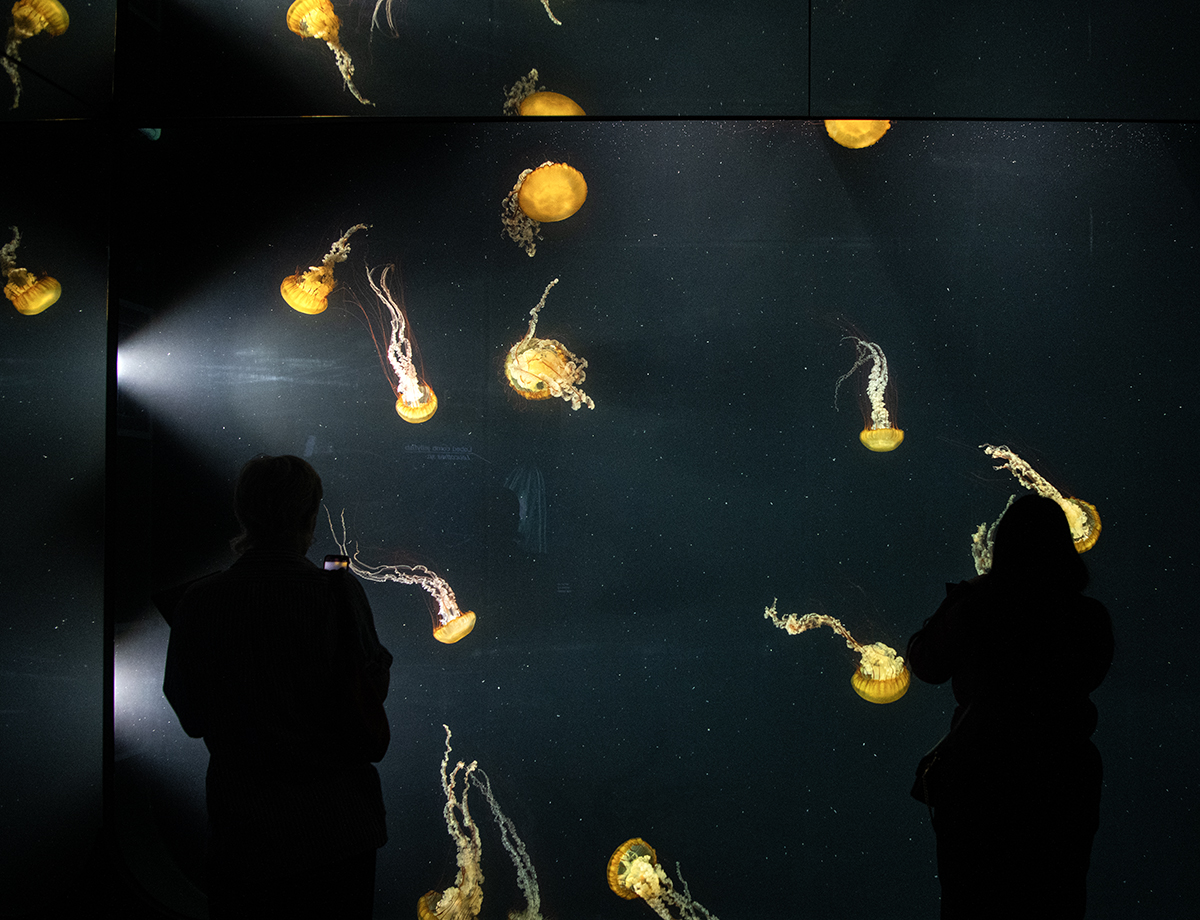
Sea jellies were brought to Long Beach in two ways. Many were traded for or donated by aquariums worldwide — from Tokyo, Paris, Monterey Bay and Hartford, Conn. Others were captured by deep-sea divers in the middle of the night — when sea jellies are drawn to the surface to feed on plankton.
The new exhibit is the result of a $2 million overhaul of the aquarium’s former upstairs gallery, requiring a piping system that can replicate the water temperatures of the world, from the Arctic Ocean to the Mediterranean Sea.
Some tanks were sourced specifically from a company in Kagawa, Japan, that layers acrylic in a way that imitates the deep blue of the ocean.
There are a lot of misconceptions around the sea creatures, staff say. Most people only ever observe them in dead or dying states, spoiling on a beach or used as a gag in a movie.
Jellies may only live up to a year as a medusa — the floating blob we all know — but they can last up to 25 years as a polyp, which looks like a tiny sea anemone that grows and then releases free-swimming adult medusae, which in turn reproduce more polyps.
Staff will cultivate and grow polyps at the aquarium as a way to maintain populations for each species on display. Various strains of plankton will be grown onsite as well, for feeding.
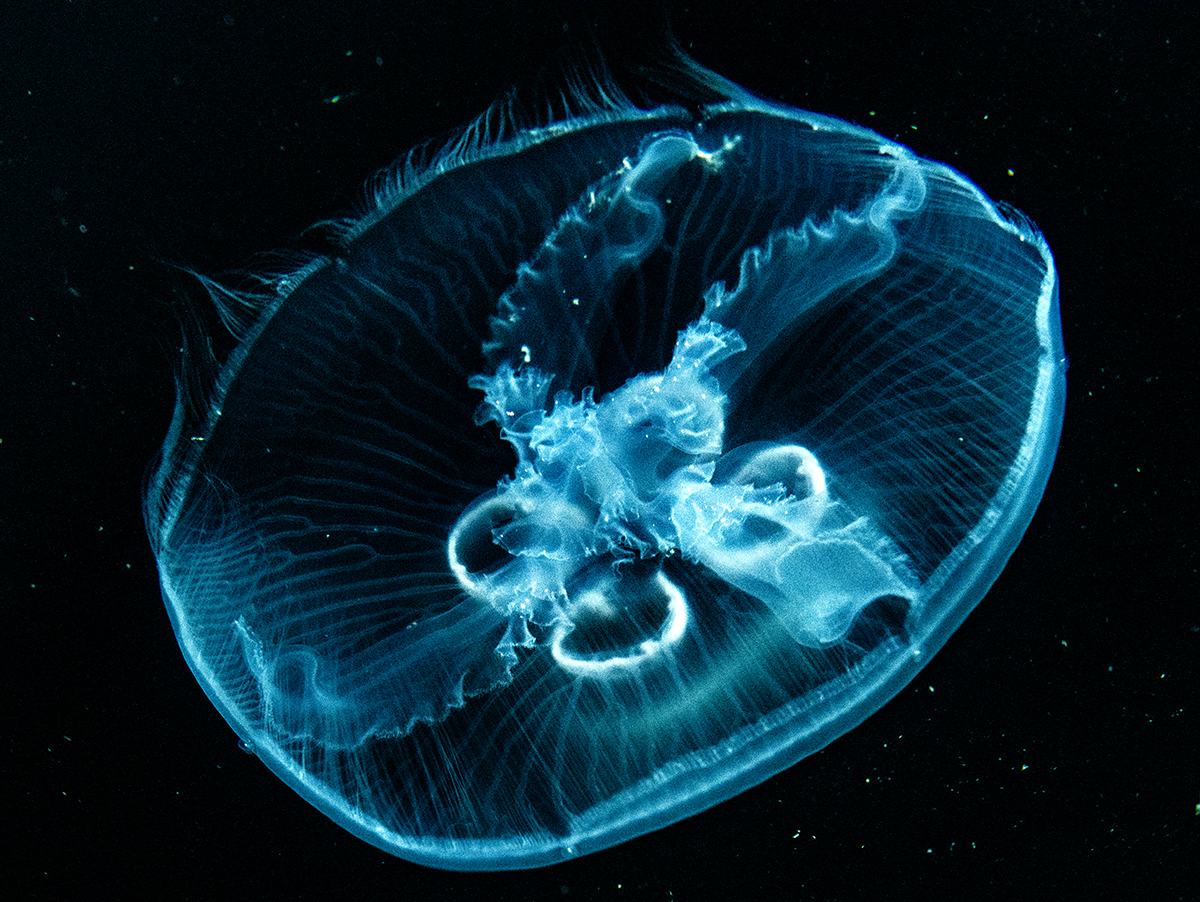
“Nearly all of the animals that we have that you’ll see were aquacultured here at the aquarium,” Jaros said.
While being brainless and blind doesn’t seem to have stopped the jellies from extinction, the creatures are incredibly fragile. Tiny hairs, or cilia, propel it forward, putting on a show as extravagant as any sci-fi flick.
Some are striped, spotted and come in a rainbow of colors, shapes and sizes, from tiny, transparent blimps to the lion’s mane jellyfish that can grow as long as a whale. Some resemble a boiled egg, others like a yolk poured into water. Many have no stinging tentacles, instead opening their mouths to envelop their prey.
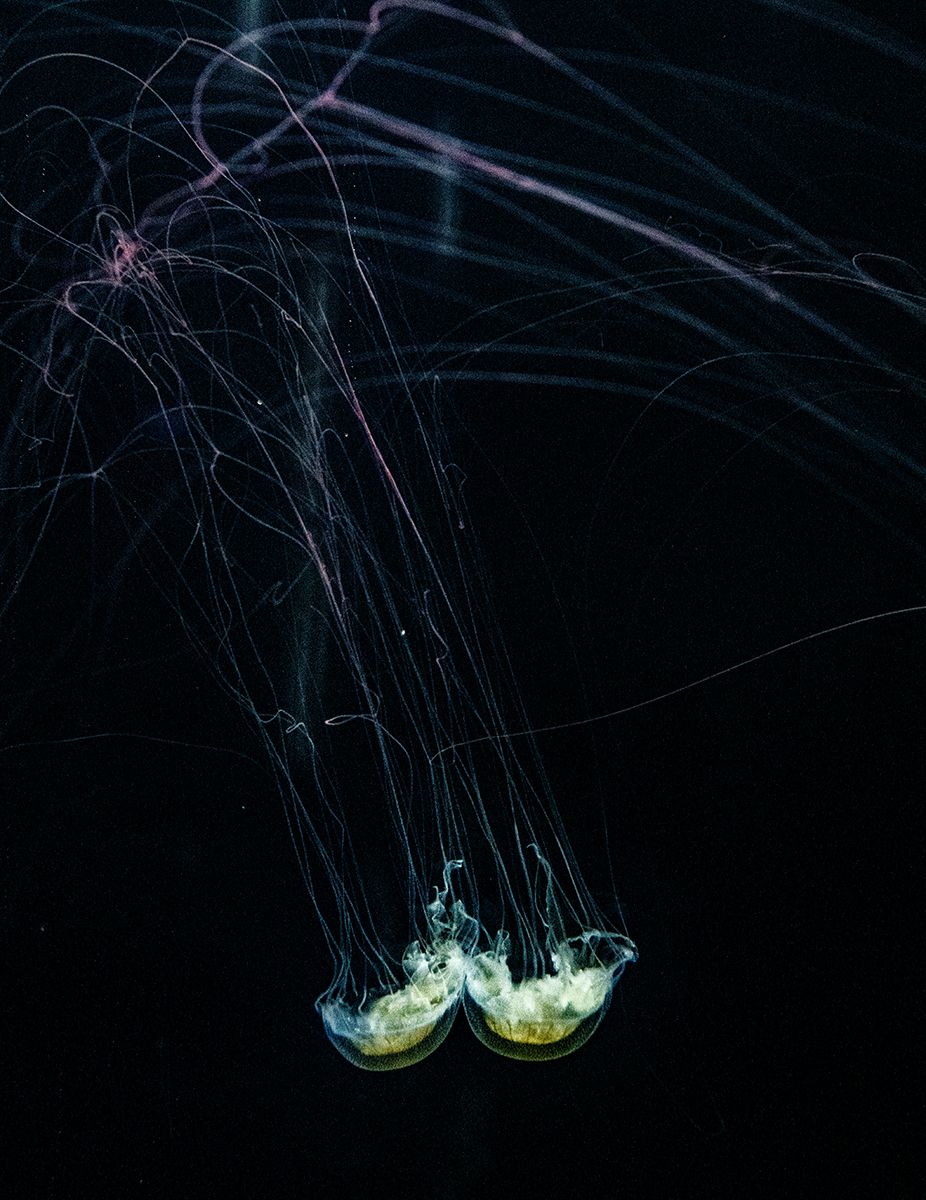
Each developed a propulsion movement well before human imagination landed on it, creating mesmerizing movement that, without much ability to steer, leaves them gliding at the whim of the current.
It’s one of the closest looks at the vastness of ancient life, all for the price of admission. For more information or to book a visit to the aquarium, click here.