


Few people were as consequential to racing — and to Long Beach’s place on the world stage — as Jim Michaelian. His was a decades-long career that made him almost synonymous with speed: After years as a professional endurance racer, Michaelian helped found the Long Beach Grand Prix in 1975.
But before he was a race car driver, a caboose operator or a father, before he was nicknamed the “Energizer Bunny,” “Cecil,” or “Squeaky,” before he led the Grand Prix, Michaelian was a long-haired boy from Alhambra with a penchant for death-defying speed.
His first taste came at age 13, aboard a three-speed tractor at his grandmother’s vineyard in Fresno.
Usually after an eight-hour day of picking grapes, Michaelian would sneak away to cut through the dirt roads that bounded the fields and the small, one-story farmhouse where he and his family would stay in the summer.
The speed — at most maybe 20 mph — was just enough to feel cut through his hair, and curl around his face. From that moment, according to his son, Michaelian knew that his life would revolve around this feeling. As he explained to those close to him, Michaelian sought to test the limits of every car he rode in.
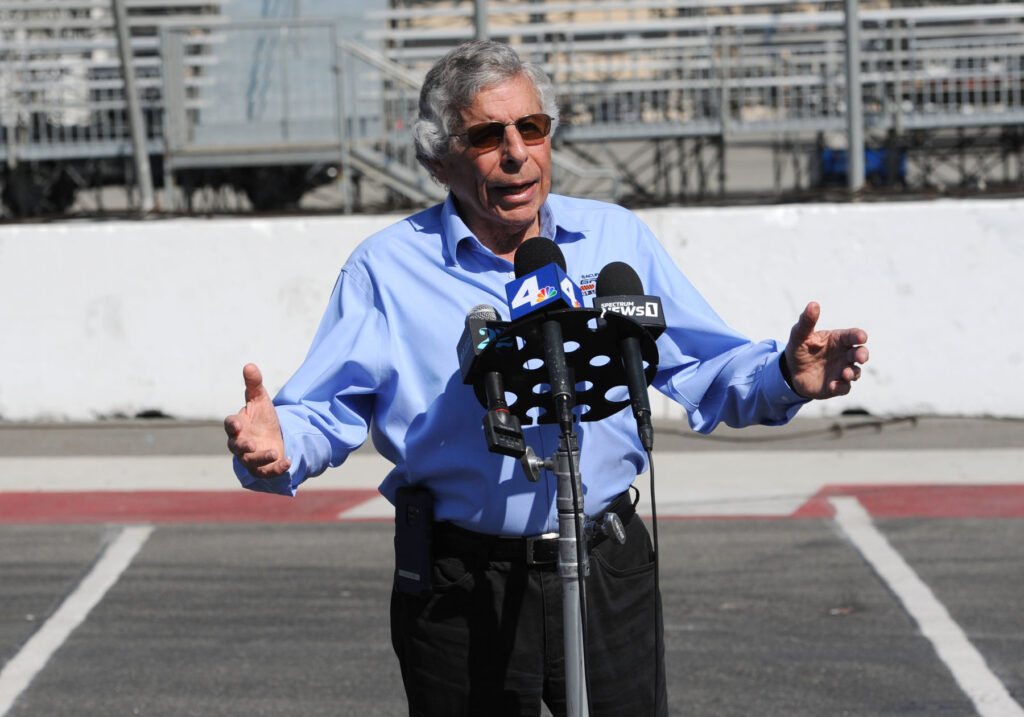
It remains a mystery where Michaelian developed such a craving for racing. His parents were the exact opposite: always driving well under the speed limit, with turn signals used and every precaution taken when behind the wheel. They never watched professional races.
Born into a working-class family of five, his parents were the product of the Armenian diaspora, among the thousands who fled persecution and death in the former Ottoman Empire. Michaelian’s father, orphaned in New York by the age of 3, met his eventual wife in Fresno. The two were devout Baptists, with Michaelian’s father becoming a minister at a local church.
Of their three sons, the parents were adamant on assimilation. What mattered was that their children spoke English, attended school and earned a living in a respectable way — as a doctor, lawyer or government worker. Two of Michaelian’s brothers eventually earned scholarships and went into medicine — one became a doctor, the other a dentist.
But Michaelian had a different purpose, much to their chagrin. His parents shared a green Volkswagen Beetle, which they drove slow and steady.
The dangers of their son’s chosen path were impressed upon them when the police came knocking on their door, calling him the speed demon of the neighborhood.
“When the police came, they had shown up and my grandmother had never seen the police at her door, and she was mortified,” said Jim’s son, Bob Michaelian. “They were an upstanding Christian family in the neighborhood, then cops showed up, came to the door, and they were asking for (Jim), and then shared the story about how he’s drag racing around Alhambra.”
By that point, a 17-year-old Jim Michaelian was freshly graduated from Alhambra High School and had bought his first car, a 1960 Chevy Impala, with money saved from odd jobs and his high school paper route.
With 335-horsepower and a V8 engine, the car was good enough for racing. In those raw days, racing went two directions: official, organized and sponsored by local car clubs; or unofficial, heavily prosecuted and occasionally fatal. The races happened whenever some stranger at a stoplight revved an engine and you revved back. Then they would race until one driver ate the other’s exhaust.
Jim Michaelian, reserved but proud, was known to take it out for competition at Lion’s Drag Strip, a quarter-mile track in Wilmington. But he also raced it around town, sometimes even without a competitor, a habit he carried throughout his life.
Among the earliest followers of his exploits were the Alhambra city police, who had grown to recognize his car after repeated stops. The revolving doors of traffic schools were turned by the hands of Michaelian.
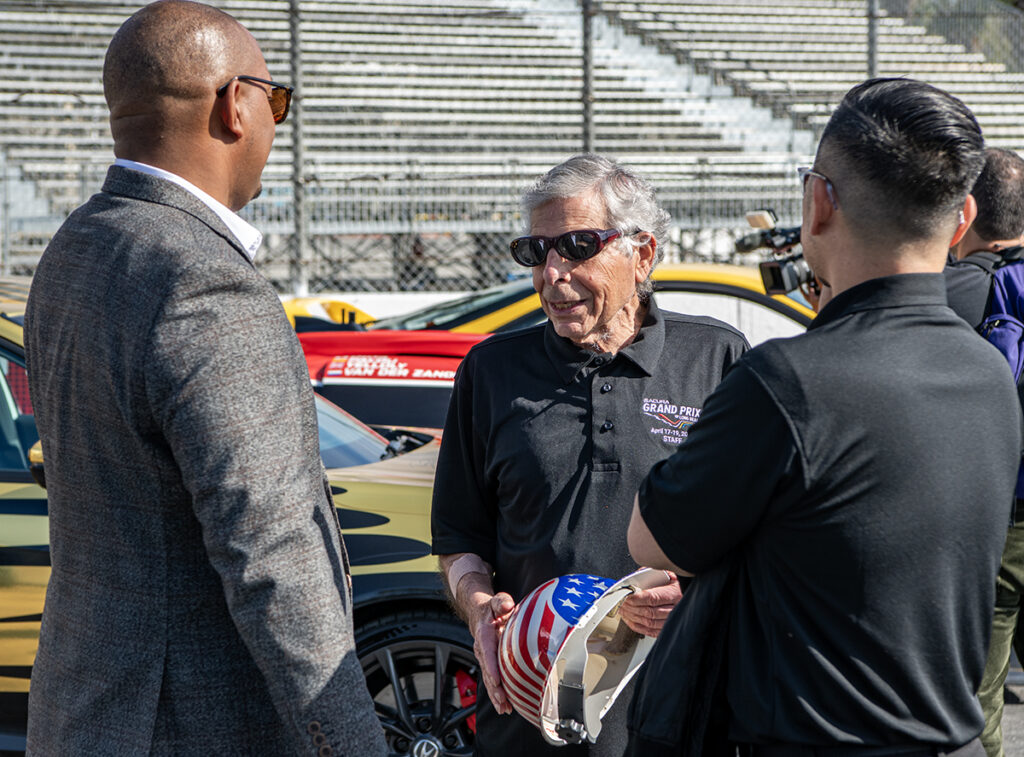
His parents grounded him, taking away his keys for a time, hoping — as it would with most teens — that it would deter him from doing it again.
“I don’t think it gave him any pause at all,” Bob Michaelian said. “They were trying to do the right thing, for sure, but I’m sure that went in one ear and out the other.”
By 18, Jim Michaelian nearly lost his license. His speeding habits followed him to a Santa Monica courthouse, where a judge reviewed his case and asked the young man, simply, why he shouldn’t be jailed.
He made the judge an offer: He would get rid of the Impala and replace it with a 1962 Volkswagen Beetle. The judge took the deal.
And while the Impala hadn’t lasted five years, the need for speed Jim Michaelian had continued through his life, into professional racing and later as the head of the Grand Prix of Long Beach.
In his 51-year tenure, first as its controller, then chief operating officer and president, Jim Michaelian built an enduring legacy that skirted bankruptcy, bitter feuds between racing leagues, the exodus of Formula One, the 2008 financial crisis and a global pandemic to grow the race into one of the most recognizable sporting events in the world. His career was capped with a massive deal to sell the Grand Prix to Penske Entertainment in 2024, saying at the time the sale represented “a new era for us, a new dawn.”
In his later years, Jim Michaelian would say he had accumulated more than 100 speeding tickets over the course of his life. It was an expensive habit, he joked, one he didn’t waste on left turns.
His passion took him across the world in a 33-year racing career: racing Firebirds in Florida, Porsche in Nürburgring and other sports cars across Portugal, France, the Arab Emirates and Italy. He raced even after he lost his eye to cancer in 2001, the same year he took the helm of the Grand Prix, and continued competing well into his 70s.
But speed, he said, was something embedded in him — something that had started to build on that Fresno farm, scooting around in the dirt.
Jim Michaelian died on March 21 at the age of 83 of a heart attack, according to his son. Those close to him say he died in his office, as he was preparing for this year’s 51st Grand Prix — his last before handing it off to incoming CEO Jim Liaw.
A funeral is scheduled to take place from noon to 2 p.m. June 13, a Saturday, at Cottonwood Church, 4505 Katella Ave., Los Alamitos.