

This article was originally published by LAist on March 26, 2026.
The International Olympic Committee will prohibit transgender athletes from participating in women’s sports, starting at the 2028 Summer Olympics in Los Angeles.
The new policy, approved by the IOC’s executive committee Thursday, requires all athletes to undergo a genetic test to compete in women’s sporting events at the Olympics.
The move comes as transgender athletes’ participation in sports at all levels — from youth athletics to professional competition — faces intense scrutiny and often partisan debate, including in communities in California.
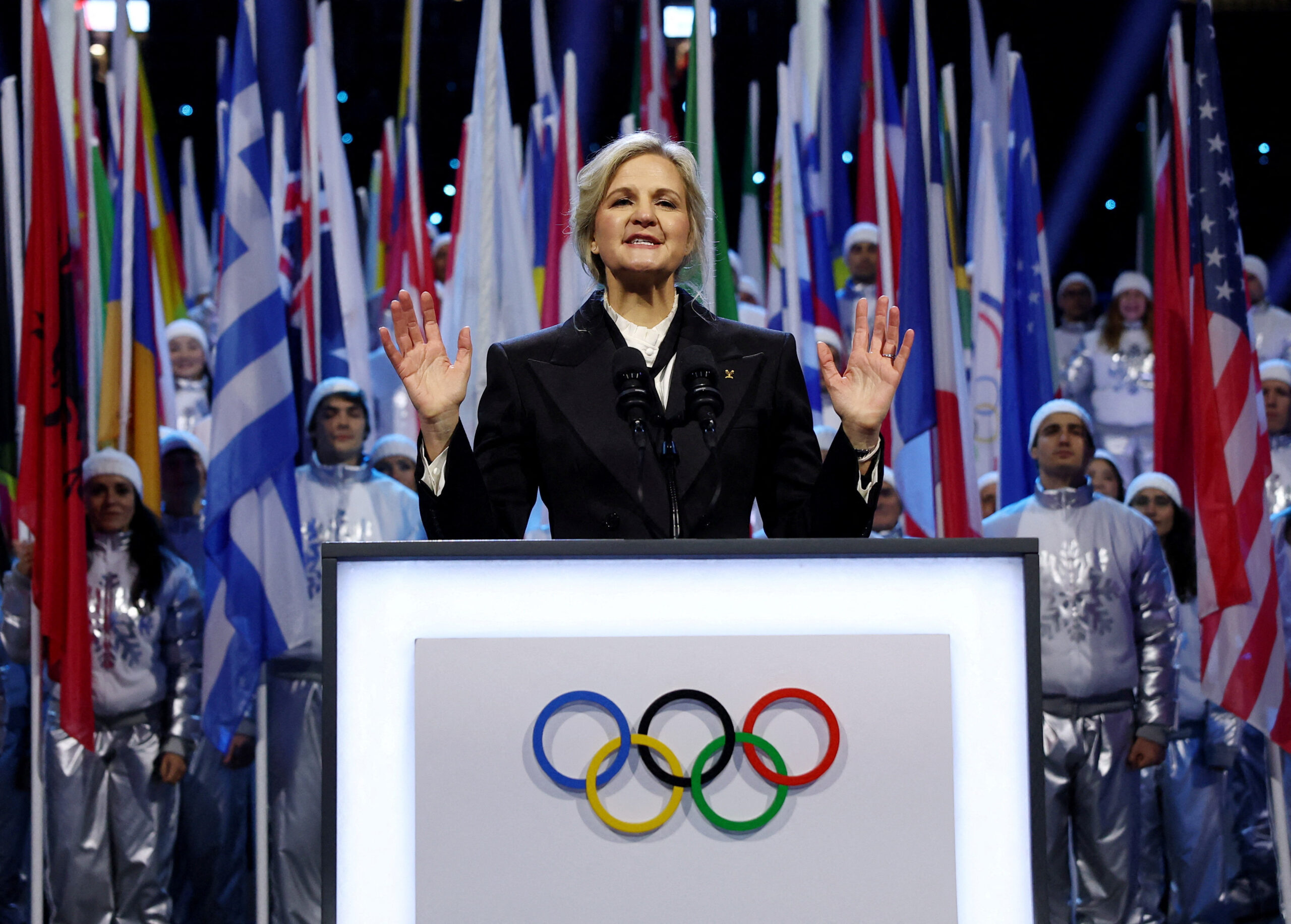
“At the Olympic Games, even the smallest margins can be the difference between victory and defeat,” IOC President Kirsty Coventry said today, announcing the ban. “So, it is absolutely clear that it would not be fair for biological males to compete in the female category.”
The number of transgender women competing in international sporting events like the Olympics is estimated to be tiny, according to the Williams Institute at UCLA Law, a research center focused on sexual orientation and gender identity law and public policy. The push to bar trans athletes from girls’ and women’s sports has picked up as a raft of new policies in the U.S. target the rights of transgender people.
The Trump administration has ramped up efforts to keep trans athletes out of women’s sports through an executive order and legal action, including a lawsuit against California for allowing trans girls to compete in girls’ school sports.
“ It is basically the IOC bowing down to the pressure on its body by the federal government, and particularly Donald Trump,” said Terra Russell-Slavin with the Los Angeles LGBT Center, responding to the new policy on Thursday.
About the new policy
The new Olympic policy limits participation in the women’s competitions to “biological females” in order “to ensure fairness, safety and integrity in elite competition.”
The IOC had previously allowed individual sports federations to set their own rules for trans athletes — but the topic became a huge focus of controversy in Paris in 2024, when conservative commentators questioned the sex of two female Olympic boxers, including gold medalist Imane Khelif, kicking off an international firestorm.
The policy change faced immediate criticism from some women’s groups and LGBTQ organizations.
“By mandating sex testing and excluding transgender and intersex women from competition, the International Olympic Committee is embracing a policy that invites confusion, stigma and invasive scrutiny rather than clarity or safety,” Brian Dittmeier, director of LGBTQI equality at the National Women’s Law Center, said in a statement.
Dittmeier also said the decision would “trickle down” to school sports and discourage young athletes. According to a recent survey by the L.A.-based Trevor Project, less than one in three young LGBTQ people reported participating in sports. Many cited fear of discrimination as a barrier.
The policy will require all female athletes to do an SRY gene test to determine if a “Y” chromosome is present. According to the IOC, with “rare exceptions,” no athletes who test positive will be able to compete in women’s sports at the Olympics.
Groups respond to new rule
InterACT, a group that advocates for intersex youth, said the IOC’s new required genetic test discriminates against intersex athletes — athletes whose sex characteristics don’t fall into the binary categories of male or female.
“Sex testing invades all women’s privacy, forcing them to give up their personal medical and genetic information for the IOC to determine if they are ‘woman enough’ to compete,” Erika Lorshbough, interACT’s executive director, said in a statement.
Some groups in California celebrated the change, including the California Family Council, a conservative and religious advocacy group that is pushing the California Interscholastic Federation, California high school’s governing body for sports, to ban trans youth from girls’ sports.
“We’re going to see that reflected in the Olympics, which will be coming up in L.A.,” Sophia Lorey with California Family Council said in a video on Instagram about the IOC’s new policy. “So it’s going to be interesting to see how this plays out.”
Russell-Slavin with the L.A. LGBT Center said Olympic organizers and local politicians should respond to the ban by affirming their support for trans people in Los Angeles.
“ The fact that the policy will be implemented for the first time in Los Angeles is also at direct odds with our values as a city,” she said. “I feel very clearly that one of the things that makes Los Angeles so great is our diversity and our inclusion, and this is the opposite.”