

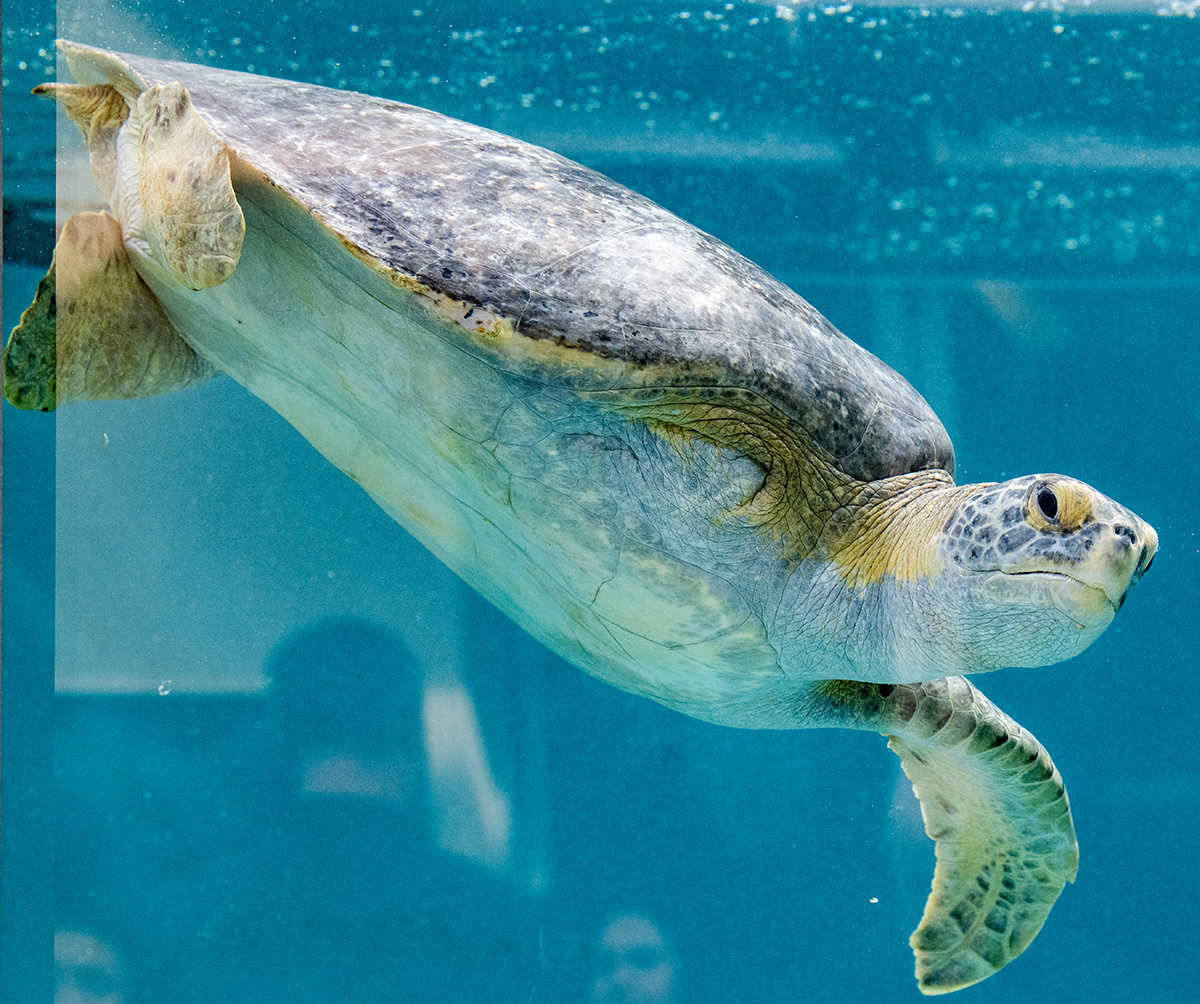
The turtles at this waterfront hospital have been hit by boat propellers, snarled in fishing nets, attacked by sharks, stricken with tumors and lost flippers.
Or, as their veterinarian puts it, they’ve had a heck of a lot of luck to still be alive.
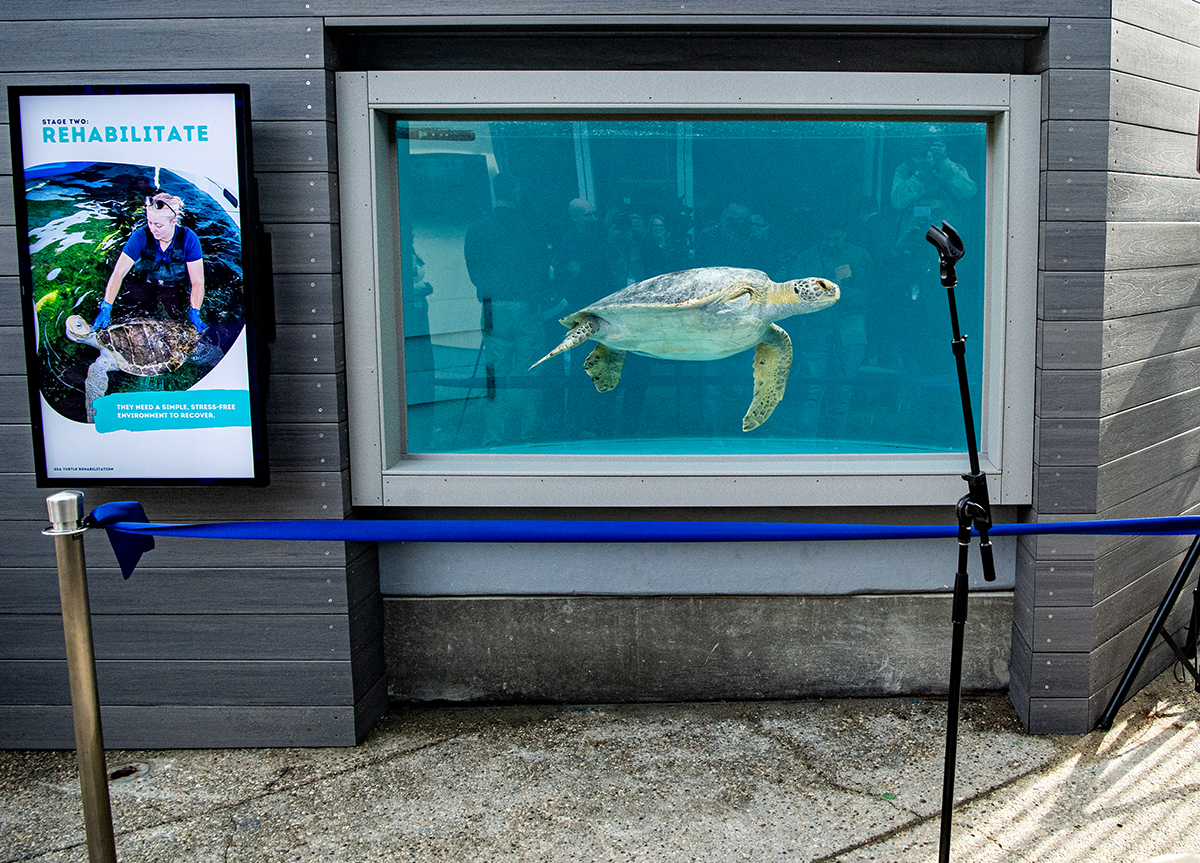
The Aquarium of the Pacific on Wednesday unveiled the expansion of its sea turtle rehabilitation center. It adds a 4,000-gallon tank that staff say will double the site’s capacity, and give visitors a view of the process through a newly opened exhibit
Dr. Lance Adams, the aquarium’s lead veterinarian, said turtles tended here can come from anywhere along the California coast or plucked out of waterways across Los Angeles County.
Locally, they are found in Alamitos Bay and Marine Stadium, among the outflow of the Los Cerritos Wetlands, or traveling upstream through the San Gabriel River.
Many that arrive on the coast each summer to mate and nest often battle natural and human-made threats.
Most injured turtles are never spotted and die at sea. The fortunate ones can sometimes only float, with spinal cord injuries causing paralysis. Some have the bite marks of a shark on their shells. Some are hooked on fishing wire, entangled in trash along the river or stranded on the beach.
The ones lucky enough to be found are transported to one of the few rehabilitation centers in California, including Monterey Bay Aquarium, Sea World in San Diego or here in Long Beach.
From there, the first order of business is restoring their health. Public tours will display the areas within a fin’s reach to where the turtles are treated, fed and exercised.
Across from the pool and through a glass pane wall is the aquarium hospital where staff will operate on animals in one of several medical treatment rooms.
“They’re treated for any diseases or malnutrition, [and we] make sure the animal can swim and forage normally,” Adams said, adding this can involve X-rays, blood work and surgery. A typical turnaround for a turtle’s recovery can take between a month or two for minor injuries up to several years for a severe case.
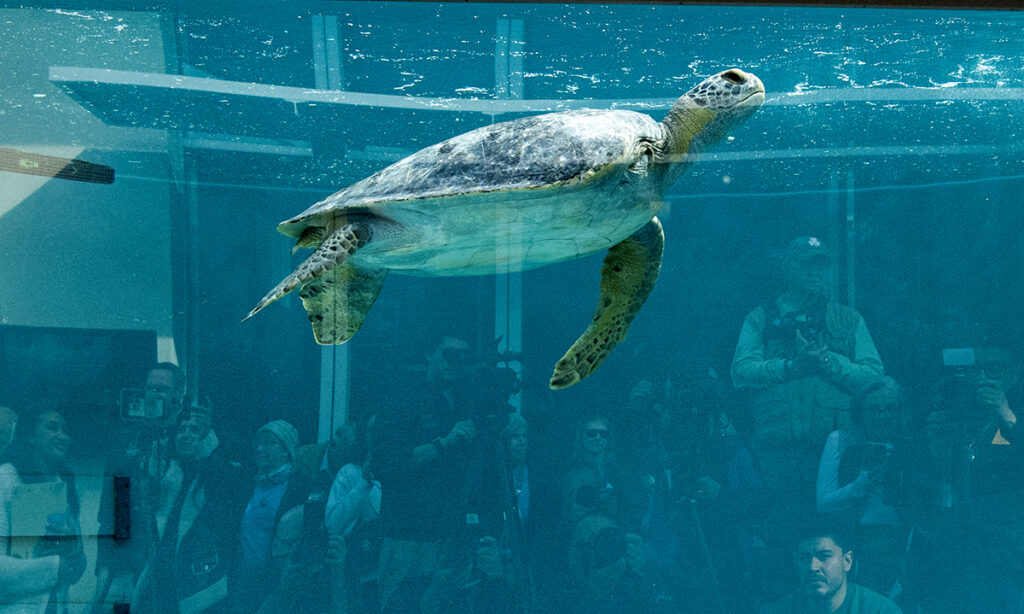
On this particular day, an 85-pound sea turtle named Porkchop is near its eleventh month in rehabilitation. Discovered last March with a fishing line wrapped around its flipper and a hook through its throat, the turtle required multiple surgeries and the amputation of its front-right flipper.
Those rehabilitated are released back into the wild, in an area near other turtles, far from humans, and warm enough to survive (above 65 degrees).
As it nears Porkchop’s time to leave, staff earlier this month welcomed a new, 250-pound turtle to its flock, found entangled in a fishing line weighed down by shopping carts in the San Gabriel River.
“It had similar but slightly less severe flipper constriction injury, and we are working to try and help this sea turtle keep a flipper,” Adams said.
Despite the past illness and injury, this is a place of happiness.
It’s important to make this process public, he added, saying it establishes “a greater bond” between the visitors and the animal far better than any brochure or speech on conservation.
“I think it gives a good demonstration of our commitment to the stewardship of animals, conservation and through care while they’re here at the Aquarium,” Adams said.