

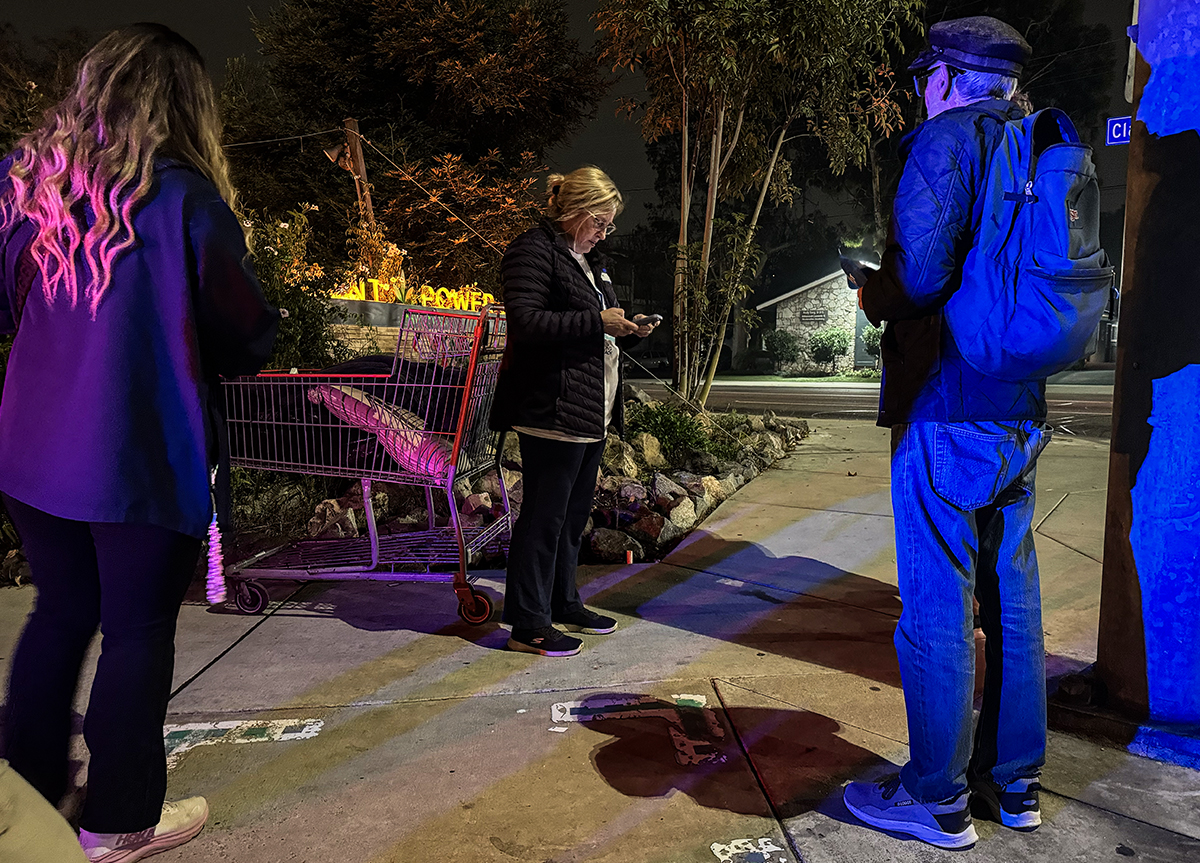
Approximately 300 volunteers across 70 teams conducted a count of homeless people in Long Beach, “the biggest turnout we’ve ever had,” said Mayor Rex Richardson.
Richardson addressed the volunteers who gathered prior to 5 a.m. on Thursday, before they dispersed across the city to administer surveys and distribute 7-Eleven gift cards and hygiene kits. “It’s super important that we continue our commitment and fidelity to data,” he said.
Last year’s count identified 3,595 people experiencing homelessness, and data from Thursday’s count will likely be released in the spring, according to Paul Duncan, the city’s homeless services bureau manager. The data will be used to evaluate the effectiveness of Long Beach’s homeless services and help qualify them for grant funding.
A team of volunteers in the Park Estates neighborhood counted four unhoused people, including Art, a guitar player unaware of the Multi-Service Center, the city’s hub for homeless services. He sleeps wherever he can find cover and added, “wherever I go, I usually get chased off.”
Volunteers deployed to the Westside South neighborhood, north of the Port, counted approximately 10 people sleeping on the street and at least double that number living in cars and RVs. Heather Filbey-McCabe, a volunteer who works with Mental Health America of Los Angeles, said she saw significantly more people living in makeshift encampments, tents and cars in a nearby area last year — so many that her team called in reinforcement volunteers to complete the count and surveys. She said she was “shocked” to see far fewer this year.
Nicolas Mendoza, who emerged from a dumpster when volunteers arrived and joked that he slept on his bicycle the night before, speculated that the streets were clearer because city officials had recently collected identification information from the neighborhood’s unhoused population in an attempt to get them into housing.
Todd McQuiddy, a 70-year-old auto-body-shop worker, said his path to homelessness began with divorce. Now he lives in cars and a backyard, finding community with his five cats and people sleeping in the area. “This block is a tight group,” he said. When volunteers arrived, he had just returned from Jack in the Box with breakfast sandwiches for two friends who had spent the night on the sidewalk.
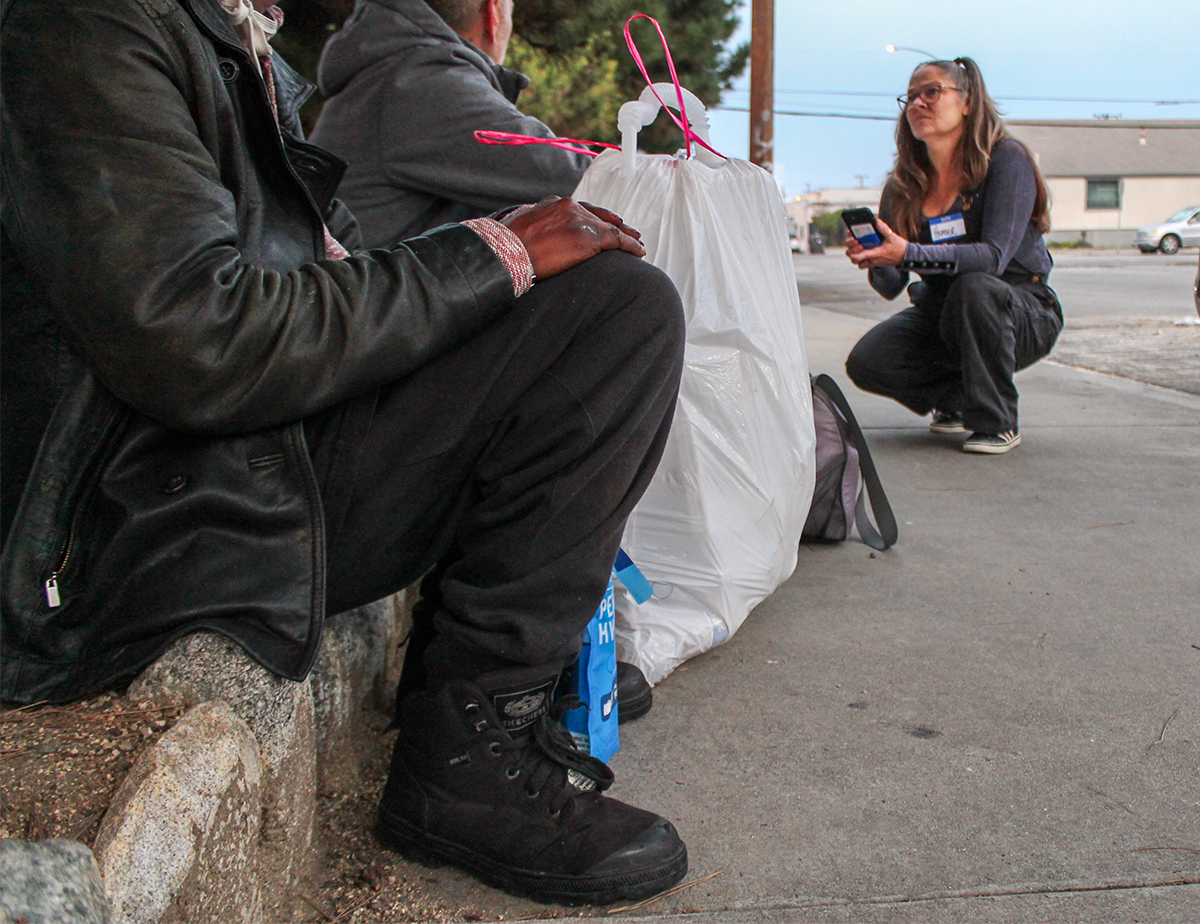
One woman, age 65, said she lost housing after her grandson died by suicide. She had been a substance abuse counselor but could not continue that work because she uses cannabis, she said. Now, she hopes to work with kids whose parents have attempted or died by suicide. Though she’s looked into shelters, “everyone is full,” she said.