

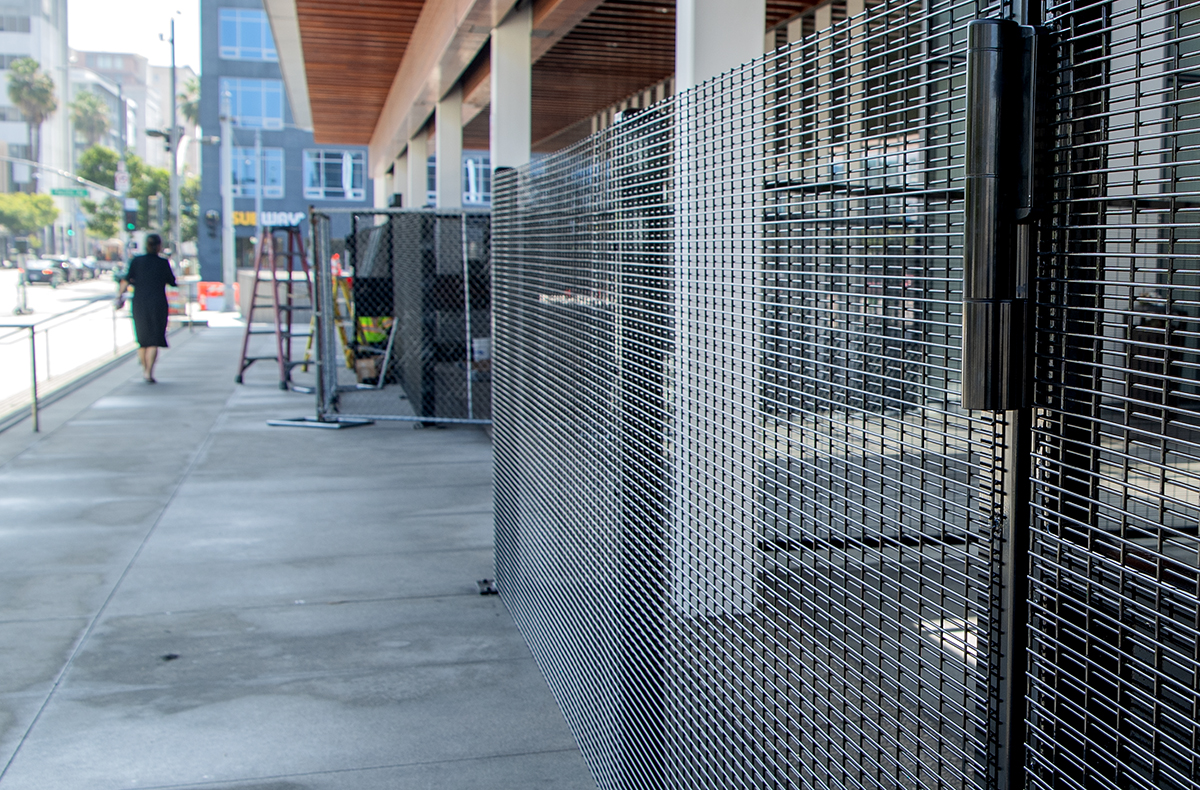
How is a fence going to help solve homelessness? That’s the question a citizens’ advisory committee had for the city of Long Beach this week.
For the past couple of months, crews have been installing a new, permanent fence around the Billie Jean King Main Library in downtown, blocking off an outdoor terrace where people frequently pitch tents, pile belongings or sit in the shade when they have no other shelter.
It’s now nearly done. On Saturday, there’s an unveiling ceremony planned where the mayor and others will celebrate the terrace as a new community space for book sales, crafts, games and kids programming like storytimes.
It’s a way to “make our Downtown more welcoming for all,” the area’s council member, Mary Zendejas, said in a statement.
But members of Long Beach’s Homeless Services Advisory Committee on Monday said the fence sends the opposite message. They argued it’s closing off a public space, cutting off access to one of the few shady spots downtown and doing nothing to actually address Long Beach’s homelessness problem — all for a price tag of about $790,000.
“It just makes no sense to spend that kind of money,” committee member Patricia Scott said. “For what? What are they truly accomplishing for that money?”
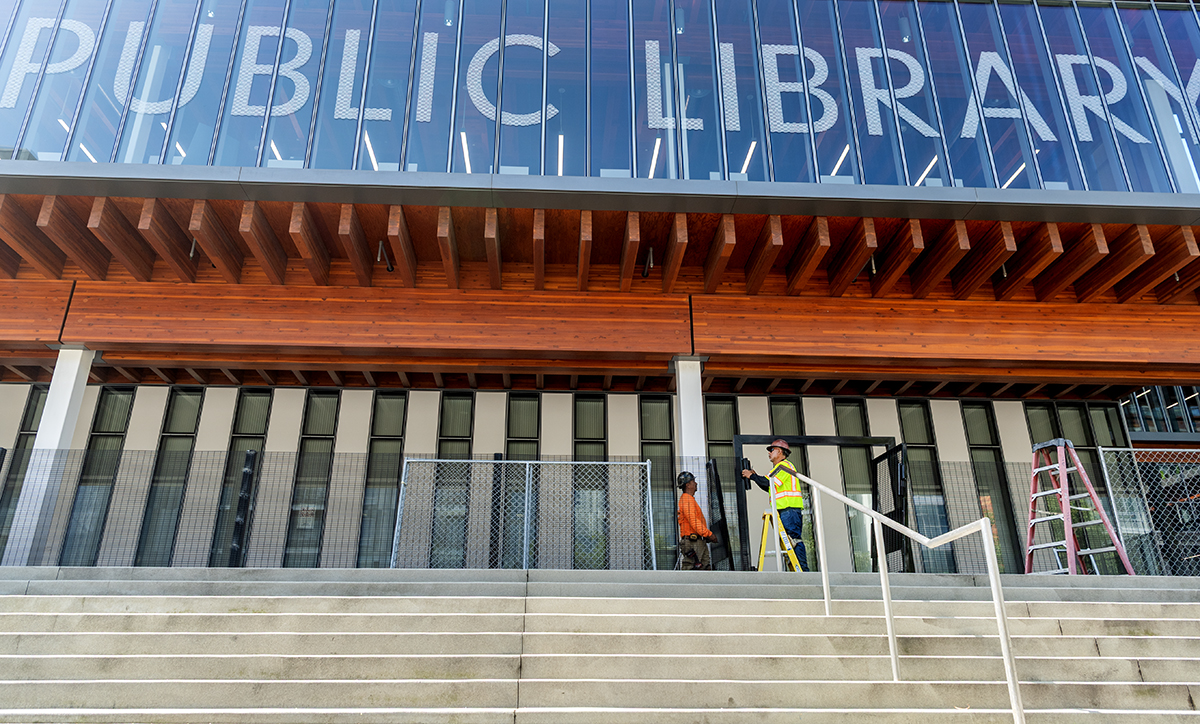
She and the two other volunteers on the committee expressed frustration at their meeting Monday. They said they weren’t consulted on the fence and had no opportunity to object or suggest alternatives.
The fence does nothing to “address the human needs of our unsheltered neighbors,” said Tamika Wagner-Osio, who attended the meeting and spoke during its public comment period. Wagner-Osio founded a nonprofit that provides temporary, emergency housing and co-chairs the city’s Continuum of Care, a network of organizations that works to end homelessness.
This isn’t the first time Long Beach’s main library has become a symbol of its difficulty in reducing homelessness. In 2022, as library staff struggled to manage disruptive patrons and people showing up with escalating mental health problems, the $48 million facility was temporarily closed.
Since then, the number of people living on Long Beach’s streets has continued to grow. In its last count, volunteers tallied 3,595 homeless people locally, a 6.5%increase and the city’s highest total in more than a decade.
The library and its terrace still attract many people who have nowhere else to go.
Fencing it off “is dumb,” said Patrick, a 59-year-old man who said he’s been homeless since his RV was towed in Carson City, Nevada, a few months ago. He declined to give his last name, fearing he could be targeted by police, who he says he’s been harassed by in other cities.
It’s not clear how city officials ultimately decided a fence was necessary.
When they originally announced the plan to enclose the library terrace, they avoided saying it would be fenced off — instead suggesting plants, posts or landscaping could be used to block off space for a kids’ area.

Members of the Homeless Services Advisory Committee did not hesitate to call it a fence or label it a waste. The money would’ve been better spent, they said, on a mobile shower unit that they’ve been urging the city to buy and set up downtown. But, they said, they were told the city couldn’t afford it.
Committee member Scott said it seemed like city officials didn’t want their input, despite appointing them to serve on the advisory board.
“Why am I sitting here doing this,” she asked, “coming up with all of these ideas that never get produced?”
She didn’t get an answer Monday. There were no city representatives at the meeting.
In a statement provided shortly after this story was published, city spokesperson Stacia Momburg said, “The Homeless Services Advisory Committee does not typically weigh in on library operations or operational decisions related to library programming and use of library spaces.”