

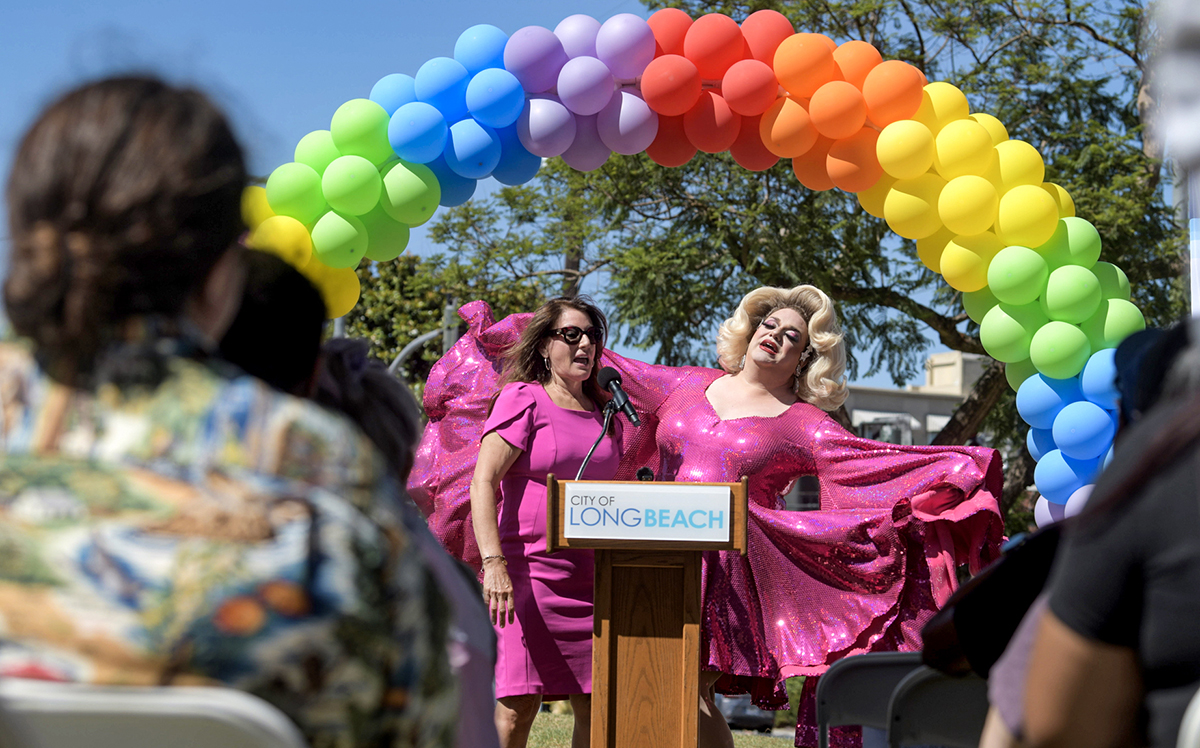
The city of Long Beach on Wednesday unveiled early mockups for new lighting, historical markers, murals and a plaza that will mark the neighborhood along Broadway as a cultural district for the LGBTQ+ community.
The district, designated by the City Council in 2024, will stretch 1.4 miles, between Alamitos Avenue and Temple Avenue, in an area that’s historically been home to many gay bars and other LGBTQ-focused businesses.

Right now, the city does not have enough money set aside to fund a redesign of that whole stretch and initially focus on two blocks between Hermosa and Junipero avenues using $3.3 million they’ve so far socked away, Public Works Department spokesperson Jocelin Padilla said.
In the initial phase, the city will add color-changing festoon lighting between Hermosa and Junipero Avenues, wraps and banners on streetpoles, and murals. There will also be a Pride Plaza, situated at the corner of Junipero Avenue and Broadway, with historical markers and educational signs that draw on the city’s LGBTQ+ history.
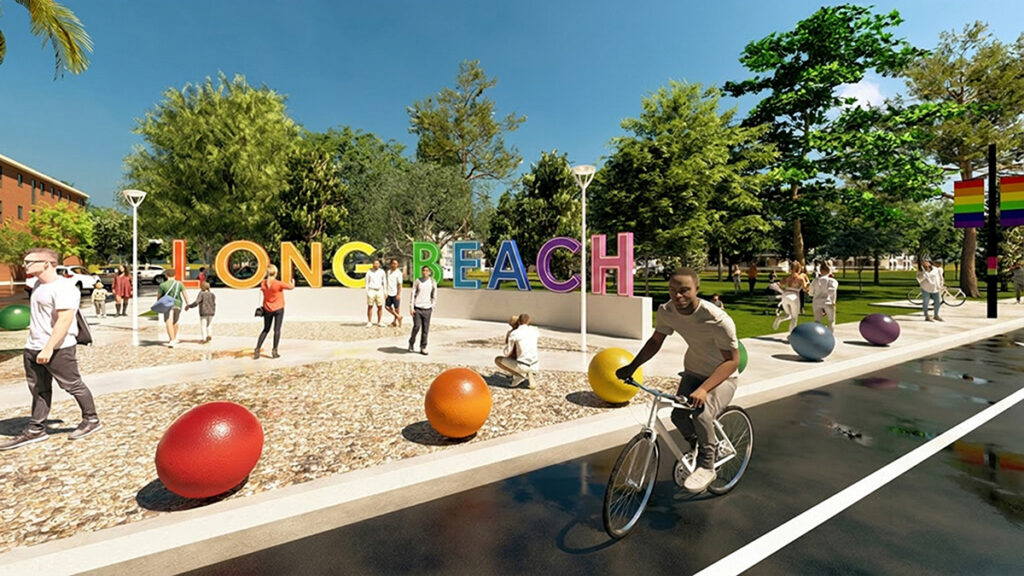
Designs for the site, officials say, are based heavily on existing districts in San Jose, Chicago and Montreal.
Padilla said there is no date set yet for the work to start, though the city hopes to begin in early 2027 and finish sometime in 2028. A survey was launched this week to garner feedback on the proposed designs. Early renderings of the plaza, Padilla said, were intentionally vague, so that people could give further input on how it should look.
Future phases will look to add foliage, decorative crosswalks, plaques, signage and construct a memorial to those who died from the HIV/AIDS epidemic. It would be similar in design to memorials built in New York and Chicago.
This comes as multiple city-run surveys and workshops in October 2022 and 2023 found that many feel the area is poorly lit at night and doesn’t have enough tree shading in the day. There was also a high demand for murals, parking spaces and bike lanes.
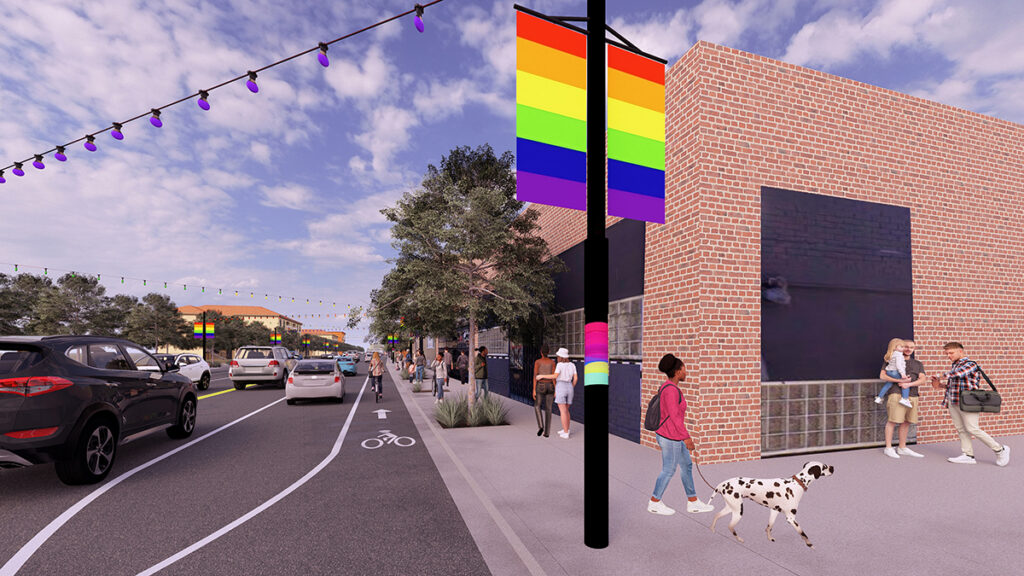
City planners say the location, which includes Bixby Park near its center, is best suited for the district given its density of LGBTQ+ shops and bars, and as the location of the city’s yearly Pride parade.
“This corridor has long been a place that served as a home for gathering space and a source of pride for all the LGBTQ+ community,” said Councilmember Cindy Allen. “This corridor carries a powerful history of community advocacy, celebration, business, and resilience.”
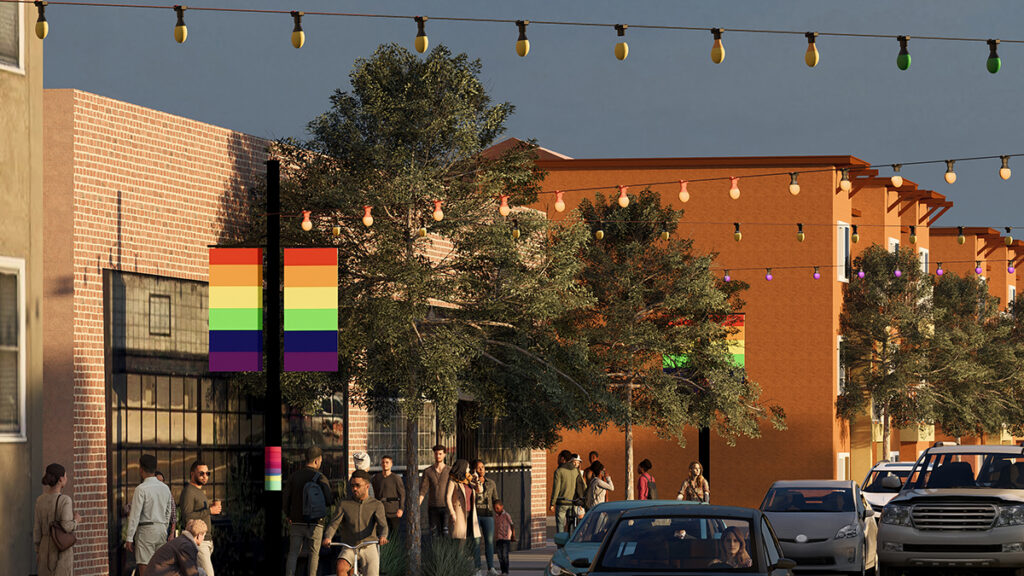
“Together we are building a district that reflects your voices, honors your history, supports local businesses, and celebrates who you are, not just during Pride, but every single day,” Allen said.
You can see more renderings and give feedback here.