

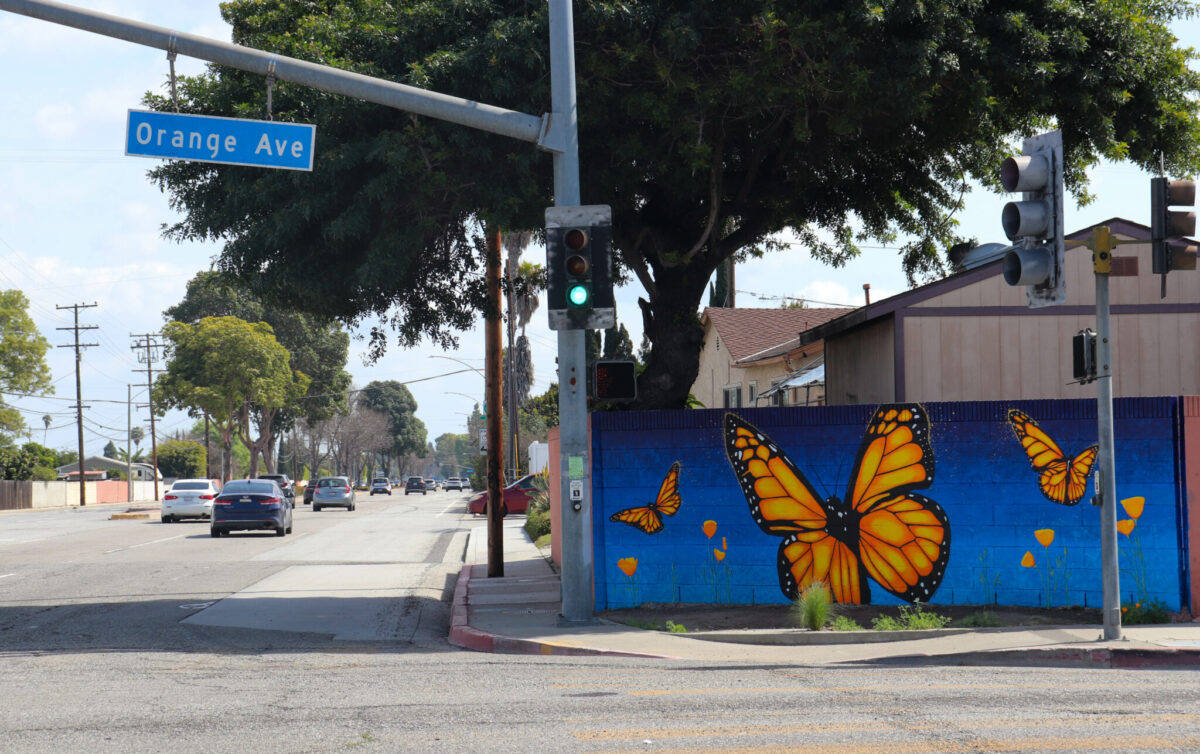
Cyclists in Long Beach scored a victory at the City Council meeting Tuesday. In a unanimous decision, the council approved the next phase of an 8.28-mile bike route along Orange Avenue, a busy north-south thoroughfare that will be overhauled with protected cycling lanes and intersections, upgraded crosswalks, new bus stops and extensive sidewalk repairs.
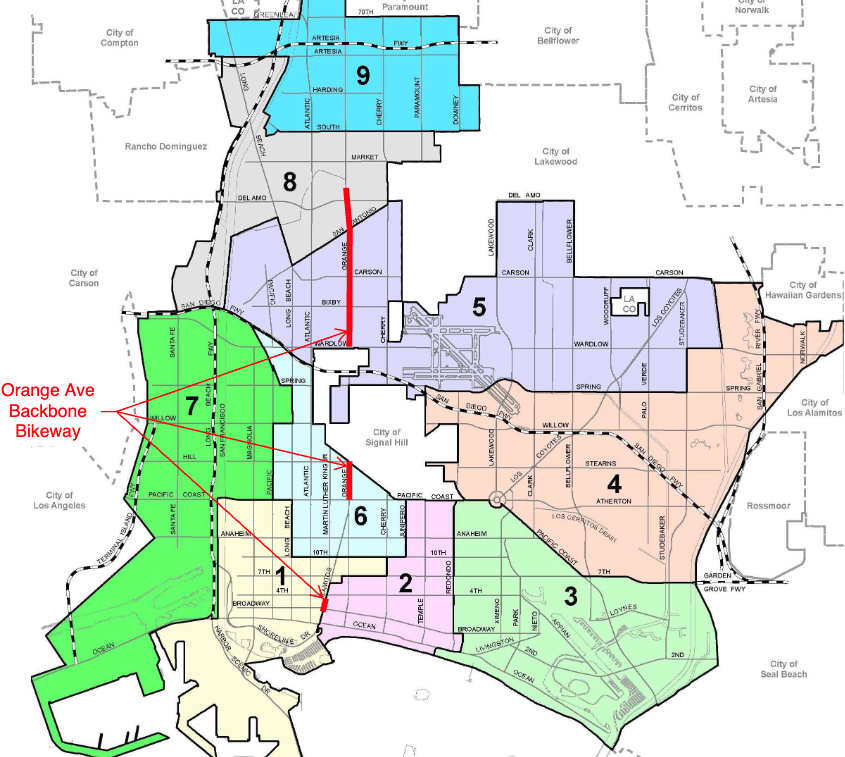
The project, which began in 2017, is more than halfway finished. This phase will cover roughly another third, from 52nd Street to Wardlow Road and Hill Street to Pacific Coast Highway, leaving the last 16% to be built in future phases, said Public Works Director Josh Hickman.
If they do not run into any unforeseen hitches, construction should start this fall and finish by fall 2028. Hickman added they will have more information on road closures then.
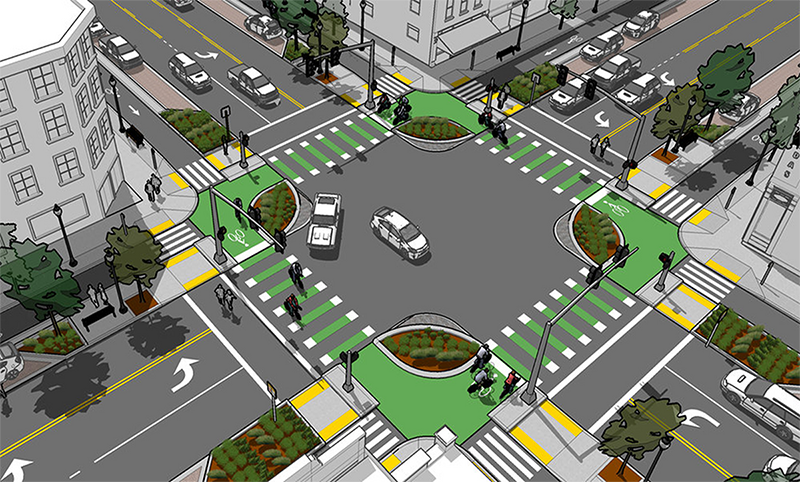
Once complete, this phase will bring 2.66 miles of upgraded bike lanes — some parts divided by a sharrow, other parts with a barrier — as well as five protected intersections at major cross streets, 10 upgraded crosswalks with flashing beacons, 15 new or relocated bus stops and 2.5 miles of sidewalk addition or repairs.
At the request of residents, spot repairs will be made using concrete.
Tara Riggi, president of the California Heights Neighborhood Association, asked that the project minimize the amount of green paint used in striping between Bixby Avenue and Wardlow Road, and that spot repairs use concrete and not asphalt slurry seal, to preserve the neighborhood’s original aesthetic.
“We believe that safety improvements and historic preservation can coexist when projects are thoughtfully designed and implemented,” she said.
The project skips a 1.47-mile segment of road that cuts through the city of Signal Hill.
There was urgency to get this section of the project approved, considering nearly half of the $29.4 million budget — a $13.2 million Caltrans grant — expires next month if it’s not allocated.
Marked as a project the city wants finished by the 2028 Olympics, the bikeway is meant to alleviate a sense of dread and discomfort faced by cyclists and pedestrians zigzagging the street each day.
Last year, 32 people were killed while walking, biking or riding an e-scooter in Long Beach — more than the 29 people murdered that year. Orange Avenue is flagged as one of the city’s most dangerous streets. It’s a long and fast arterial, running through multiple neighborhoods with narrow shoulders, poorly lit intersections and too few marked crosswalks that has landed it in the city’s high-injury network.
In past coverage by the Long Beach Post, residents have flagged particular issues along Orange Avenue, including the especially dangerous stretch between Seventh Street and Hellman Avenue, and the traffic signal at 36th and Orange Avenue, where drivers speed through to make the light.
Councilmember Megan Kerr said her office has heard from multiple residents who feel unsafe crossing roads, adding she hopes the plan will “make Orange Avenue a safe street for all.”
Reducing all types of crashes, city experts say, is possible if Long Beach is willing to dramatically reshape streets by adding medians, widening sidewalks and putting in dedicated bus and bike lanes, at the expense of car lanes.
Long Beach has yet to see success on that front. Despite a goal of eliminating traffic deaths by 2026, there were 53 deadly car collisions last year, the highest in a decade.