

This guide was produced in partnership between the LAist and Long Beach Post newsrooms. See all our guides at LBPost.com/elections.
Did this guide help you? Consider donating to support our nonprofit newsroom.
What’s at stake in this race
The City Council is Long Beach’s main legislative body. Its nine members are among the most powerful people in the city, deciding how best to spend more than $3 billion each year on key services such as public health, streets and public infrastructure, law enforcement and the Fire Department.
City Council members have the power to change existing laws in the city and oversee the effectiveness of departments and specific programs. Through zoning and regulations, they directly influence housing and commercial development.
Individual councilmembers also act as advocates for the geographic area of the city they represent and have small individual budgets to support local festivals and nonprofits. Individual council offices are often residents’ first and best point of contact when there’s a neighborhood problem that requires the city’s attention.
What do Long Beach City Council members do?
- Influence and vote on the city budget that funds city departments, major Public Works projects and more.
- Pass or repeal local laws, called ordinances, that can then be signed or vetoed by the mayor.
- Pass or adjust city fees and fines.
- Hire and fire the city’s top executive, the city manager.
- Set the city’s agenda and priorities through directions to the city manager.
You might know them from
City Council members’ decisions have a direct impact on residents’ lives. In their most recent term, they have:
- Lowered speed limits on dozens of city streets and picked where to place automated speed cameras.
- Mandated minimum staffing for self-checkout lanes at grocery stores in Long Beach.
- Allowed cannabis sales at some special events.
- Allocated money for a deportation defense fund designed to protect immigrants.
- Voted to participate in a lawsuit against the Trump administration seeking to block roving immigration raids.
- Made decisions on how to spend tens of millions of dollars on homelessness programs — including abandoning a “tiny homes” project and switching to a new shelter provider after an audit raised concerns about the old contractors’ billing practices.
Here are some things they don’t do
City Council members don’t control the Long Beach Unified School District or directly influence the city’s independent municipal agencies, including the airport, port, utilities department or Long Beach Transit, which operates the local buses. Council members also have limited power on their own, needing a majority City Council vote to pass ordinances, approve budgets and set policy.
Outside their own small offices, council members cannot hire or fire staff other than the city manager and police oversight director, or direct individual staff members what to do.
Council members are elected to four-year terms and are limited to three terms. It’s a part-time position, and they are paid a little more than $50,000 a year.
The City Council cannot override state or federal law. Ordinances passed must not conflict with California or U.S. law, regardless of local preference. And the city charter — essentially our local constitution — cannot be amended without voter approval.
Fast facts about City Council District 1
- The District 1 council office, which represents downtown Long Beach and some surrounding neighborhoods, has about 26,000 registered voters. Despite this, it historically has had some of the lowest voter turnout citywide.
- Incumbent Mary Zendejas won the seat in 2022 with less than 2,600 votes. Nevertheless, the district has been a launching pad for powerful politicians, including current U.S. Rep. Robert Garcia and state Sen. Lena Gonzalez.
- It’s home to some of Long Beach’s most recognizable sights, including the Queen Mary and the Aquarium of the Pacific.
- The district also suffers from some of the highest pollution rates in Long Beach due to its closeness to the port complex and 710 Freeway.
What’s on the agenda for next term
Long Beach’s budget deficit, projected at over $60 million next year, will be a major topic for all councilmembers, who will have to decide on potential cuts.
Homelessness continues to be a major issue, with frequent discussion about encampments along the Los Angeles River, in Lincoln Park and around the Billie Jean King Main Library.
Olympic preparation, including several events in the downtown area, will also undoubtedly be on the agenda.
What it takes to win
Any candidate who earns more than 50% of the vote in the June 2 Primary wins outright. If not, the top two vote-getters advance to a general election Nov. 3.
The candidates for Long Beach City Council District 1
When information is missing: Some candidates did not reply to our requests for images. Some did not have a campaign website and/or list of endorsements available online at the time of publication. We will update this guide as more candidate information becomes available.
Mary Zendejas, incumbent
Zendejas was elected to the Long Beach City Council in 2019. Prior to her role as a councilmember, Zendejas says she served on the Long Beach Transit Board of Directors and with the Disabled Resource Center. She says she was the first person in her family to graduate high school and later went on to get a degree from Cal State Long Beach.
In her own words
According to Zendejas’ website, she has written tenant protections that prevent unfair “substantial remodel” evictions, expanded pandemic “hero pay” for frontline workers and invested in affordable housing projects that prevent displacement. Zendejas says that growing up near the port has helped drive her commitment to “cleaner-air initiatives [and] climate-ready infrastructure.”
More voter resources:
Website: MaryZendejas.com
Endorsements: Rep. Robert Garcia, Long Beach Mayor Rex Richardson.
Full endorsements list here.
Anthony Bryson, restaurant manager
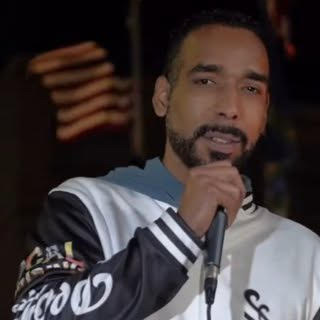
Anthony Bryson says he has been a community organizer in Long Beach for a decade and attended Long Beach City College and Cal State Long Beach. He said as a renter living in the 90813 ZIP code — which he said has the highest crime rate in Long Beach — he believes it’s time for District 1 to have “a councilmember who will show up for renters, workers and families — not for developers and donors.”
He said his role as a community organizer and chef have prepared him to serve as an effective councilmember: “I know how to put aces in places … making sure the right people are where they need to be so that things are executed properly.”
In his own words
Bryson has identified renter protections, non-violent crisis response, environmental improvements and safeguards against ICE as some of his top priorities. Bryson said that recently, he’s volunteered with neighborhood anti-ICE patrols, helping alert residents to immigration raids.
Bryson is also the co-founder of SoCal Uprising — a nonprofit and self-described “rainbow coalition” that organizes demonstrations across Southern California in support of equal rights for all. He said he’s been a longtime member of both Black Lives Matter and the Democratic Socialists of America.
“We need more AOCs, we need more Mamdanis, but we don’t have enough that are coming into these arenas,” Bryson said.
If elected, Bryson said, his first priority would be expanding supportive programs for the unhoused community. This means potentially expanding shelter hours, revising policies to allow families (and pets) to remain together and creating a designated encampment zone — a safe space where “outside city dwellers” can live. Bryson said this outdoor facility could be built in a green space in an area with a dense unhoused population, insulating it with a fence or other protective border and bringing in unarmed police officers to maintain peace for the residents.
He said all these efforts take on new urgency with the upcoming Olympic Games, which will have a significant footprint in Long Beach and attract watchful eyes from all over the world.
“It’s imperative to me that we’re not shuttling out homeless people and that we’re not experiencing mass gentrification to be more appealing while we’re being televised,” he said.
More voter resources:
- Website: BrysonforLongBeach.org
Brock Goleman, trucking business owner

Goleman says he owns a small trucking business, serves on the Citizens’ Advisory Committee for the Long Beach Police Department and is a member of the Coast Guard Auxiliary. He said he was inspired to run for office after experiencing the financial roller coaster of running a small business.
“If something disrupts the economy, I mean, truckers are the first people to go,” he said. “You know, we’re the first people to work real heavy, and we’re the first people to lose our jobs.”
In his own words
Long Beach is in the middle of a financial emergency, Goleman said. If elected, he said he would institute an internal review of each governmental department to ensure that available funds are being spent efficiently and transparently.
One way to conserve funds would be to restore more power to law enforcement — that way, they wouldn’t need to spend as much on additional resources, he said. So he supports giving law enforcement more “discretion” in handling incidents involving complaints about disturbing the peace. As an example, he said that if someone is standing in the middle of the road “with their pants over their head,” instigating fights and drawing a crowd, Goleman thinks police should be empowered to intervene.
He said that as the climate shifts away from what he calls the “anything goes approach” to a “more practical ‘fix things’ mindset,” this is slowly happening. But the LBPD needs to change the hands-off policies it has been operating under, Goleman said, referring to those as policies shaped by past mandates and public opinion.
“In a Democratic stronghold, you don’t want to use violence as a means,” he said. “But you have to change the attitude a little bit to where you know when to be cool and when you can go full stop on being cool.”
When it comes to federal law enforcement like ICE, Goleman said he doesn’t want them in Long Beach and thinks they set back law enforcement “about 70 years.” But he also thinks the city needs a new, “innovative” approach to diplomacy, so as not to antagonize the federal government and risk financial repercussions.
More voter resources:
- Website: GolemanforLCBityCouncil.com
Deb Kahookele, real estate agent/business owner

Deb Kahookele received a bachelor’s degree from Cal State Long Beach with a double major in management and operations management. She moved to Long Beach in 2010 and now works as a real estate agent. She’s an executive board member of Long Beach Pride, which hosts the city’s Pride festival each year, and is the president of the Promenade Area Resident Association.
Kahookele said the issues at play in this election cycle — homelessness, public safety and housing — are the same that have been debated for decades.
“Why is it that we’re here today, still saying the same things?” she said.
In her own words
Public safety is Kahookele’s top priority, she said, and her plans to improve it vary by the neighborhood. For some places, it means installing more lighting on public corridors and recruiting residents to serve as community watch. For others, it requires a tougher stance on homelessness, she said. For unhoused individuals who don’t want to live outside, the city needs to be proactive about getting them into transitional housing. For “drug addicts,” who are resistant to help and continue to engage in illegal activity, police officers need to step in and either arrest them or give them the option to go to rehab, Kahookele said. Either approach gets them off the street.
“We need to enforce the laws that are on our books,” she said. “We’re not.”
Kahookele said some residents don’t even call police anymore because they’re convinced officers won’t respond. She added that some small businesses that have been burglarized multiple times are no longer even repairing their broken windows or doors; they’re just boarding them up with plywood.
Kahookele said this isn’t the image Long Beach wants to project — especially with the upcoming Olympics.
“And we have one shot to make an impression,” she said. “If we lose our tourism here, we’re done.”
More voter resources:
- Website: DebforLongBeach.com
Go deeper:
Lori Logan, retired laboratory technician
At the time of publication, Logan had not responded to our requests to participate in our voter guide.
Logan is a member of the Washington Neighborhood Association. In 2020, she participated in organized marches to call attention to acts of violence in the neighborhood and to pressure local government to address the high concentration of liquor stores in the area.
“Everyone is frustrated because we’re trying to work with the City Council, we’re trying to work with the police, and neither party is doing anything,” Logan told the Long Beach Post at the time.
More voter resources:
- Website: none provided
Tamika Wagner-Osio, nonprofit executive director/entrepreneur
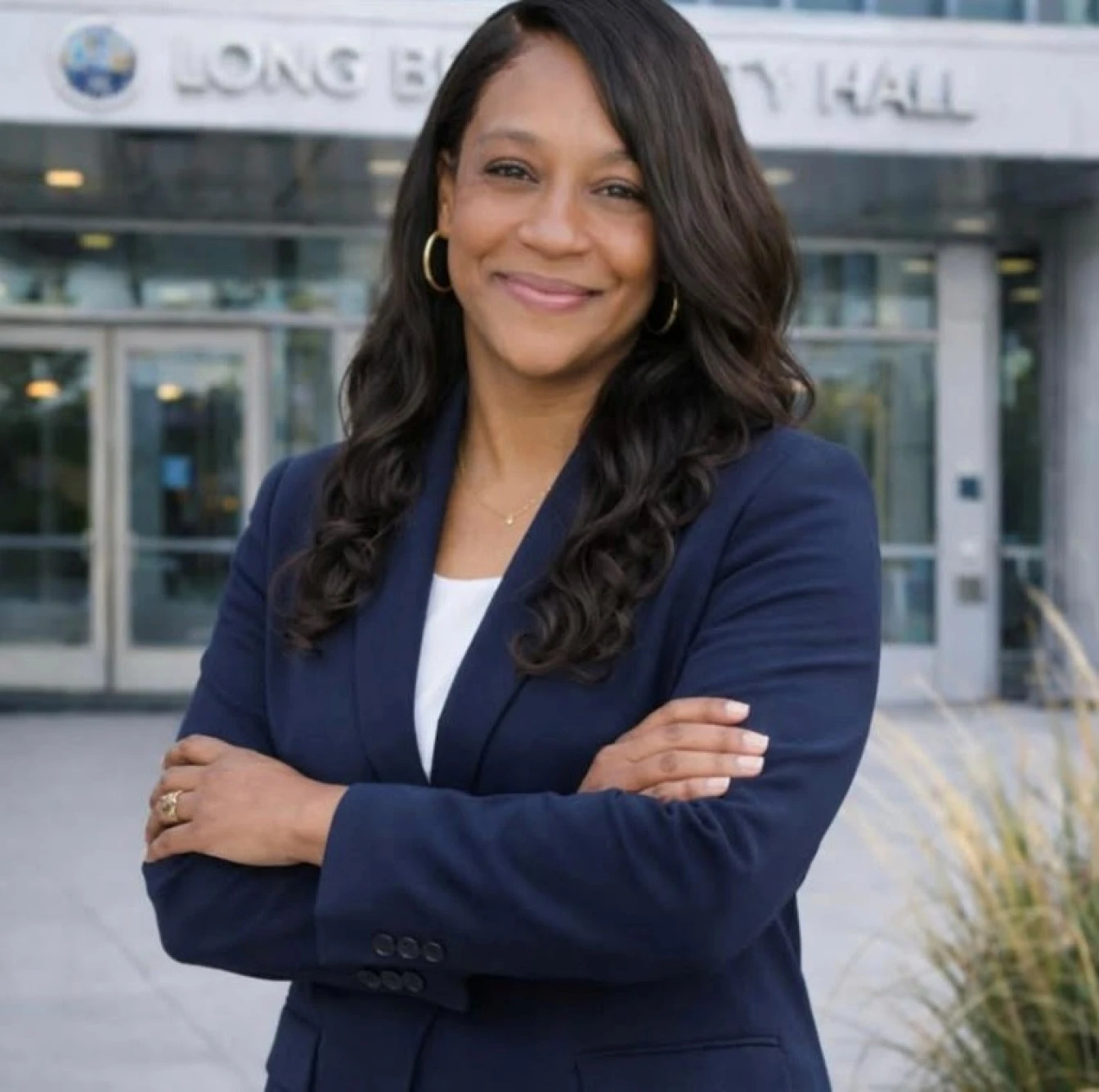
Tamika Wagner-Osio says she’s a single mom who fought her way out of poverty and homelessness, and it’s this firsthand experience that drove her to pursue a life of service and advocacy.
“I know what instability feels like,” she said. “I know what it’s like to be stuck in a failed system.”
So after she and her family found stable footing, Wagner-Osio said she founded Connections for Women, a nonprofit that began by collecting donations for homeless families and evolved into a shelter that provides temporary, emergency housing. Since then, Wagner-Osio also started a therapeutic home for foster youth boys coming out of juvenile detention, and she’s currently a co-chair for the Long Beach Continuum of Care for Homelessness.
In her own words
Wagner-Osio said City Council members are elected, but in reality, they’re also “hired” positions, paid by Long Beach taxpayers. So candidates should have the résumé, references and proven outcomes to get the job done, she said.
“When I hear other candidates … they use the language of ‘We need compassionate care, we need solutions, and we need plans,’ but nobody is talking about their plan of how they would actually do that,” she said.
If elected, Wagner-Osio said she’d first increase shelter space by building on city-owned property in commercial zones. This would create more housing options without affecting libraries, schools and residential neighborhoods.
Wagner-Osio said she’s a “systems builder,” and in fact has already designed a program called SheltrLink to address homelessness in Long Beach. She said it’s a central database where providers can identify available bed space, file incident reports and track the estimated costs of sheltering a person and transitioning them into permanent supportive housing. If implemented widely, Wagner-Osio said it could save the city millions of dollars in duplicative efforts and other inefficiencies in the current system. She said that this same, data-based approach could also be used to streamline the permitting process for small businesses and to lower the barriers to entry for entrepreneurs.
More voter resources:
- Website: TamikaWagnerOsio.com
- Full endorsements list here.
Campaign finance
Independent or outside committees can raise and spend without limits — but they’re barred from coordinating with a candidate.
How to get involved
How to attend a Long Beach City Council meeting
- If you want to contact your City Council member or other local elected officials directly, you can find their contact information here.
- The Long Beach City Council meets most Tuesdays at 5 p.m. in the Civic Chambers at 411 W. Ocean Blvd. You can attend in person or watch online here, as well as on the city’s YouTube channel. You can find the meeting agendas here.
- In order to give public comment, residents must sign up with the city clerk, located on the left side of the room in front of the council dais. If you can’t attend the meeting, you can still leave a public comment online. Here’s more information on how to do that.
- The public comment period for non-agenda items typically happens toward the start of the meeting, but there’s also an opportunity to give public comment for each item on the regular agenda. If there are too many speakers on non-agenda items, be prepared to wait until almost the end of the meeting, which can last hours.