

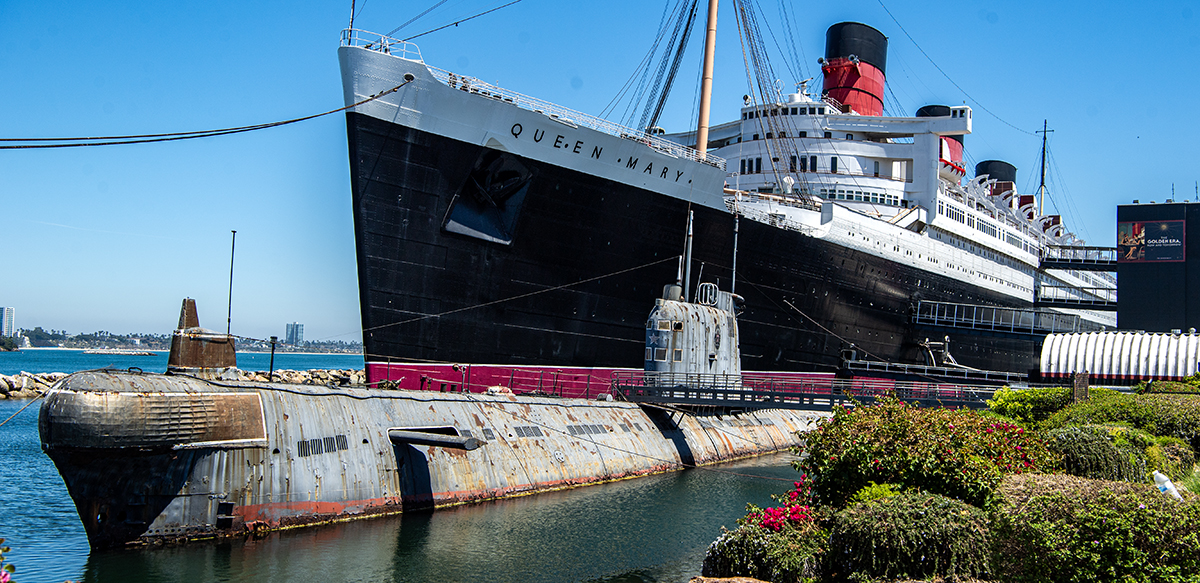
For 22 years, the Scorpion patrolled the Pacific as an attack submarine of the Soviet Navy. For 17 years, it stood guard beside the Queen Mary, welcoming aboard visitors eager to learn about the hidden world of undersea warfare.
Now the sub may be facing its final mission: a one-way trip to the scrap yard.
Long Beach is probing the local market for the possible cost and difficulty of towing the 55-year-old submarine out of the water and to an accredited disposal facility.
It’s not a formal bid request, city officials say, but a request for information — asking qualified ocean towing operators to respond by Sept. 16 with a sense of the scope of work, the permits required and the likely price tag.
If enough qualified vendors respond, the city says it could issue a bid for the job.
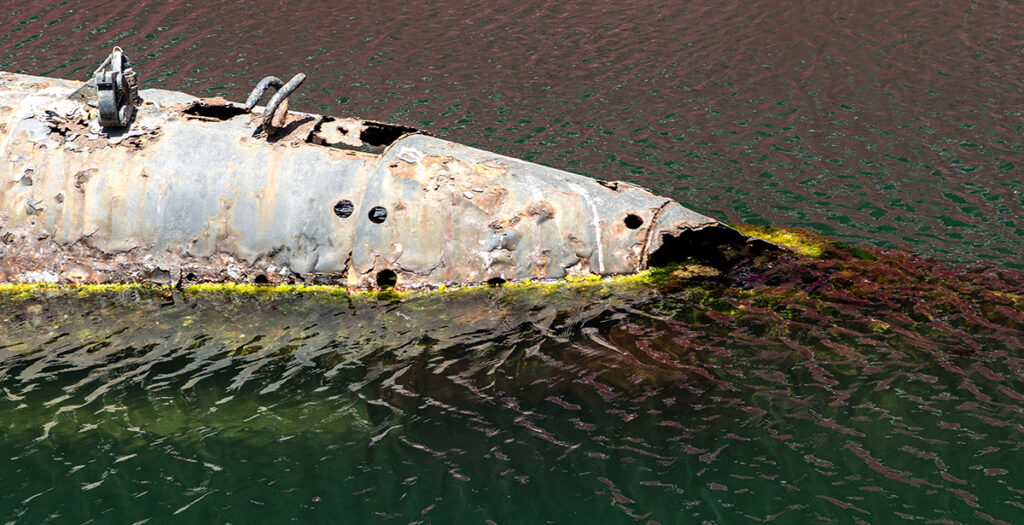
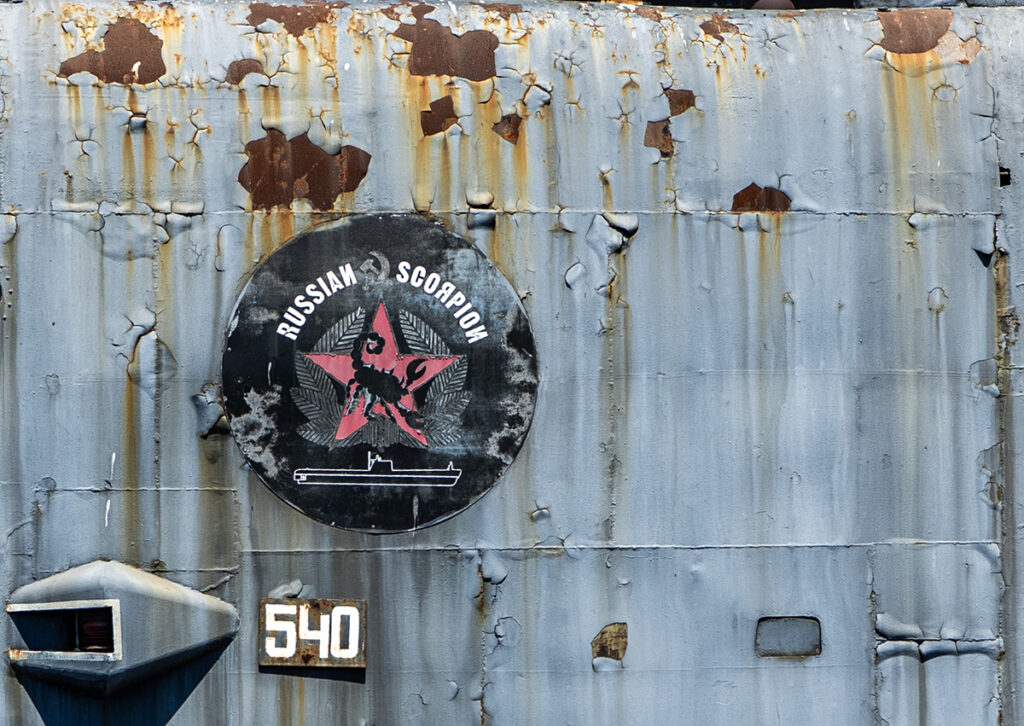
Officials say the outer skin of the 1970s-era Foxtrot-class vessel has been deteriorating for some time, its once sleek profile disfigured by holes, rust and protective netting. Saltwater and the occasional severe storm have not been kind.
How did the sub get here?
Commissioned by the Soviet government in 1971, the Scorpion spent its working life searching for and tracking enemy forces in the Pacific before it was decommissioned in 1994. After a three-year stint at the Australian National Maritime Museum in Sydney, it was bought by Palm Springs resident Ed Skowron and towed to Long Beach as a tourist attraction in 1998.
For years, it drew about 8,000 visitors a month, its own lure alongside the Queen Mary.
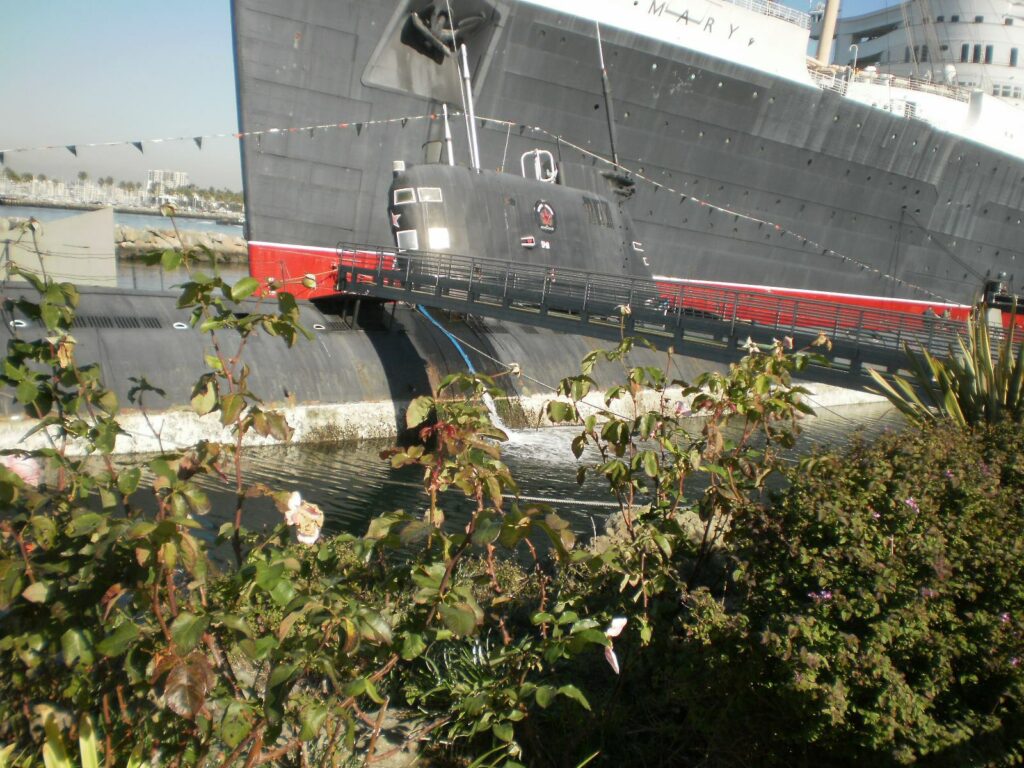
But after its hull ruptured and a ballast tank flooded, the sub closed to the public in 2015. It has sat empty and deteriorating ever since, and raccoons eventually moved in, according to past reporting from the Long Beach Post.
Since then, Long Beach’s Public Works Department says the sub has seen significant deterioration along its outer hull, along the topsides and waterline.
“In the interest of safety, water quality, and to mitigate any risk of damage to the Queen Mary, the vessel has been identified by the City as an abandoned asset for removal, pending any future legal or administrative actions required for its removal,” wrote Public Works spokesperson Jocelin Padilla.
In a preliminary assessment of the submarine, the city says the sub can handle a landside or waterside removal. “However, further analysis has to be conducted to determine the most appropriate course of action, taking into account safety, risk, impacts, and costs,” Padilla wrote.
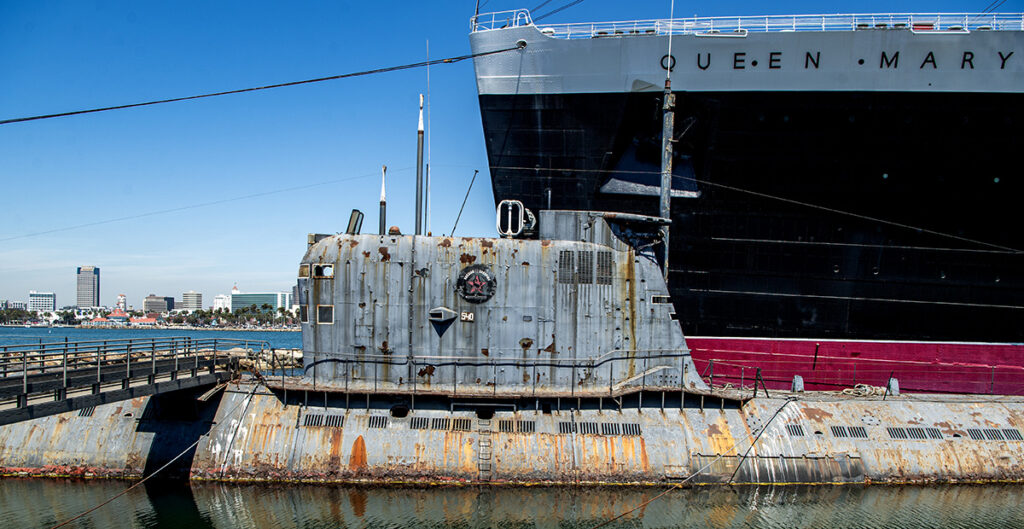
Ownership of the Scorpion has grown murky after years of legal disputes among the companies that leased and operated it. The submarine’s most recent owner, an Australian company called NEWCO Pty Ltd., dissolved in 2020, leaving no one to answer the city’s demand letters. With no one to take responsibility for it, Long Beach may end up paying for the sub’s removal.
How hazardous would it be to move?
At one point, there was concern the sub could sink and damage the Queen Mary, but a more recent survey by engineering firm Moffatt & Nichol found the vessel still watertight and unlikely to roll toward the ship. City officials say further analysis is needed to settle on a removal method and account for any potential hazards.
Curtin Maritime Corp., a marine construction and salvage company with an office at the Long Beach seaport, is among the firms weighing whether to take on the job.
Ralph Botticelli, the company’s director of business development, said the first question is whether the Scorpion can even be moved safely. Wherever the sub ends up, it won’t be near the Queen Mary — Botticelli estimated it would be towed at least four or five miles offshore before any cutting begins to disassemble it.
The sub’s batteries, asbestos piping, the thickness of the steel and its overall condition would all factor into whether crews put a towline on it or lift it out with a crane, he said. If hazardous materials need to come out first, Curtin would likely bring in a third-party environmental cleanup contractor, Botticelli said. Soviet-era diesel submarines like the Scorpion typically carry lead-acid battery banks, residual fuel and oil, asbestos insulation and sometimes PCBs.
Finding a hazardous-waste facility equipped to handle the job should also be manageable, he said, since Southern California has a number of pre-approved sites for that kind of material. It’s just a matter of finding the right one.
But without a full assessment, it’s difficult to say exactly how the sub would come apart — likely in sections, cut along its watertight bulkheads so the remaining pieces in the water don’t sink. “There’s no rule of thumb,” he said. “It’s just what is deemed appropriate at the time and most cost-effective and most safe.”
“Thirty years in this business and I’ve never seen anything like this,” Botticelli said, calling the Scorpion “a museum piece.”