

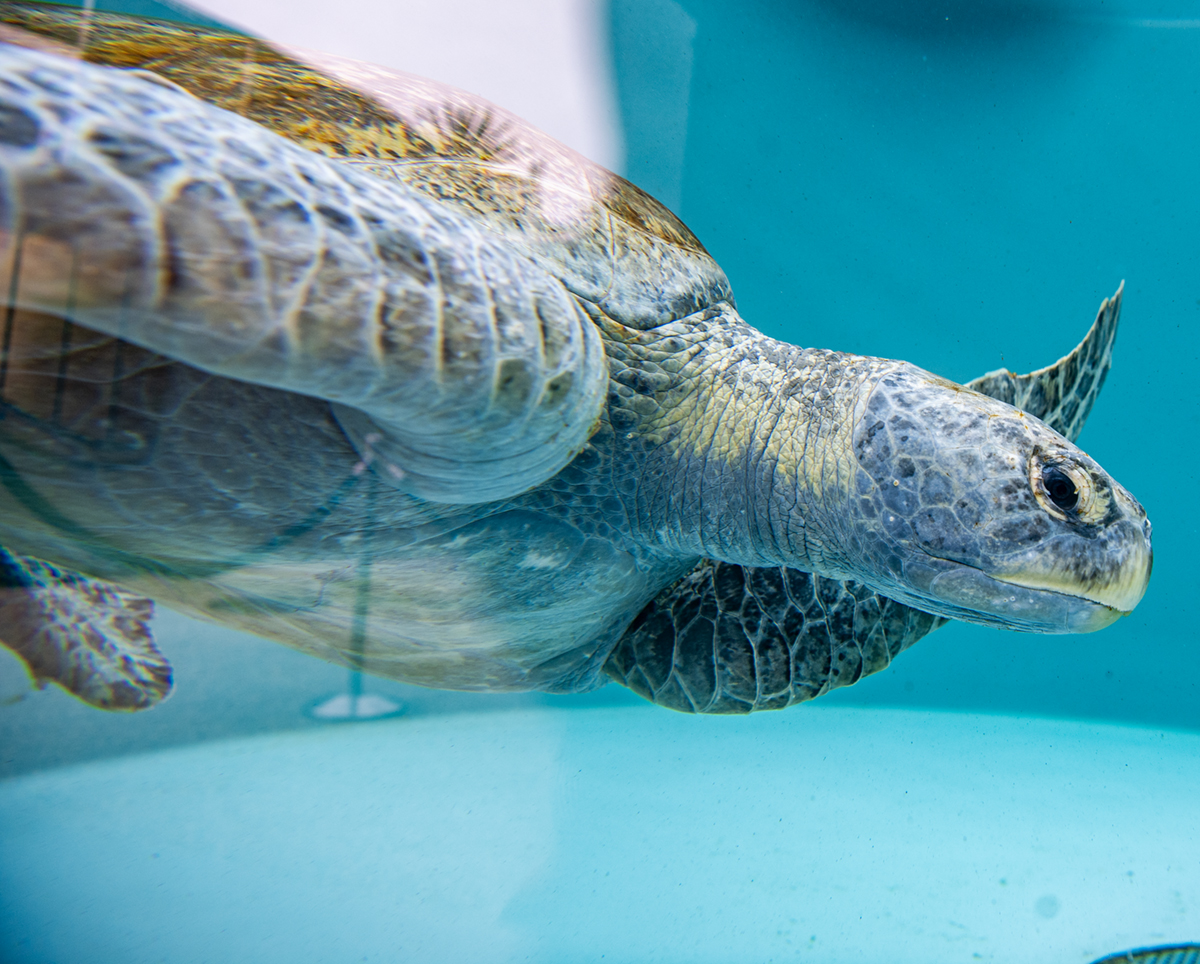
The Aquarium of the Pacific is putting out a call for donations to raise $50,000 for a surgery to save the front flipper of their newest green sea turtle, Meatloaf.
The 240-pound turtle was taken to the aquarium in January after being found entangled in fishing line and rope in the San Gabriel River.
For two months, she has undergone rehabilitation and several surgeries to nurse her front-right flipper back to health. Dr. Lance Adams, the aquarium’s director of veterinary services, said they plan to keep Meatloaf for at least another six months as they redress her wounds.
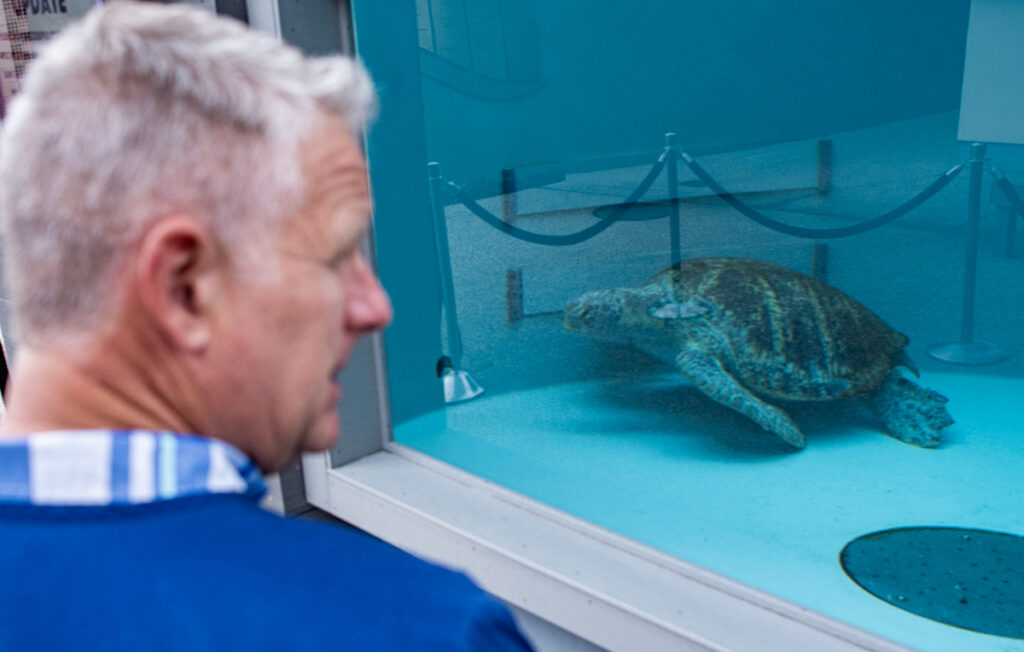
Wide as a manhole cover and several times the size of the facility’s former tenant, Porkchop, Meatloaf is the latest ward at the aquarium’s newly expanded turtle rehabilitation center — one of two able to care for them in Southern California.
Right now, Meatloaf’s swollen flipper is more than twice the size it should be. Adams said aquarium staff have repeatedly cleaned out the wound and used a number of methods to drain it. Past surgeries were done to remove scar tissue that had built up.
But Meatloaf’s fluid buildup, called Edema, persists and will likely require reconstructive surgery. It’s hard to tell, Adams said; turtles are slow to heal.
Turtles tended to at the aquarium include loggerheads, leatherbacks, ridleys and green sea turtles, which arrive on the coast and warmer waters each summer to mate, nest and battle natural and human-made threats: speedboats, water skiers, baited hooks, urban runoff, tons of garbage and harassment.
Green sea turtles like Meatloaf can grow up to five feet long and weigh 500 pounds. They typically have tropical haunts — sandy beaches along the Mexican coast where they lay eggs.
But in recent decades, the chunky oddballs have continued to wander upstream, usually in search of food, toward the San Gabriel River’s mouth in Long Beach. Aquarium officials say there can be a dozen to nearly 100 turtles in the river at a time.
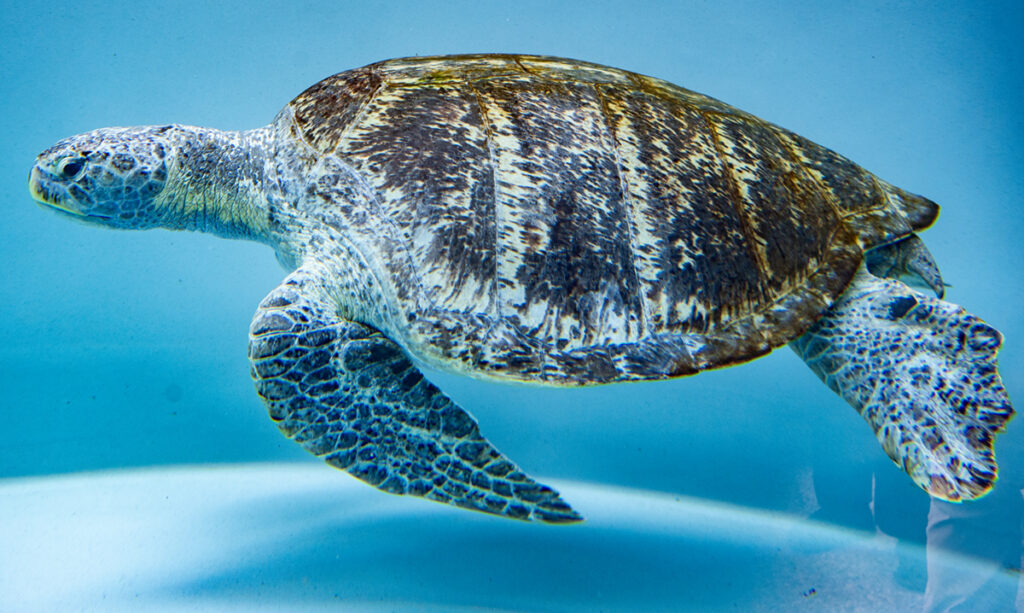
They eat almost anything they can clamp their mouths on, including snails, eel grass and — to the ire of scientists — rotting garbage along the waterway floor.
It’s an unfortunate circumstance that volunteers with the aquarium’s Southern California Sea Turtle Monitoring community science program see on a weekly basis.
But it’s not all bad. Adams said workers have seen their most recent graduate, Porkchop, at least three times since the three-flipped turtle left their waters and ventured out on her own.
Each time, they’re sure to say hello.