
Long Beach will soon allow residents to prepare and sell meals directly from their home kitchens, a highly anticipated program that promises a cost-effective path for local vendors.
Applications to operate Microenterprise Home Kitchen Operations, or MEHKOs, are expected to open in June, according to the city’s Health Department.
Once live, residents must review the program requirements to make sure they’re eligible. Then they’ll have to obtain food safety certifications, a public health permit and a small business license — expected to cost about $1,500 in total. Hopeful operators will have to prepare a menu and operating plan and pass an initial health inspection before they’ll get the green light.
Though the city will not notify landlords directly (a contested point at recent City Council meetings), MEHKO applicants will be required to sign a self-attestation showing they have permission to operate out of their residences.
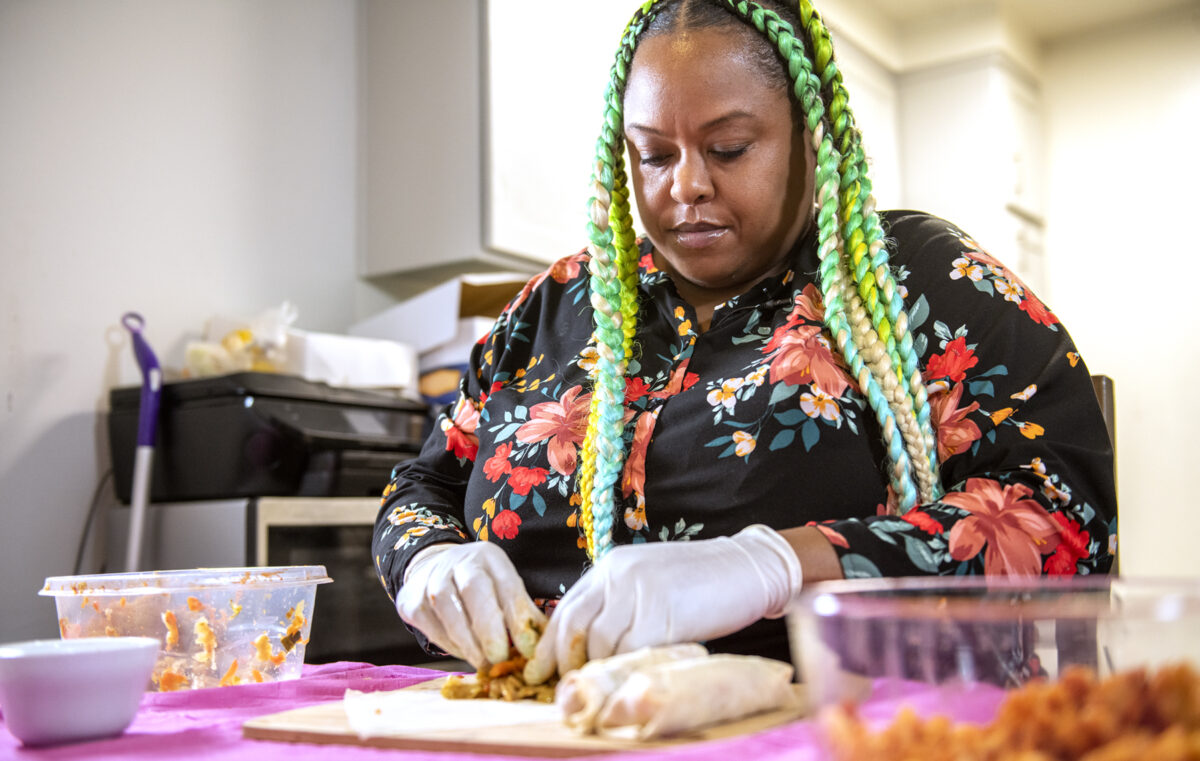
Monica Stewart, a resident of Long Beach, has waited years for this opportunity. It “was a dream for me to become a chef from a long time ago,” she said. She put that plan on hold while parenting five children as a single mother. But in 2023, she earned a culinary arts certificate from Long Beach City College. Now, at 60 years old, she’s still waiting for the thumbs up to sell Peruvian food out of her backyard.
“It’s really hard for anyone to open a brick-and-mortar business,” which can cost about $475,000 in start-up costs, she said. Even food trucks can cost $100,000, according to a report by the COOK Alliance, a nonprofit advocating for home food entrepreneurs.
Because few have the capital to launch those businesses, California passed a law in 2018, which included home kitchens in the definition of a food facility, paving the way for MEHKOs. “It was the first law of its kind across the entire country,” said Roya Bagheri, executive director of the COOK Alliance.
As of January, 18 California jurisdictions have opted into the program. Los Angeles County began issuing permits at the end of 2024. But permits in Long Beach have been delayed because the city has its own Health Department, which must oversee both the issuance and enforcement of the permits, said City Manager Tom Modica at a recent City Council meeting.
In the void of MEHKO permits, options for Long Beach vendors have been limited. If they sell non-perishable items, they can apply for a cottage food permit, which greatly limits what they can sell: “If something falls in your couch cushions and a few days later you can pick it up and eat it, that’s cottage food,” Bagheri said.
Alyssa Arellano of West Long Beach has a cottage food permit, but she said she’s not even allowed to bake with fresh jalapenos.
Those who aren’t eligible for cottage food permits and want to sell perishable food must either wait for a MEHKO or are “stuck doing it under the table,” Bagheri said.
Research from the COOK Alliance shows that nearly 80% of MEHKO operators are people of color. Many of them are also low-income, women and immigrants, said Jesica Coronado, economic justice coordinator at ÓRALE, a local immigrant rights group.
Those residents stand to benefit most from MEHKO permits, yet are forced to wait, she said. (The city anticipates 25 to 50 MEHKO applicants in the first year, though Coronado has already identified 35 vendors who would benefit from the program.)
And some Long Beach residents are frustrated that neighbors just a few miles away are operating MEHKOs, Coronado said.
Those frustrations prompted Stewart to attend multiple City Council meetings, urging the city to launch the MEHKO program. She was nervous to speak in front of the mayor, “but I thought it was very important for them to realize that normal people like me have taken the time to go to school, to do the right thing,” she said.
To help Stewart and others launch their home kitchens, the city plans to host future events with community organizations to educate residents about the MEHKO application process. Updates will be available on the Bureau of Environmental Health’s website.