


Long Beach streets got deadlier last year than they’ve been in a decade. Now the city wants to build a whole new division bent on reversing that, powered by the $5 million it expects to get annually by ticketing people with new speed cameras.
As part of Long Beach’s budget, city leaders are proposing a new traffic safety division, which consolidates two Public Works teams and adds more than a dozen staff who will administer a state pilot program for 18 automated speed cameras around the city.
It comes after the city saw a record number of fatal traffic collisions in 2025 — 53 last year, the most in more than 10 years — that includes 32 pedestrians, cyclists and e-scooter riders killed. That eclipsed the number of people murdered in the city that year.
High rates of traffic deaths and collisions coincide with a record number of public requests to overhaul dangerous arterial streets, calibrate traffic lights and add traffic calming measures to neighborhoods known for dangerous driving. Long Beach currently sits on a backlog of more than 1,400 open traffic requests.
Many delays are tied to the 4% completion rate of traffic investigations. Officials explained many of those unresolved cases involve arterial streets the city already knows need expensive, yearslong overhauls. Neighborhood traffic calming requests have also spiked, from about 35 in the second half of last fiscal year to 306 in the first half of this one.
Councilmember Joni Ricks-Oddie said the shift reflects years of pressure from residents.
She added that the old system wasn’t built for the volume of requests coming in now.
“I think we all recognize that the old ways of managing these requests simply just wasn’t working for the volume that we are seeing come into Public Works,” she said.
Public Works Director Josh Hickman put it more bluntly: “We’re barely keeping up,” citing data that requests have risen swiftly this year compared to late last year.
He explained the current model only adds unnecessary delays, even on simple fixes.
“In order to do street sweeping and in order to enforce parking control, you need to have signs,” he said as an example. “Those require our engineers to review and approve the signs, which are in a different bureau. Once it gets approved, well, then it requires another bureau to go and install those signs.”
This division would alleviate that, he said, by folding the city’s existing traffic engineering and traffic operations divisions into one unit under the Transportation Services Bureau.
The new division will be powered by citation revenue generated from the city’s automated speed enforcement program, a state pilot that will bring 18 cameras to handpicked streets and intersections later this fall, with warnings starting in October and citations beginning in December.
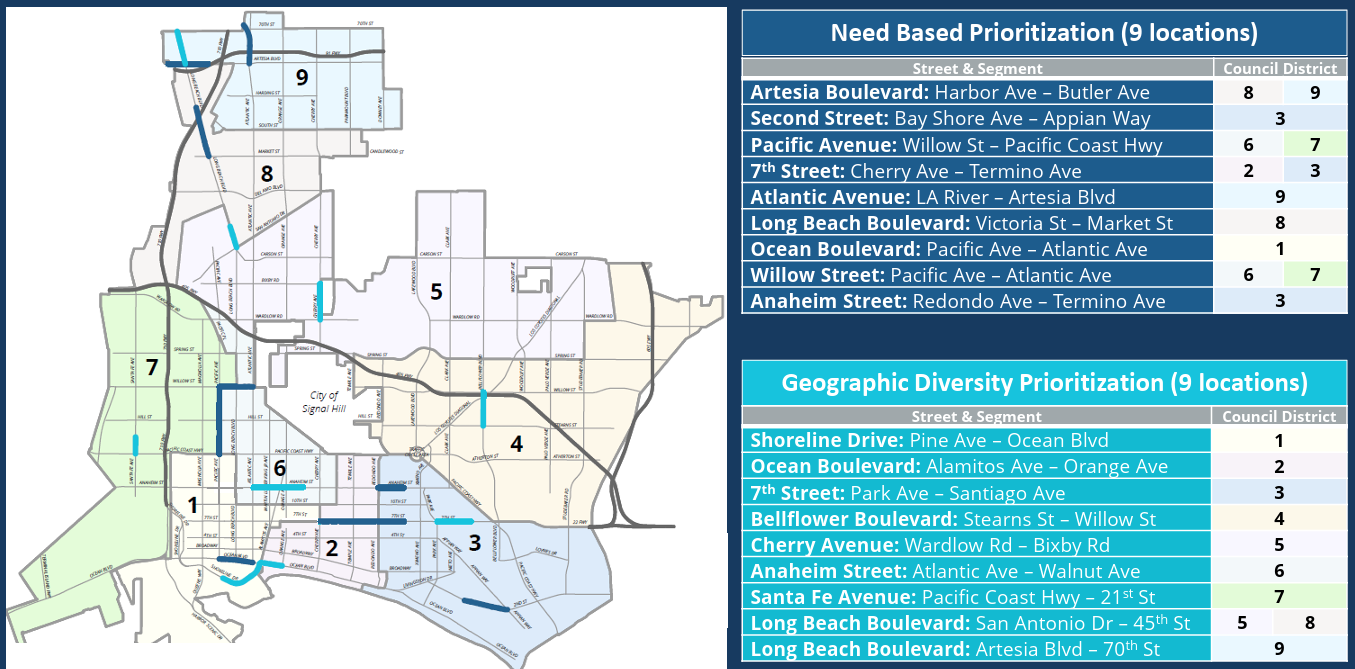
Officials say the cameras will rake in about $5 million a year, half of which will go toward operating costs with the other half restricted to funding traffic-calming projects.
Hickman called that estimate “quite conservative,” in hopes that the cameras will discourage drivers afraid of paying for tickets — which start at $50 for those driving 11 mph over the limit.
It’s a program that has seen success in other California cities.
In San Francisco, the program’s 56 cameras led to 163,906 citations and brought in $7.2 million in its first year, according to the city’s transit agency. About 65% of drivers who got a warning or ticket didn’t reoffend, and 82% were cited no more than once or twice over the year.
Madhu Unnikrishnan, a spokesman for SFMTA, said that has led to $3 million in street improvements across San Francisco, while the rate of drivers going 10 mph or more over the limit has fallen by 80% in the enforcement areas.
By state law, that money has to cover operating costs first, and anything left over must go toward traffic calming — such as crosswalk upgrades, no-turn-on-red signs, speed humps — within three years. It can’t be spent on anything else, even to help close a city’s budget gap.
Jonathon Bolin, a Public Works bureau manager, emphasized that the point of the cameras is to change driver behavior and discourage speeding, not “bankroll revenue.”
Long Beach’s 2027 budget would add seven new traffic and five new customer service positions to the division. Hickman said the department plans to fill the new positions “as quickly as possible.”
Seperately, the city is also proposing $37.3 million for roadway improvements, curb and sidewalk improvements and traffic safety projects funded by the Measure A sales tax.
An additional effort by state Sen. Lena Gonzalez is looking to place more speed cameras along Pacific Coast Highway.