

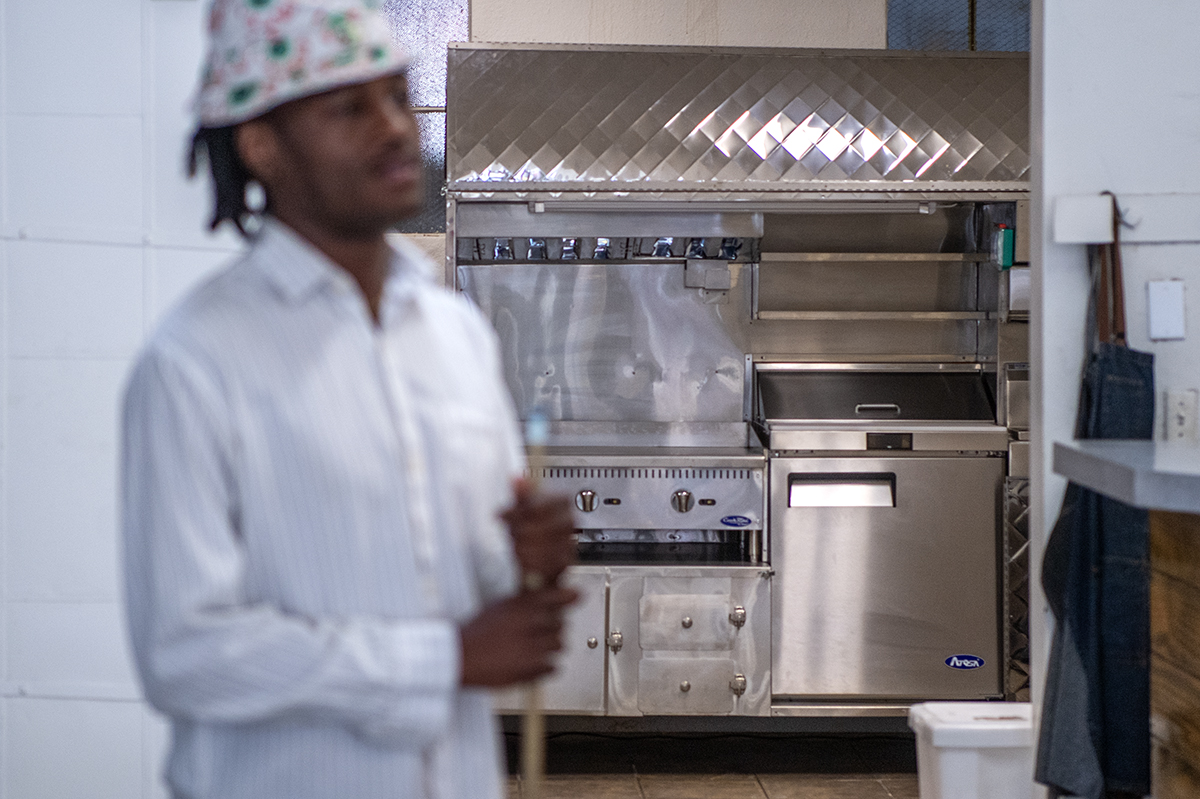
More than a year-and-a-half after promising to provide up to 40 free carts to eligible street vendors, Long Beach hasn’t even made it halfway to that goal and now plans to cut funding for the program.
As of late February, Long Beach has supplied 11 free carts, with six more applicants waiting for final approvals. Health officials say this is because out of the 123 applicants, the vast majority haven’t completed all the steps necessary.
Long Beach originally allocated $429,500 for the free-cart program, but the City Council recently approved reducing that by $200,201, citing “low participation” and the need to balance a city budget that’s facing deficits.
Applications are still open for vendors seeking a free cart, but city officials are reviewing “the application process and overall program,” Health Department spokesperson Jennifer Ann Gonzalez wrote in an email.
Vendors, for their part, say the process was plagued by delays and complications.
Anita McCoy, who sells pastrami and hot dogs through her business Lucky Bee, said it took roughly 8 months to receive a cart that was worth about $17,500. She was grateful but said it took countless emails and phone calls to the Health Department to finally get the finished product.
“I had to be diligent in my pursuit,” McCoy said.
De’Mon Tyndell, who runs The Quesadilla Calling, received his cart roughly a year after applying.
At one point, after months of email exchanges and “doing applications on applications,” Tyndell told city staff, “I don’t even want to do this anymore,” he said.
Although he has the cart, Tyndell said he doesn’t use it for his various pop-ups throughout the week because the roughly 800-pound mobile kitchen is not “user-friendly” to transport.
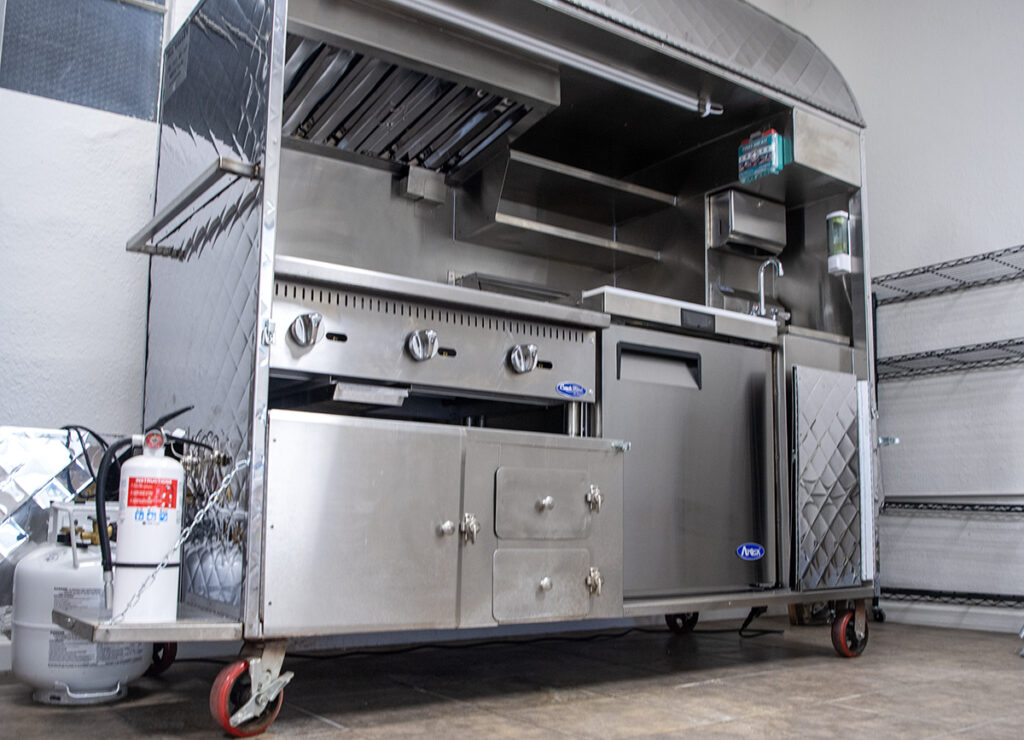
Moving it requires a trailer with a winch because the cart’s built-in wheels are too small for it to be towed around, Tyndell said.
As a result, the cart has been sitting in storage for the past six months while he uses a flattop grill and tables he can easily load in his van.
The free cart program was aimed at small-time entrepreneurs who needed help complying with new rules the city drafted on street vending. To qualify, applicants needed to live in Long Beach, have no more than two full-time employees and operate only one cart. If approved, they could receive one of four types: fruit carts, grilled food carts, tamale carts and ice cream carts.
But many people trying to run a low-margin business don’t have time for a complicated application process.
For McCoy, selling pastramis and hot dogs from a corner in North Long Beach is just one of her side businesses. That means she doesn’t have to be out every day to bring in enough cash to sustain her operation. That flexibility gave her the time to pursue the free cart with a sense of urgency.
“I was begging them [to give me a cart] because I knew the program was going to be cut,” McCoy said.
Meanwhile, since early last year, the city has begun penalizing street vendors who don’t comply with its rules.
Health Department officials say it’s a necessary step to prevent food-borne illness caused by vendors who haven’t gone through a health inspection.
From early last year through Feb. 23, city staff seized and discarded food from 72 vendors and issued 103 administrative citations against vendors without an active business license. In 71 cases, they’ve also impounded street vendors’ equipment.
Penalties for the citations range from $100 to $500, depending on how many times a vendor has been cited.
Enforcement is carried out based on complaints. The Health Department says its staff first tries to educate vendors on how to comply, then they issue a notice of violation and finally an administrative citation. If vendors don’t heed that citation, a team responds to discard food and impound equipment.
Starting in 2022, California banned cities from outlawing street vendors altogether, but municipalities are still allowed to regulate when, where and how they can sell for health and safety reasons.
Since Long Beach adopted its rules, the city has received 358 applications from vendors seeking a business license to operate legally. As of Feb. 23, the city has granted just 55 (15.4%).
Rather than risk being cited, Tyndell limits his selling to pop-ups at farmers markets, outside bars and various events around the city where he can more easily get permits. Recently, he got a spot selling inside Good Times Billiards — a pool hall in Lakewood — and hopes to add a second location inside another pool hall on Broadway in Alamitos Beach.
That business is awaiting city approval, but Tyndell said he aims to open by the end of the month. There, he says, he’ll finally use his free cart to serve up gourmet quesadillas.