

Long Beach resident Kelsey Wise has been asking for a speed bump on her street for months. After multiple close calls on Orange Avenue just north of Seventh Street, she spent hours building a PowerPoint to lobby her City Council member to get behind the idea. Her efforts earned her a meeting with the Long Beach Public Works Department, which manages street safety improvements. Soon, she’ll make her case to them as well.
Few people go to the lengths Wise did, but she’s far from the only person with frustrations about how difficult it is to make local streets safer.
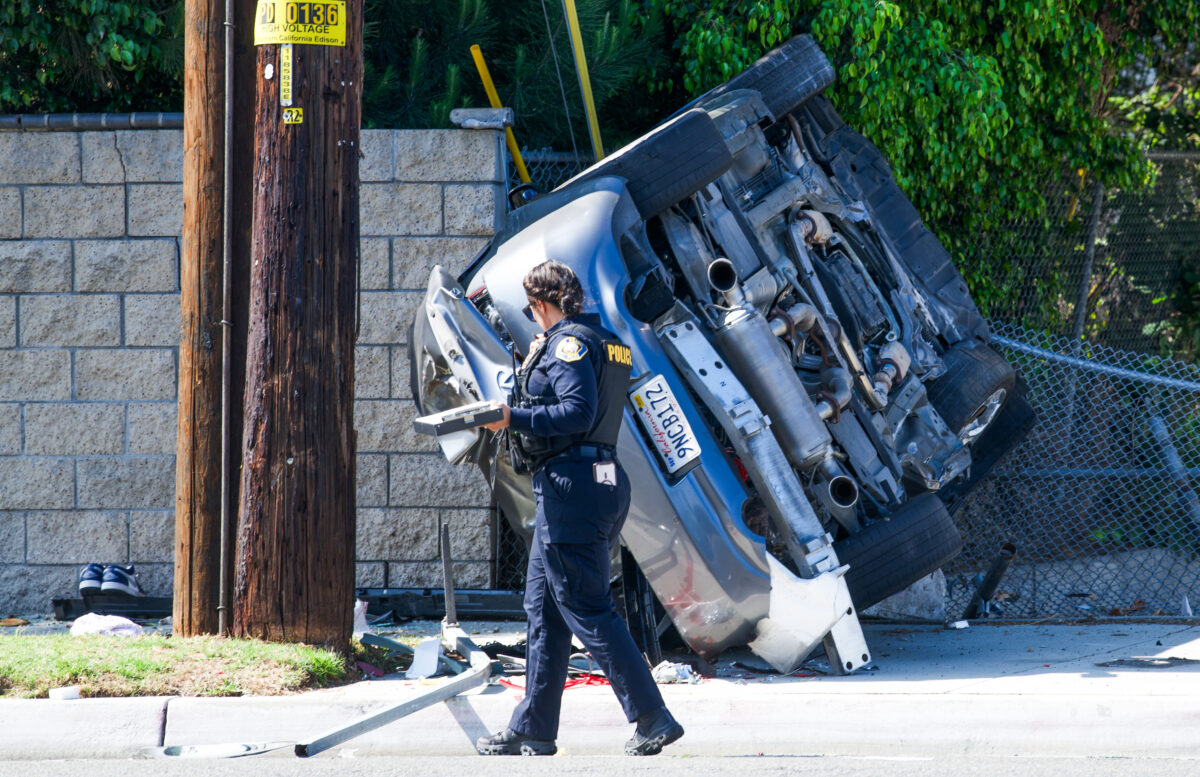
With fatal traffic collisions at their highest point in more than a decade, that dissatisfaction bubbled over last week at a Long Beach City Council meeting, where members and residents took turns voicing their irritation.
Council members told city staff to come up with a plan to speed up safety measures, but it raised the question for us: What’s taking so long to begin with?
We put those questions to City Traffic Engineer Paul Van Dyk. Here’s what we found out.
What happens when residents ask for a new safety measure?
When the city receives a request to evaluate a street for a potential measure to influence traffic behavior, Long Beach sends out city staff to observe drivers along that section of roadway.
In general, a street must clear three specific benchmarks for the city to begin designing a measure to impact traffic behavior. More than 26% of drivers must be observed speeding on a certain stretch of roadway, that stretch must have at least one crash per year and the street must average more than 2,000 vehicles per day.
There are outliers to these rules. For example, Sixth Street between Almond and Orange avenues averages 790 cars per day on less than a tenth of a mile. Fewer than 2% of drivers speed on that stretch, but it’s seen a half dozen collisions recently. City traffic engineers are lowering the speed limit on that stretch from 25 mph to 15 mph to limit future crashes.
Asking for a change is no guarantee that something will happen quickly.
Public Works is dealing with a backlog of requests. It received 220 over the past two years and still has 40 it needs to evaluate, and new requests are rolling in, with this year already outpacing prior ones.
And of the 180 requests Public Works finished evaluating, only 17 were selected for new traffic-calming measures. Once a road is selected for a traffic-calming measure, it takes anywhere from two to four months to install, according to a Jan. 20 presentation from Public Works.
Residents can submit a request for a traffic evaluation here.
Stop Signs
The state has strict rules on where and when a stop sign can be installed. To meet the threshold, an intersection must have five or more reported crashes in 12 months. Furthermore, it has to be clear that a stop sign would directly prevent similar crashes from occurring, and there must be a minimum vehicle and pedestrian volume through the area.
Stop signs are effective when “there’s an equilibrium” in traffic flow, said Van Dyk. If someone pulls up to a four-way stop sign and there’s never anybody at any of the three other directions, it makes the driver less likely to obey the sign, he said.
“The hard part is not putting up a sign,” Van Dyk said. “It’s convincing people to actually listen to the sign. To follow what the sign says and make it make sense to them.”
Speed bumps
Speed bumps are different than speed humps. Speed humps can include speed tables and raised crosswalks, while speed bumps are concrete mounds that require drivers to slow down to cross.
“Typically, speed bumps are most effective if we’re seeing significant amounts of people going at high speed,” Van Dyk said.
If people typically travel between 25 and 30 mph down a street, speed bumps “really aren’t going to make a noticeable difference in behavior,” he said.
They are reserved for areas where people typically travel at 35 to 40 mph, Van Dyk said. However, even if a traffic engineer deems it a viable solution to slow speeding traffic, Long Beach requires a petition signed by neighbors to install them. The approval percentage ranges from 50-75%, depending on the type of speed hump or bump the neighborhood is seeking.
New left-turn signals
From January 2023 through the end of 2025, Public Works received 133 resident requests to check the timing of existing traffic signals. When that happens, Public Works sends out a traffic engineer to “test all the different detectors around the light to make sure that they are accurately detecting when a car goes by.”
They check to make sure the magnetic sensors underground are working properly and observe traffic during rush hour to make sure the light is “flushing the left turn pocket every time,” Van Dyk said.
Van Dyk acknowledged the danger of trying to make a left turn at a green light instead of a green arrow. “All of the liability is on the driver in making sure that I’m doing this safely,” he said.
Long Beach is in the process of adding more left-turn arrow lights, but “traffic signals are probably one of the most expensive projects that the city undertakes” as far as traffic-calming measures, Van Dyk said.
Adding a signal at one intersection costs “more than half a million” dollars once you factor in the costs of building the light and making sure everything is hooked up properly underground without disturbing the existing utility lines, Van Dyk said.
“It’s a lot of steel, it’s a lot of engineering,” he said.
Low-cost fixes include changing the signal timing “to give pedestrians a head start” when crossing the street.
Crosswalks
Long Beach plans to install 39 new crosswalks throughout the city, including 25 with a button that activates rectangular rapid flashing beacons for pedestrians crossing the road.
Among those to be installed: two will go along Seventh Street, five will be installed on Anaheim Street and three will be installed on Atlantic Avenue.
Those with specialty beacons are placed on marked crosswalks that see elevated levels of speeding cars, traffic volume or crashes. They are also installed in areas that don’t have a marked crosswalk, but are on roadways where pedestrian deaths and injuries are common.
How do speed cameras and limits fit into this?
This fall, speeding drivers caught at 18 spots throughout Long Beach will begin receiving fines from automatic cameras. The program is part of a state pilot in seven cities that mandates the ticket revenue pay for new traffic-calming measures.
Proceeds from the fines “can’t be spent on enforcement, general police or fixing potholes. It’s spent on neighborhood traffic calming,” said City Manager Tom Modica.
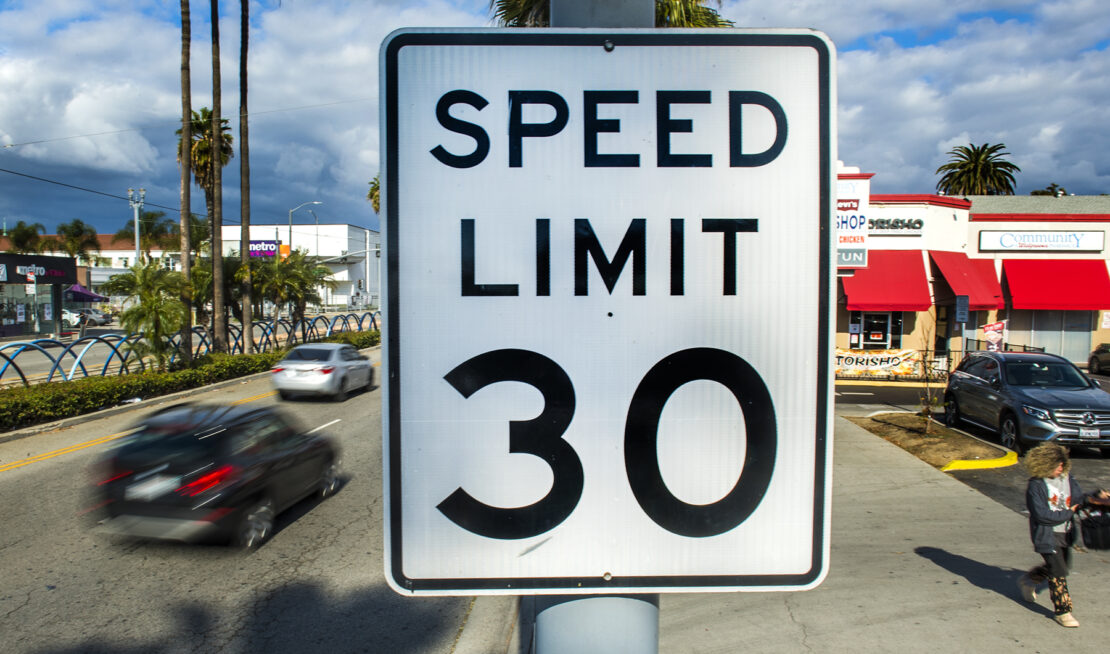
In January, the City Council also approved lowering speed limits on 77 streets throughout the city. A majority of those reductions restored the state standard of 25 mph on streets with three or fewer lanes that had speed limits of 30 to 35 mph.
In nearly two dozen locations, speed limits were dropped to 15-20 mph to match “existing driver behavior. A dozen streets had speed limits dropped to 25 mph within 500 feet of a park playground.
Until 2021, state law limited a city’s ability to set its own speed limits. This round of speed reductions is the second the city has undertaken since the law changed. The city conducts speed surveys on its streets “on a rotating multiyear schedule” and adjusts speed limits based on that data.
To request a speed survey on your street, email [email protected]. You can also request a free yard sign saying “20 is plenty” in English or Spanish here.