

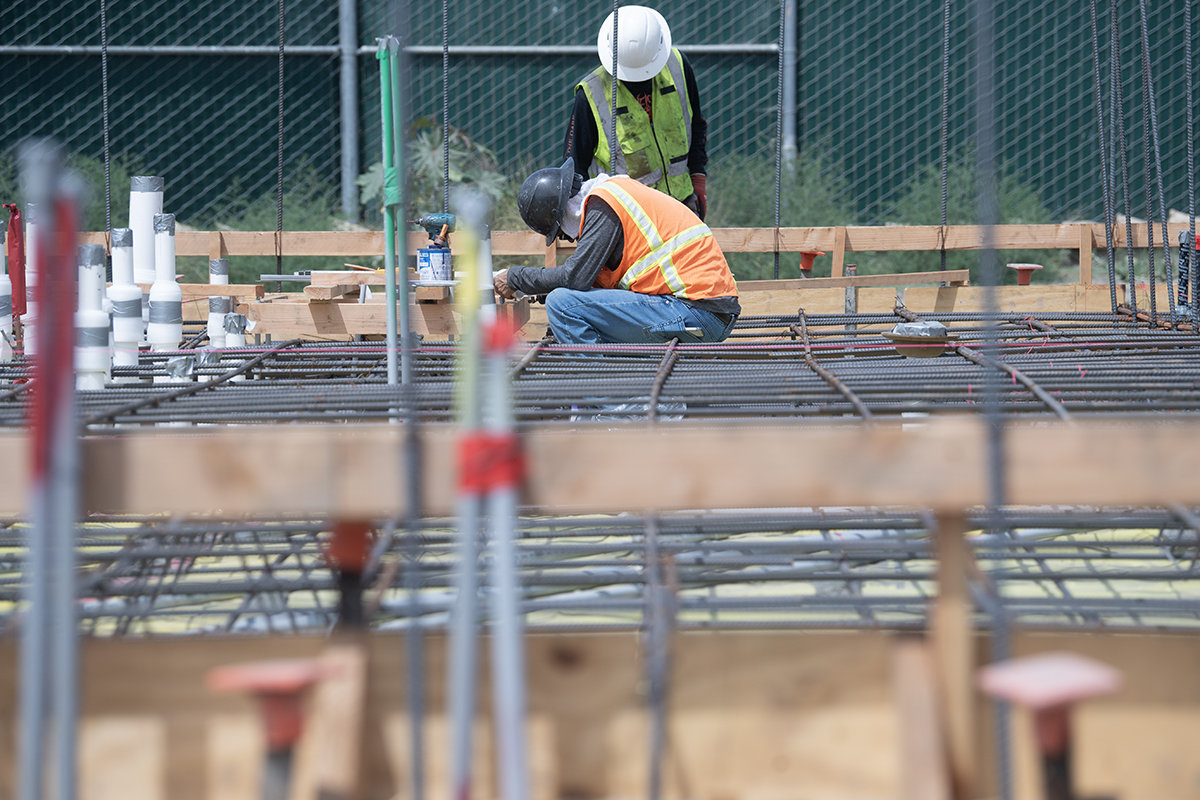
After a tough budget season that demanded the elimination of hundreds of city jobs, Long Beach plans to borrow $246 million to fund street repairs, a seaside pool, convention center renovations, and to pay off its newly built fire station and police academy.
Top city staff say it’s the most efficient way to get languishing capital improvement projects across the finish line. It’s also expected to come at a total price tag of roughly $473 million over the next 30 years, including about $234 million in interest, or close to a dollar of interest for every dollar borrowed.
The Finance Authority of Long Beach, a city-controlled agency consisting of City Manager Tom Modica, Financial Director Kevin Riper and Treasurer Hank Kim, approved the plan Wednesday. It now goes before the City Council for a vote on Nov. 10.
Under the plan, $246 million in bonds would be sold to pay for a wide net of infrastructure projects, some of which are tied to the city’s Olympics preparations. Documents show $24.6 million is set aside for the unfunded portion of the Belmont Pool and about $50 million for roof, air-conditioning and structural work at the convention center. There’s money for street improvements on Anaheim, for a Cambodia Town Grand Entrance, soccer fields at Heartwell Park, $1 million for the Belmont Pier, another million for pump stations and storm drains, $500,000 to display the VIP Records sign, and $2.2 million for the city’s new LGBTQ Cultural District — among many other projects.
It would also pay back debts for the city’s new police academy and fire station, and be used to buy property on Redondo Avenue.
If the bonds aren’t approved, there is no backup plan to fully finance the long-awaited Belmont Pool project, according to Riper, the city’s financial management director.
Money borrowed for construction cannot be spent on payroll or used to fill a budget hole, they said.
To pay off the bonds, Long Beach would pay about $14.8 million in debt service this year, then about $16.5 million a year through 2031, and about $15.7 million a year through 2056.
Officials say this route would save years of waiting for the city to save cash until projects can be paid for outright. The alternative would mean waiting while construction costs outrun city revenue.
Modica said the timing of this plan works in the city’s favor, taking advantage of lower interest rates and giving enough time to get at least some projects done ahead of the 2028 Olympics. None of the proceeds would fund venue commitments for the Games, he added, though the Belmont Pool and Convention Center have Olympic events scheduled at or near them.

“Part of our plan for the Olympics is to put our best foot forward and to have good streets — as many as we can get done — and have good neighborhood parks and things that we can be proud of as a city,” he said.
Many of these projects have been approved and permitted for years but have remained sidelined while the city finds the cash to cover them. Further delays would only raise the price more, Modica said.
He said the city has seen construction costs climb 10% to 20% each year as of late, driven by rising prices for materials like steel and greater competition to find contractors already busy with rebuilds from recent wildfires across L.A. County. “Every year you wait, the construction cost goes up,” he said.
The bonds would be issued through a lease-leaseback arrangement, a financial tool used by California cities because state law bars cities from pledging future tax revenue to secure borrowing without voter approval. To avoid this, the city leases properties it already owns to the Finance Authority, which leases them straight back. The rent the city pays covers the bondholders’ principal and interest.
If approved by the City Council, the city will temporarily transfer leasehold rights of 15 city properties, including the Health Administration Building, two downtown parking structures, the Art Museum, Fire Station 9, the Emergency Operations Center, two historic ranchos and the Convention Center to the authority, which would then lease those properties back to the city.
Officials say bondholders can never take possession of a city building; the lease simply gives the city a reason to keep paying. Over the past decade, the city has used 23 assets worth more than $700 million in such deals, officials said, and none has left city control. Long Beach has never defaulted on its debt.
But the proposal arrives right as the city approved a new budget with cutbacks needed to close a $58 million deficit by eliminating hundreds of positions.
“But that’s part of the reductions that police and others made in order to prioritize capital projects,” Modica said. “So, in order to have an academy to do hiring, in order to have a police crime lab, you know, these are some of the things that you need to have to be a police department, and then we make budget reductions in order to do that.”
In the first year of the bonds, the city’s general fund — which funds basic city services ranging from firefighters to libraries — will be on the hook for 18% of the debt, or about $2.6 million.
The city is scheduled to pay $146 million in debt service this fiscal year, along with $166 million toward unfunded pension liabilities.