

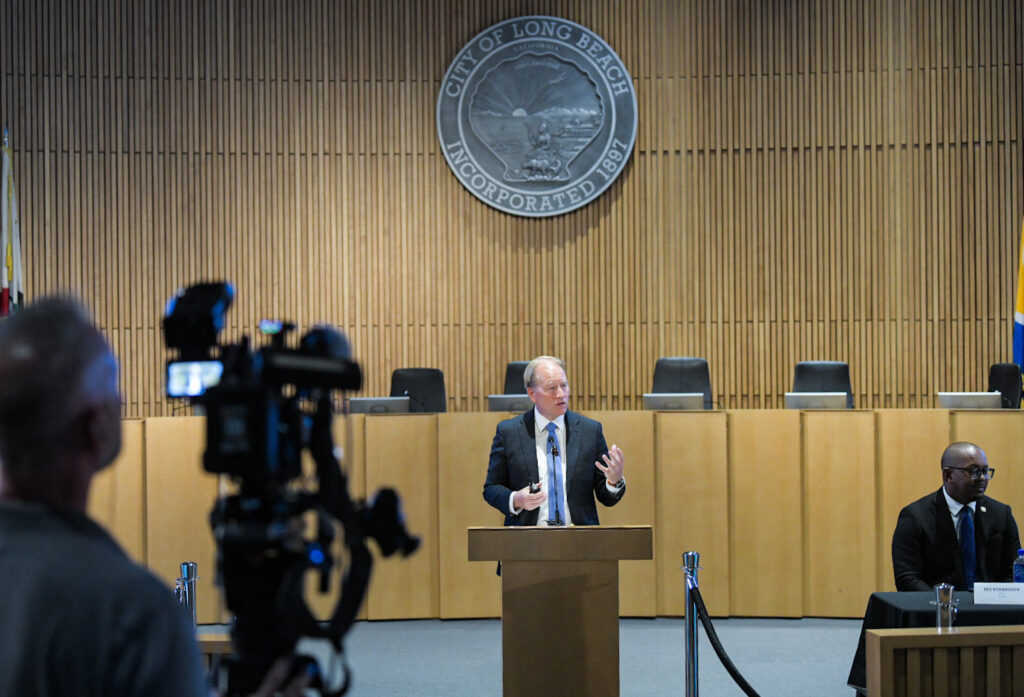
More than 260 city employees could be laid off and over 200 more vacant positions could be cut in departments ranging from fire and police to homeless services in order to close a $58 million budget gap the city faces next year, according to a budget proposal from Long Beach City Manager Tom Modica released on Thursday.
The $4 billion spending plan, which covers the 2026-27 fiscal year, includes some new spending, including a 12-person High Crime Focus Team and expanded real-time crime center in the Police Department, permanent funding for Fire Engine 17 near Stearns Park, money for replacing traffic signs and sprucing up medians, investments in the city’s police crime lab and a $6.5 million helicopter paid for using forfeited assets and a law enforcement grant.
But the cuts outsize the gains. Layoffs could claim 4% of the city’s nearly 6,000-person workforce, with additional cuts at libraries, parks and the city’s homeless services hub as Long Beach copes with rising personnel costs, soaring legal payouts, a clawback of federal grants and a slowdown in the local economy that has stifled tax revenue.
A range of positions are set to be cut, spanning more than a dozen departments or offices, from managerial roles to rank-and-file employees. It includes fire captains and police lieutenants, analysts and clerks, crossing guards, librarians and investigators, among others. Officials have said the impact will be felt citywide, in the government’s ability to analyze and respond to emerging issues.
A city spokesman noted that police and fire employees losing their jobs will be transferred to open roles elsewhere in the departments, including in a new patrol beat specific to the shoreline. Many other employees will not be as lucky.
This is the first time Long Beach has proposed layoffs for employees paid out of its general fund in nearly six years. Dozens of Health Department jobs were cut in 2024, but those positions were tied specifically to the loss of state grant funding and the conclusion of Long Beach Recovery Act pandemic aid.
The past couple of budgets relied on reserve cash to cover their shortfalls and delay layoffs — $7.8 million in fiscal year 2025 and $5.8 million in fiscal year 2024, the latter pulled from COVID recovery funds. But officials say that strategy was short-term and unsustainable.
The city already pulled $27 million from four reserve accounts to close out the current fiscal year, exhausting its operating reserves and taking $16.5 million from its $50.1 million emergency reserve — money set aside specifically for natural disasters and unforeseen crises.
The moves would save $55.9 million, allowing the city to add $9.8 million back to reserves. It currently has only $33.6 million in reserves.
In public safety, the city proposed shutting down Fire Engine 14, which operates out of the station near Colorado Lagoon, to save $3.8 million, citing data showing it responds to the fewest fire calls in the city and 87% of calls received are for paramedics. Officials also proposed converting one engine from permanent staffing to cheaper overtime; in the Police Department, they suggest eliminating 17 vacant patrol officer positions, cutting $2.68 million in police overtime, consolidating part of financial crimes into property crimes, and eliminating 18 investigator roles.
Pressed by the loss of $11 million in county, state and federal funding, the Health Department faces heavy losses, including 79 positions cut — including eight positions within the city homelessness bureau. The reductions will affect programs and agencies that handle medical shuttle services, weekend homelessness outreach, one of the city’s two mobile homeless outreach centers, workforce development and homelessness prevention.
If approved, the proposed budget would also cut more than half of its motel voucher shelter rooms (from 40 to 15) and offer rapid rehousing assistance to 45 fewer households. City leaders said the cuts are targeted to keep all municipal shelter beds open, a crucial need as Long Beach struggles to reduce local homelessness, which rose by 3.7% in the past year.
Programs and services citywide would also see reductions. Hours and days at five city libraries — Bayshore, Burnett, El Dorado, Harte and Michelle Obama — would be cut to five days a week under reduced hours. Teen programming at Chavez Park, summer swim classes at Jordan and Millikan high schools, and the city’s involvement with the afterschool WRAP program are all expected to be eliminated.
An additional 25 positions would be cut by contracting out services for parking collections, school crossing guards and the city’s reprographics office. To offset administrative cuts in Public Works, parking meters would be installed around City Hall, Lincoln Park, the courthouse and Ocean Boulevard, and citywide parking rates would rise from $2 to $3 an hour, with the revenue redirected to street light repairs, solar conversions, weed abatement and median upkeep.
Several departments would also see agencies consolidated, which officials say is part of a necessary restructuring to focus on emerging issues like traffic safety and community health.
What’s next
Workers were informed of potential layoffs as early as Thursday morning. Civil service rules allow for employees with more experience to bump those with fewer years on the job, meaning workers can move within or across departments, displacing colleagues.
The plan is not finalized yet. Going forward, the City Council will deliberate the budget through a series of public meetings, town hall forums and study sessions until final approval, typically at the end of September.
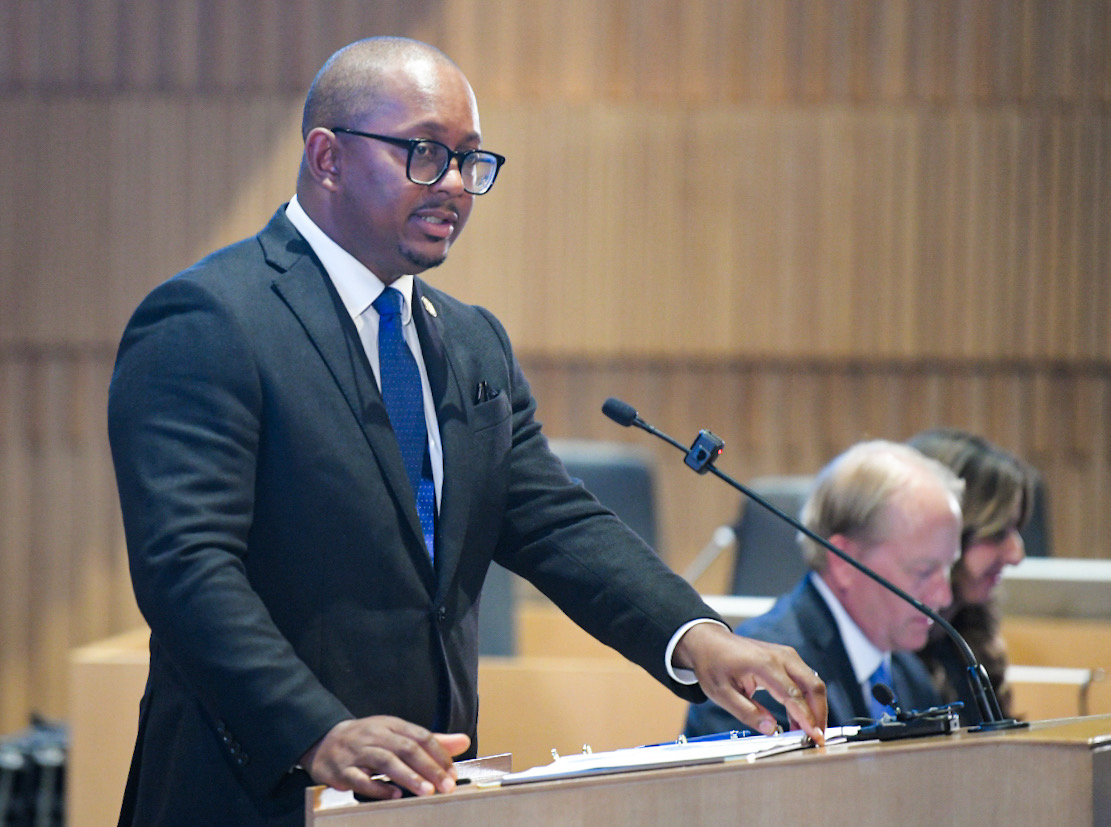
The earliest potential adjustments came Thursday, during Mayor Rex Richardson’s proposed version of the budget that would restore several programs and reinstate 70 positions.
For example, Richardson said he wants to undo the plan for a rotating engine; keep four of the 17 eliminated police patrol positions and two Quality of Life officers, while reinstating $400,000 for officers’ overtime pay; preserve youth programs, and homelessness programs; add new disease prevention and nursing positions; and continue to fund the Office of Equity position that oversees the city’s deportation defense fund while also adding more money to its account. The defense fund currently has $548,000.
Funding, he explained, could come from a line of new sources, like the $7 million to $8 million expected annually from the voter-approved county Measure ER, an updated cost-recovery agreement with the Port of Long Beach for fire services adding $5.9 million and $1.5 million saved from not holding a general election because races were already decided in the June primary.
Sparing no detail on the starkness of the economic picture, officials say it figures to get worse before it gets better. After a $27.3 million deficit expected next year, officials are confident they will have consecutive years of meager surpluses.
Despite the headwinds, they say, Long Beach is on solid footing, with a 17.5% drop in overall crime, with paramedics responding 30 seconds faster than they did last year, with 12% more city shelter beds, thousands of new, high-paying aerospace jobs, and work underway on new streets, bridges — and a very expensive pool — as part of a billion-dollar infrastructure plan ahead of the 2028 Olympics.
The city also welcomed a new amphitheater and an independent baseball team in the past year, and it continues to draw $2 billion in tourism and economic impact — outpacing San Diego, Anaheim, Phoenix, Los Angeles and San Francisco in key hotel use and visitor metrics.
By following the city’s plans, Richardson said Long Beach would achieve a structural surplus by 2028 — the first in more than a decade.
“Our responsibility today is not only to today’s budget, it’s to the long-term financial health of our city and to the thousands of employees who depend on a stable and sustainable organization,” Richardson said. “Our employees deserve to be more than temporary fixes that simply postpone difficult decisions. They deserve a city with a stable financial future. That’s why I believe we have to stay the course.”
Editor’s note: This story originally misstated that the mayor’s proposal included preserving Fire Engine 14 and library hours.