

Learn more about what El Niño means for Long Beach and how you can be prepared at LBPost.com/elnino. Support useful community-centered reporting like this with a donation.
This article was originally published by LAist on Sept. 23, 2026.
Unusual creatures are visiting Southern California’s coastal waters.
One of them, a sea turtle, nested near Seal Beach last week for the first time in California history.
And they’re here because of El Niño.
Forecasters say there is more than a 90% chance that this year’s El Niño is going to be very strong, and most Southern Californians are bracing for record-high surf and heavy rains that usually come with the climate pattern.
Residents got a taste earlier this month of what could come this fall and winter, when surf from Hurricane Marie caused widespread damage along the Southern California coast.
But the region is also starting to see a lesser-known effect of El Niño: sea creatures that don’t normally live here showing up in our waters.
Scientists say they are following the warm waters that fuel El Niño, which are likely to have a dramatic impact on our marine ecosystems over the course of the season.
“ Animals like a certain range of temperature, just like you’re setting the thermostat at home to a certain temperature that you like,” said Bill Ludt, a curator of ichthyology, or the study of fish, at the Los Angeles County Museum of Natural History.
During an El Niño year, the normally cool waters off the California coast warm significantly. As that happens, animals that normally live in warmer, tropical waters off the coast of Mexico, like sea turtles, move north.
Unusual visitors
The endangered olive ridley sea turtle crawled out of the ocean near Seal Beach on Sept. 16, according to the National Oceanic and Atmospheric Administration. It dug a hole and laid its clutch of eggs inside before burying it and shuffling back into the sea.
A turtle was also seen nesting near the Huntington Beach Pier. Officials have fenced off both nesting sites.
The Seal Beach turtle is just one of a number of unusual creatures that have been spotted off the Southern California coast lately.
A whale shark was spotted near the Channel Islands, off the coast of Malibu. There have also been reports of hammerhead sharks and other large fish like mahi mahi and bullet tuna.
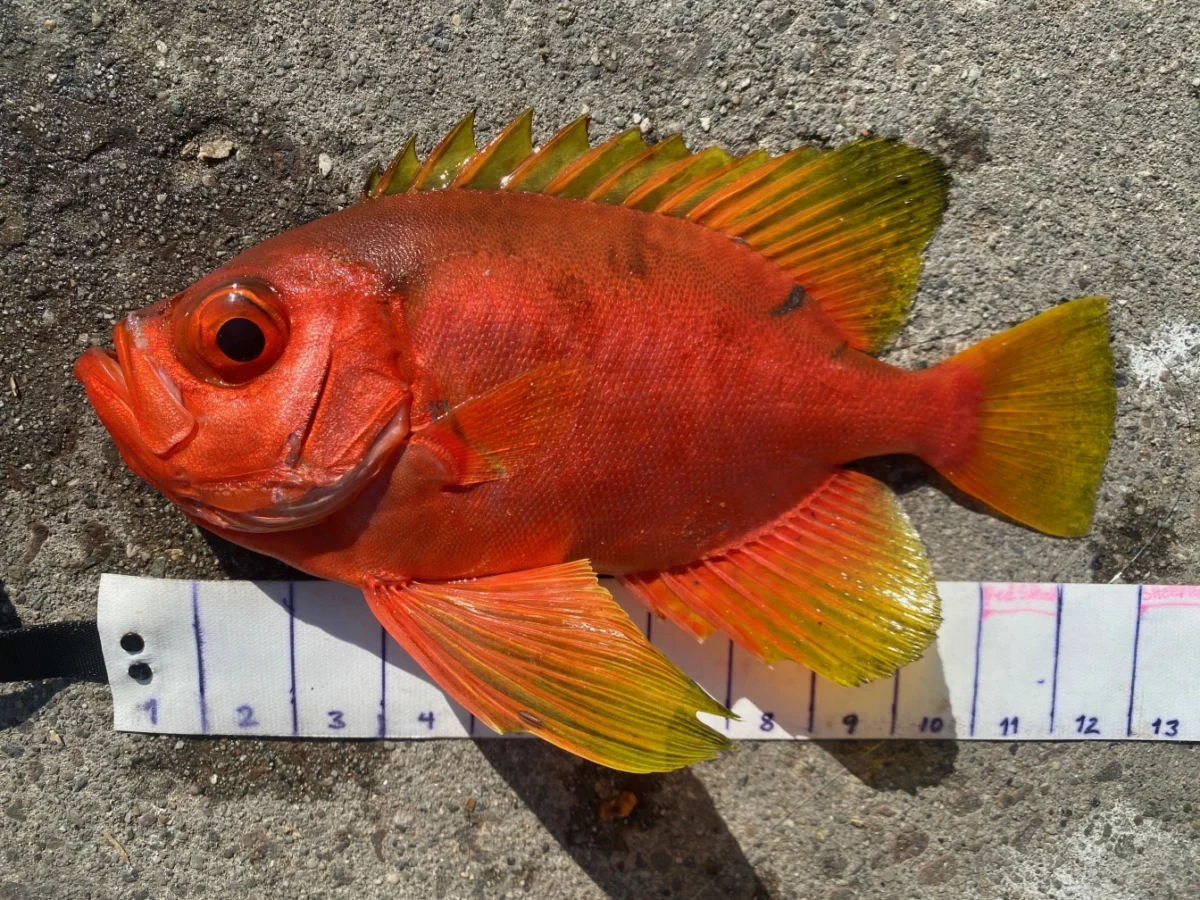
Like the turtle, some creatures have never been recorded in California waters before. A fisherman recently caught a longfinned bigeye from the Venice fishing pier, a bright red-orange fish that normally lives off of Mexico and Baja California.
“It is a wide-ranging species, just not typically in California,” Ludt said. “So it will occur in Baja, as well as other parts of the world. But for California, this is a first.”
Ludt and his colleagues at the Natural History Museum collected the longfinned bigeye and are preserving the physical specimen in the museum’s archive.
“We just want to document things that are rare along our coast, as well as the common things,” Ludt said. “Our goal is always to just document life and how it changes over time on our planet.”
According to Ludt, the creatures Southern California is seeing so far are just the beginning of what’s to come this year.
Animals like the sea turtle and the sharks are what scientists call pelagic animals, meaning they live mostly in open oceans, often migrating in search of food.
Ludt said it will take longer for sea life to show up that doesn’t normally migrate over long distances, like smaller fish. He said we could eventually see colorful reef fish, such as damselfish, angelfish or pufferfish, similar to those one might see living among corals in Hawaii.
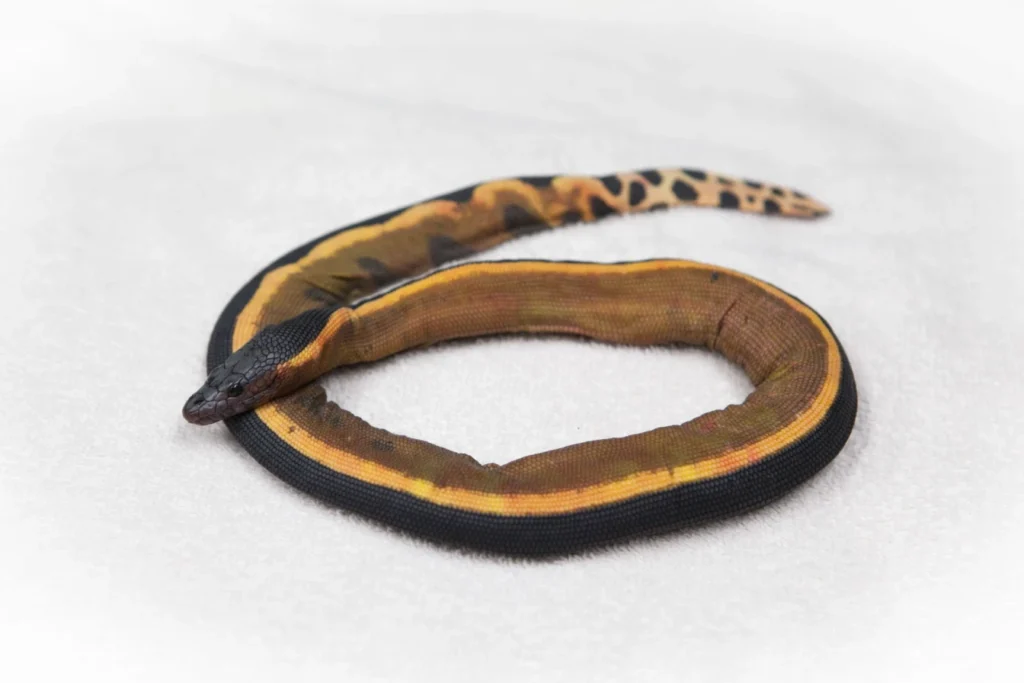
Sea snakes are also likely to move into our waters. There was a report of a yellow-bellied sea snake washing up at Crystal Cove in Orange County, but scientists have yet to confirm its authenticity.
Yellow-bellied sea snakes have also been seen here during past El Niño events. They are venomous but don’t pose a threat to humans unless handled.
These warm-water animals will likely retreat south, and some may die and wash ashore when waters cool down again later this winter.
Stress on native wildlife
While the newcomers thrive in warm waters, California’s native sea life does not.
The heat can affect their immune system and metabolism. That, in turn, means less food is available for other animals that eat fish, including seals, sea lions and dolphins.
Another danger is algal blooms. Warmer water allows more algae to grow, and at times, the algae can be toxic, especially to marine mammals.
Scientists say these stressors will likely leave some animals sick and stranded.
“They’ll beach, and they’ll be acting up weirdly, sometimes maybe more aggressively than they normally would,” said Jorge Velez-Juarbe, curator of marine mammals at the L.A. County Natural History Museum.
Velez-Juarbe added that we could also see more deaths of marine mammals over the next few months.
El Niño’s warming trend is also a window into the effects of a changing climate. Velez-Juarbe said it’s an example of how ongoing ocean warming due to climate change can affect Southern California’s marine environments.
Thankfully, Velez-Juarbe said it’s unlikely El Niño will cause long-term damage to native species populations. They will likely rebound when ocean temperatures fall later this winter.
If you see a sick or stranded animal, the best thing to do is to keep your distance and call authorities. He also recommends reporting the animal to NOAA’s stranded animal hotline at (866) 767-6114.
If you come across an unusual sea creature along the shore, you can also email the team at the Natural History Museum at [email protected].