

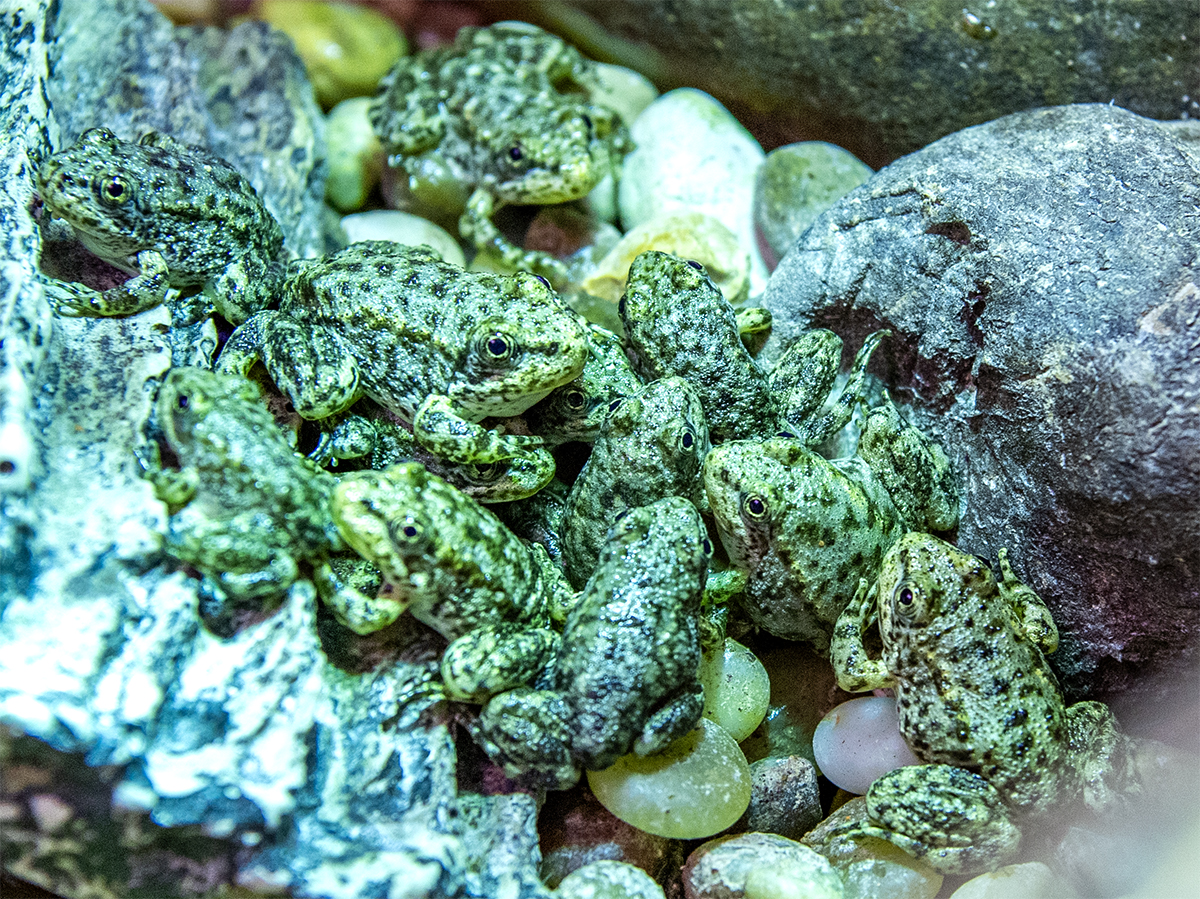
Inside three water tanks in a tucked-away room at the Aquarium of the Pacific, biologists are tasked with bringing back a population of frogs that once thrived across the state’s mountainous streams but has since reached the brink of extinction.
It’s a program that’s nearly closed out its fifth year with a major milestone: more than 1,000 frogs raised and released into the wild.
That’s more than five times as many mountain yellow-legged frogs — named for the lemon-hued streak along their hind legs — believed to be in the wild when last recorded in 2019, reduced to small pockets of wild streams in the San Gabriel, San Bernardino and San Jacinto Mountains. By the time the frog was listed under the federal Endangered Species Act in 2002, fewer than 100 adults remained in Southern California. A count in 2020 put the number at about 188 in the wild, though biologists say that figure has almost certainly shifted since.
The species’ collapse is tied to a compounding list of threats: wildfire, mudslides, pesticides, fungal disease, habitat loss and the appetites of nonnative trout, bullfrogs and crayfish. It’s a decline so severe that biologists consider the species among the rarest vertebrates on Earth.
Staff at the Aquarium of the Pacific in Long Beach are working to change that math, one tadpole at a time.
In the latest release, about 653 of the critically endangered frogs were returned to their native mountain habitat by staff from the Aquarium of the Pacific, the Los Angeles Zoo and the U.S. Geological Survey. Of those, 394 had been head-started at the aquarium — its largest release of the species yet, bringing its total to 1,032.
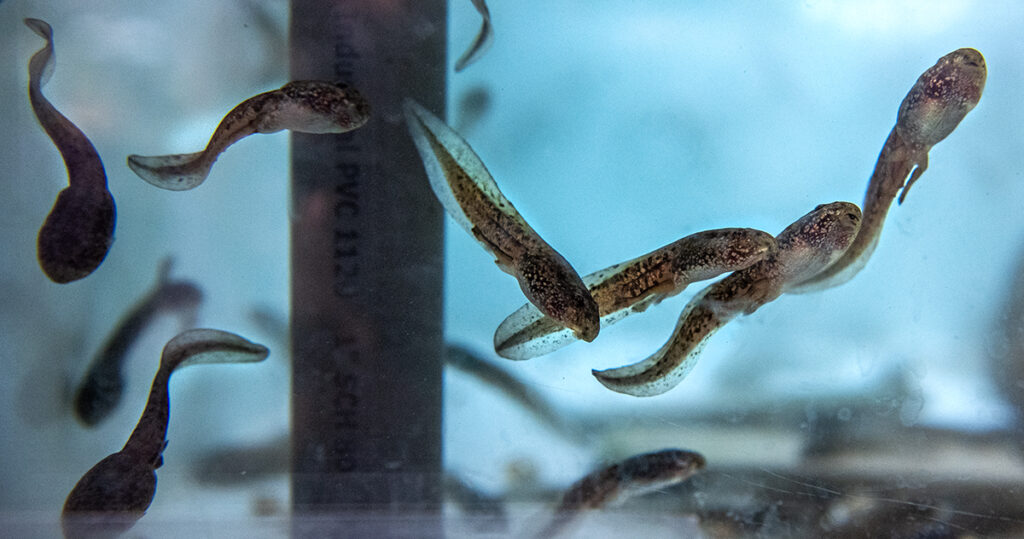
The frogs were bred at the Los Angeles Zoo’s breeding program, then transferred to Long Beach as tadpoles, where aquarium staff reared them through metamorphosis into froglets and frogs. The process typically takes one to two years, though the species can remain in its tadpole stage for up to five years, making a given frog’s age something of a mystery even to the people who raised it.
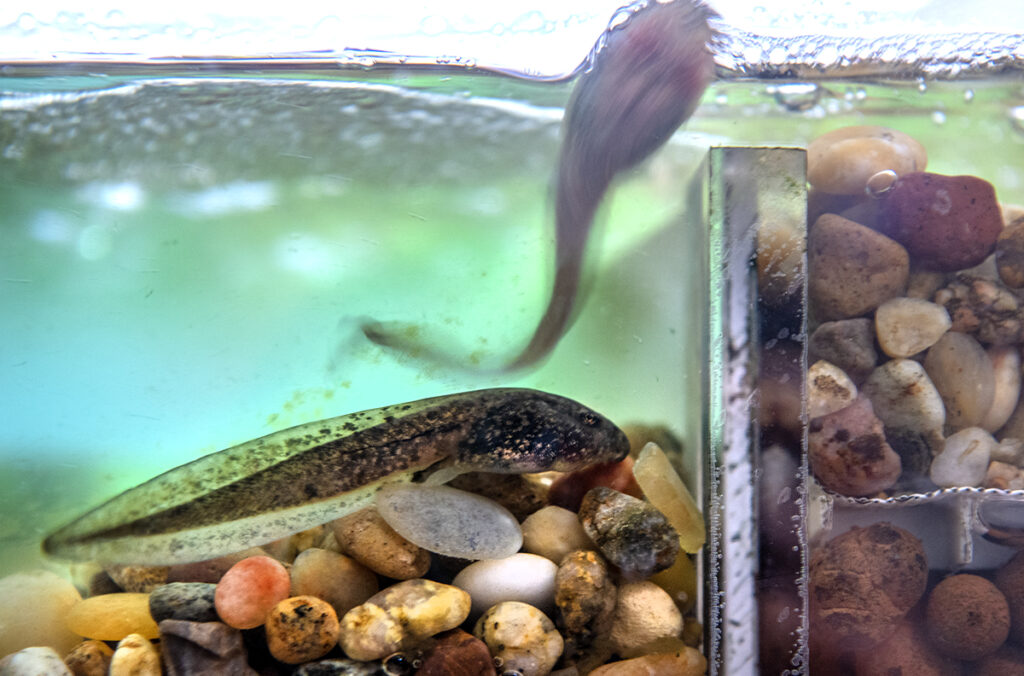
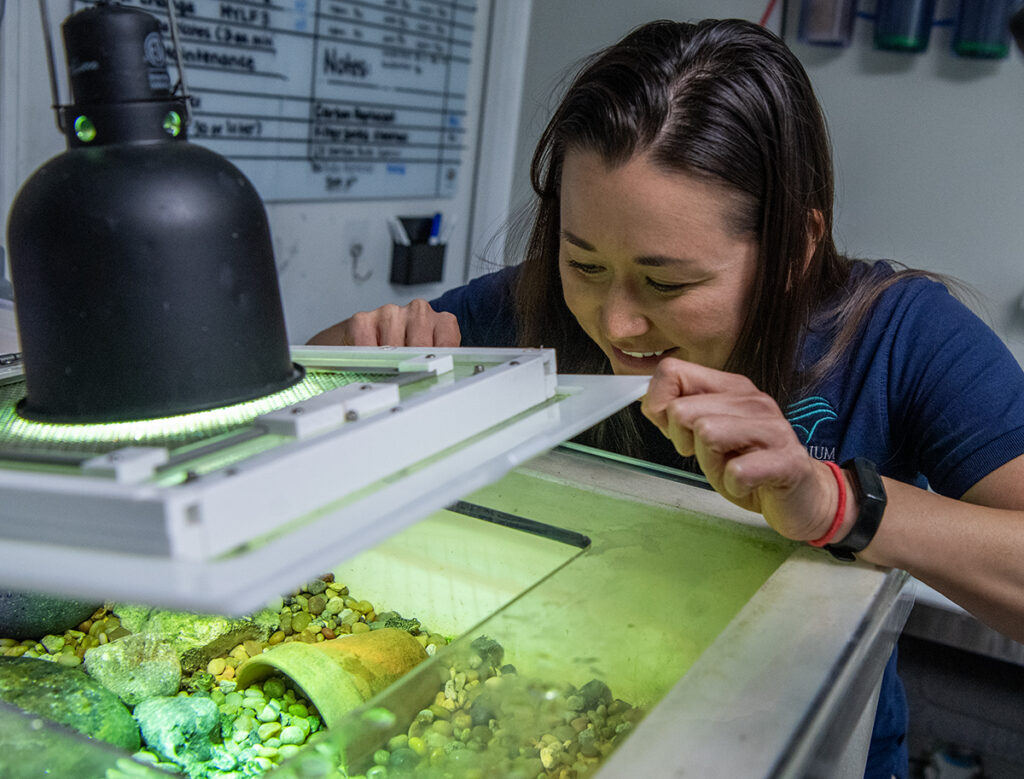
Inside the aquarium, the water is engineered to mimic the mountains it’s standing in — kept near 60 degrees in summer, the temperature currently found in the streams the frogs call home, and cooled to around 52 degrees in winter, with reduced UV exposure to simulate the season’s shorter, dimmer days.
The aquarium’s involvement began in 2021, in the aftermath of the 2020 Bobcat fire, which tore through the central San Gabriel Mountains and destroyed an estimated 95% of the frog’s remaining usable habitat.
“They had salvaged some tadpoles from the fire-impacted areas, and they ended up bringing a handful of them here,” said Erin Lundy, with the aquarium’s conservation team. “And then we also had some captive-bred ones from the L.A. Zoo that year, and that was our first group.”
Since then, the team has expanded to include the U.S. Fish and Wildlife Service, the U.S. Forest Service and the California Department of Fish and Wildlife, which help monitor populations and oversee releases.
As the aquarium’s tadpole numbers have grown, some are now sent to the Santa Ana Zoo each October to continue growing until they’re ready for reintroduction. Frogs are carefully separated by genetics and population of origin, so each can be released back into its native range and preserve healthy genetic lines.
“I think that we have some responsibility to give the animals the best chance that they could possibly have,” Lundy said, “but this is certainly a species that without a good amount of human intervention would not exist to this day.”
Much of the aquarium’s work is now focused on an even more elusive threat than fire: chytrid fungus, a microscopic pathogen that attacks the keratin in amphibian skin, blocking the salt absorption frogs rely on and eventually causing cardiac arrest. It has driven amphibian populations to collapse worldwide, and mountain yellow-legged frogs appear especially vulnerable to it.
“Some amphibian species over time have developed a resistance to chytrid, and so part of the intention of growing so many animals is hoping to find what gene that is that introduces some chytrid resistance,” Lundy said. Researchers are testing whether frogs can be inoculated before release, or whether introducing different microbes to their skin might help them fend off the fungus on their own.
Lundy has now been on three of the aquarium’s release trips, watching frogs she has cared for — some for years — carried up into the mountains and set loose into the streams they were bred to repopulate. It is, she says, a strange kind of joy.
“It’s a little bittersweet because, oh no, I’ve been taking care of you for so long, but that is the point, so it feels a little bit like Christmas Day,” Lundy said.
Not every frog leaves the same way. Some, she said, shoot off into the current without so much as a pause. Others linger at the water’s edge beside her for a few minutes before finally disappearing beneath the surface.
“Almost feels like they’re saying goodbye,” she said.