
Long Beach families can soon send their children to a free Westside dual-language preschool offering groceries, mental health support and special education services to students and their families.
The new school is housed in the West Facilities Center, a resource hub operated by the city’s Department of Health and Human Services. The center already includes a family health clinic and a Women, Infants, and Children office, and the preschool will augment those by offering wraparound services for the whole family in addition to early education for about 50 students. It’s an effort to invest in families on the Westside, an area of the city where existing providers can meet only 30% of the demand, according to a city press release.
The preschool, operated by the nonprofit Un Mundo de Amigos, is expected to open later this fall, but families can join a waitlist for the new preschool or immediately enroll at one of Un Mundo’s two other sites, according to the program director Yolanda Silva.
All families are welcome to apply, she said — Un Mundo de Amigos has no income requirements — but those with the highest need will be prioritized. That includes low-income families, families seeking employment and those with open court cases. Higher-income families can enroll if space allows, but they may pay a small fee.
Families interested in enrolling in the Westside preschool (or other sites) can contact Silva directly at [email protected] or by phone at 562-472-8099. They can also book a tour through the preschool’s website and specify that they are interested in the Westside location.
Why it’s opening now
Renovations to the Westside site were recently completed (to the tune of $1.8 million thanks to grants and state assistance Un Mundo received), but the project has been long in the works.
More than 15 years ago, Laurie Petersen founded Un Mundo de Amigos as a way to “give back to the community,” she said. She’d read research about the critical foundations preschool establishes for young children, and she wanted to direct resources toward the greatest need.
“I looked for the poorest ZIP code in the county of Los Angeles with the least number of preschool spaces per capita for four-year-olds,” she said. Central Long Beach came up, she said.
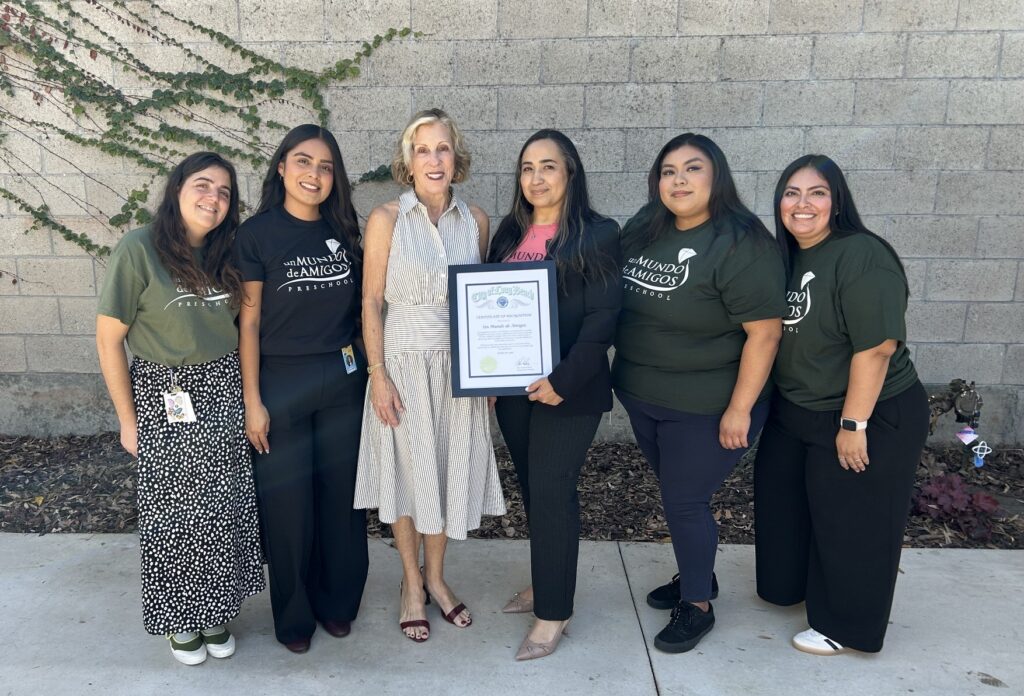
Petersen bought two used car lots on Long Beach Boulevard between 14th and 15th streets and built the first Un Mundo de Amigos “from the ground up,” she said. Since then, she has founded a nonprofit, donated the school to it and opened a second location downtown.
In recent years, she began exploring options for opening a third location on the Westside, which she called “a desert of resources.” A space at the West Facilities Center, which had been vacant for years, was a perfect option, she said.
It’s especially needed, Petersen said, because of how she has seen the preschool population change. Families are navigating economic challenges and a high cost of living, fears of immigration enforcement, impacts from COVID on young children’s language and development and a larger population of students with disabilities who may not be getting the services they need, she said. Those challenges mean many arrive to kindergarten and aren’t ready to be there, she said.
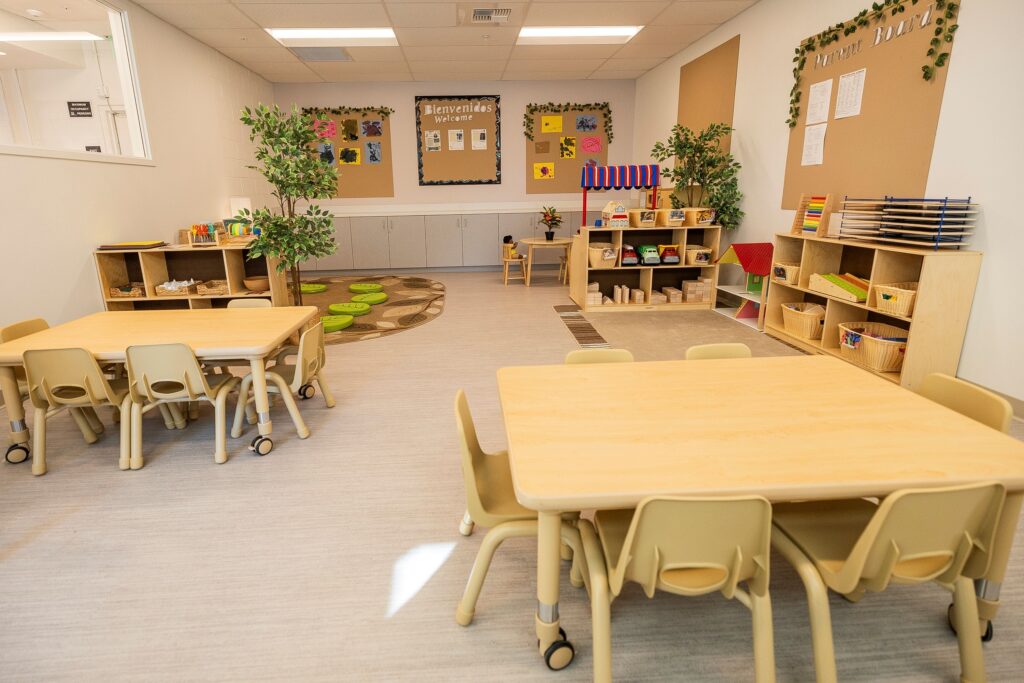
Un Mundo de Amigos aims to fill those gaps by building whole-family support into the school’s approach. Un Mundo preschools have food pantries on site, stocked with fresh organic fruits and vegetables as well as pantry staples and supplies like diapers. Mental health support for families is available twice a week, and they have access to medical clinics and dental care, Petersen said.
The new Westside school will offer early intervention, evaluation and services for students with disabilities — helping fill a critical gap for families, some of whom have to choose between going to work and taking their child to speech therapy, Petersen said.
Un Mundo staff and their partners offer programs and services onsite, since many families are fearful of seeking resources in public, Silva said. She emphasized that the Un Mundo team has worked to build strong relationships with the families they serve.
“It takes a lot for somebody to ask for help,” she said. “We built those relationships where they don’t hesitate if they’re going through a family emergency. They come to us,” she said.