This story was originally published by EdSource. Sign up for their daily newsletter.
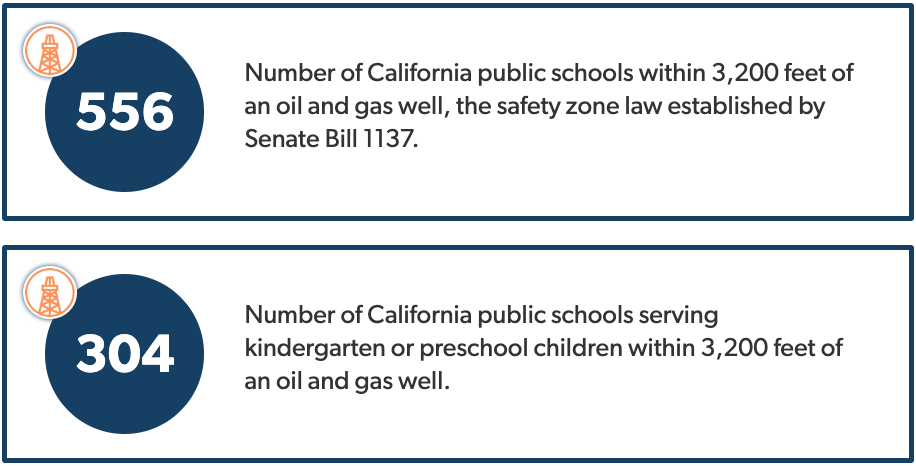
The Trump administration is suing California over a law preventing new oil and gas wells from being located too close to schools, homes and other sensitive sites. The 2022 law, Senate Bill 1137, prevents new drilling within a safety zone of 3,200 feet, a little over half a mile, around schools, hospitals and parks, based on public health recommendations.
In the suit filed in January in the U.S. District Court for the Eastern District of California, the U.S. Department of Justice said SB 1137 violates federal law and hampers domestic energy development. “SB 1137 would knock out about one-third of all federally authorized oil and gas leases in California,” said the Department of Justice in a press release. The government’s request for a preliminary injunction stopping the enforcement of SB 1137 is scheduled to be heard on March 20.
SB 1137 went into effect in 2024, after a long battle between environmental health groups and the oil industry. The 3,200 foot buffer was created to reduce exposure to harmful toxins. However, there are already many oil and gas wells within the safety zone protecting schools, and the law allows those wells to continue operating as long as they comply with additional regulations. Those new requirements include closely monitoring emissions, reporting leaks and accidents and limiting dust, noise and light emanating from the facility.
Health and safety risks with exposure to oil wells
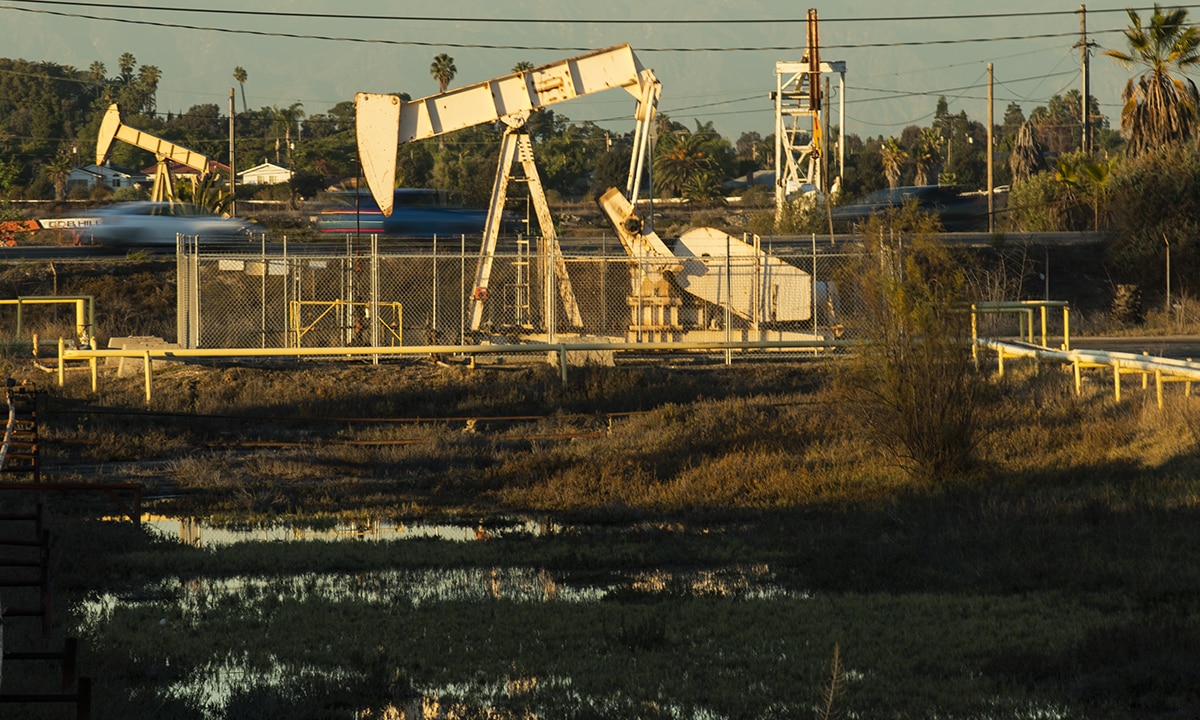
As many Californians know, oil extraction has a long history in the state. With urban sprawl, neighborhoods and schools ended up near wells. The close proximity of children to the wells can have deadly impacts, claim environmental justice advocates, due to highly toxic chemical byproducts of oil extraction, including benzene and hydrogen sulfide. Communities close to oil and gas wells, studies have suggested, are at increased risk for asthma, cancer, cardiovascular disorders and negative birth outcomes.
In addition to long-term health impacts, there are immediate safety issues next to oil production sites, with several noted accidents in the past year: an explosion and fire at a refinery in El Segundo, and oil spills in Ventura and Monterey counties.
A history of oil wells near homes and schools
Unlike other oil-producing states, California drilling often happens close to homes and directly in neighborhoods. A 2020 analysis found that over 2 million people in the state live within a half mile of an oil or gas well. About 7.37 million Californians lived within 1 mile of a well — nearly one fifth of the state’s population — with low-income communities and communities of color disproportionately exposed.
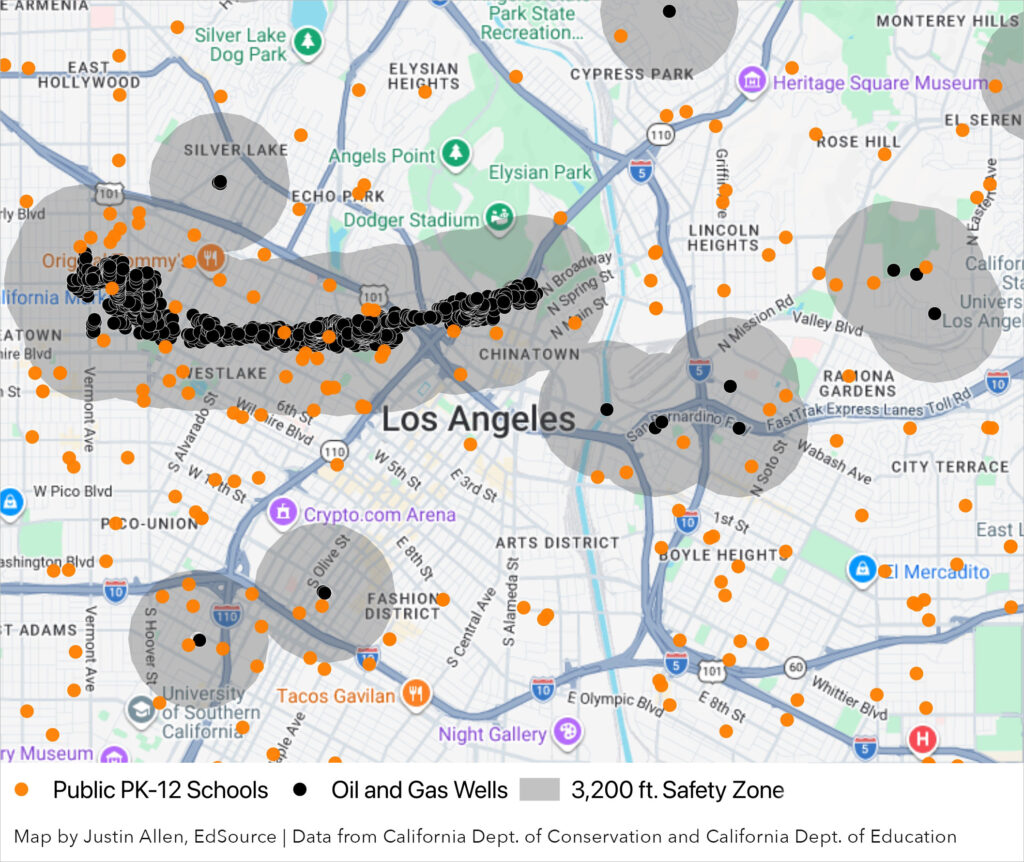
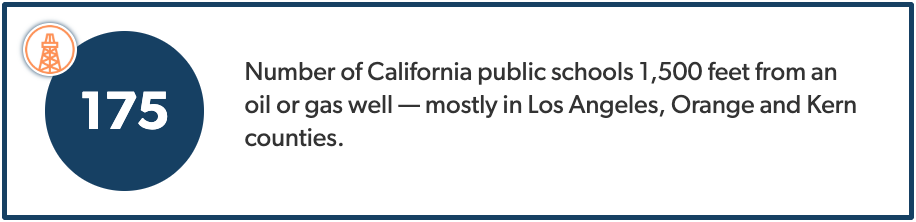
Oil and gas wells are concentrated in Southern California, where they appear in often surprising places — like the oil derrick (now decommissioned) once located at Beverly Hills High School. Many schools are even closer than the 3,200-foot setback mandated by SB 1137 for new drilling, with 175 schools within 1,500 feet (a more conservative safety zone used by the Dallas City Council in a 2013 ruling) of an oil or gas well.
A concentration of schools near oil wells in the Los Angeles basin
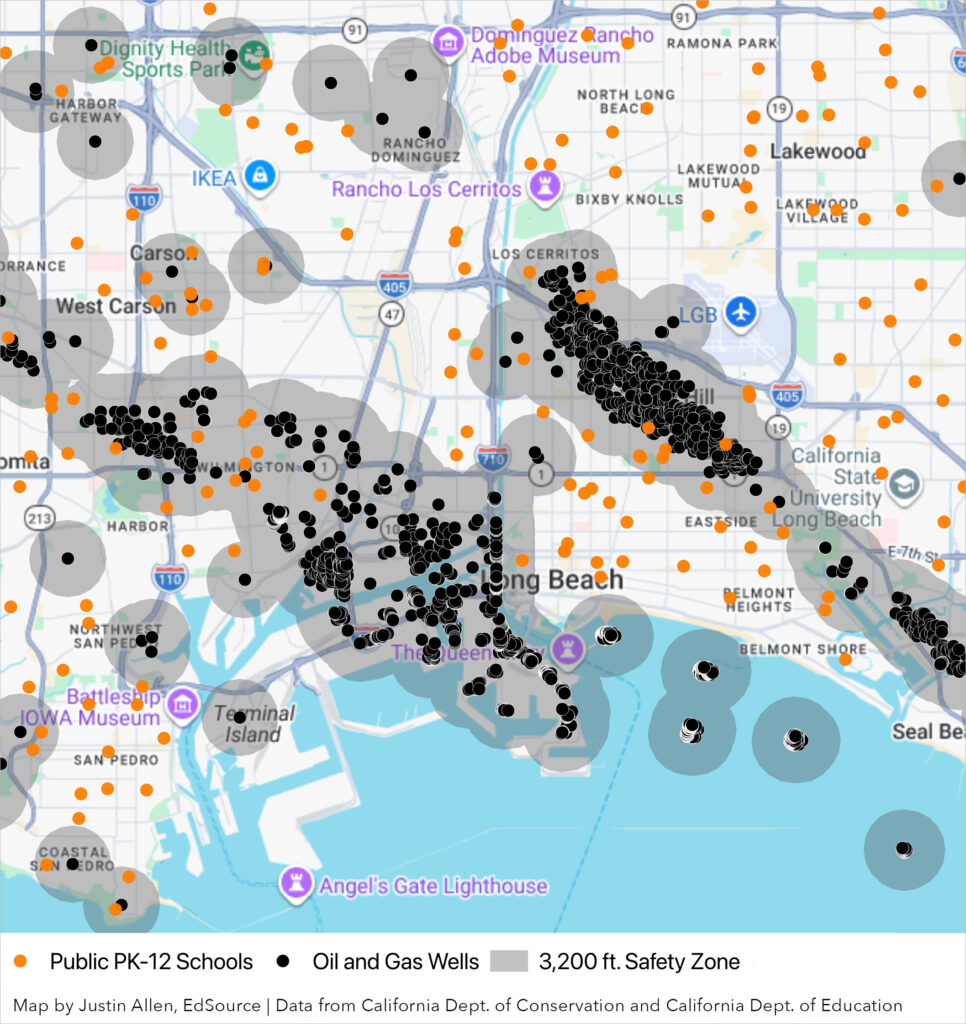
EdSource’s analysis showed the greatest numbers of schools located in the state’s safety zone are located in the Los Angeles basin, including the city of Los Angeles and nearby cities, including Long Beach, Compton, Torrance, Whittier, Montebello, and Huntington Beach. In the Los Angeles Unified School District, 165 schools are within 3,200 feet of an oil or gas well, nearly 13% of LAUSD schools. In Long Beach, 23% of schools are in the SB 1137 safety zone — 22 of a total 94 schools.