
It currently takes Long Beach middle schooler Alison Sosa Reyes 20 minutes to get to Stephens Middle School, where she spends her days learning in English and Spanish. But once the Westside dual immersion program program moves to a campus more than four miles away, she’ll have to wake up as early as 4 a.m. to get to school, she said.
She is not alone.
Parents and students say they’re facing impossible choices as the district consolidates its Westside and East Long Beach dual immersion middle school programs onto a different campus north of the city’s airport. In interviews and at recent school board meetings, parents and students have urged Long Beach Unified to reconsider the consolidation, which is set to begin in the 2027-28 school year. The district says it’s necessary to accommodate increasing demand for dual immersion. But parents and students say it may force some to lose their chance at a bilingual education — particularly those on the Westside facing long commutes on public transit.
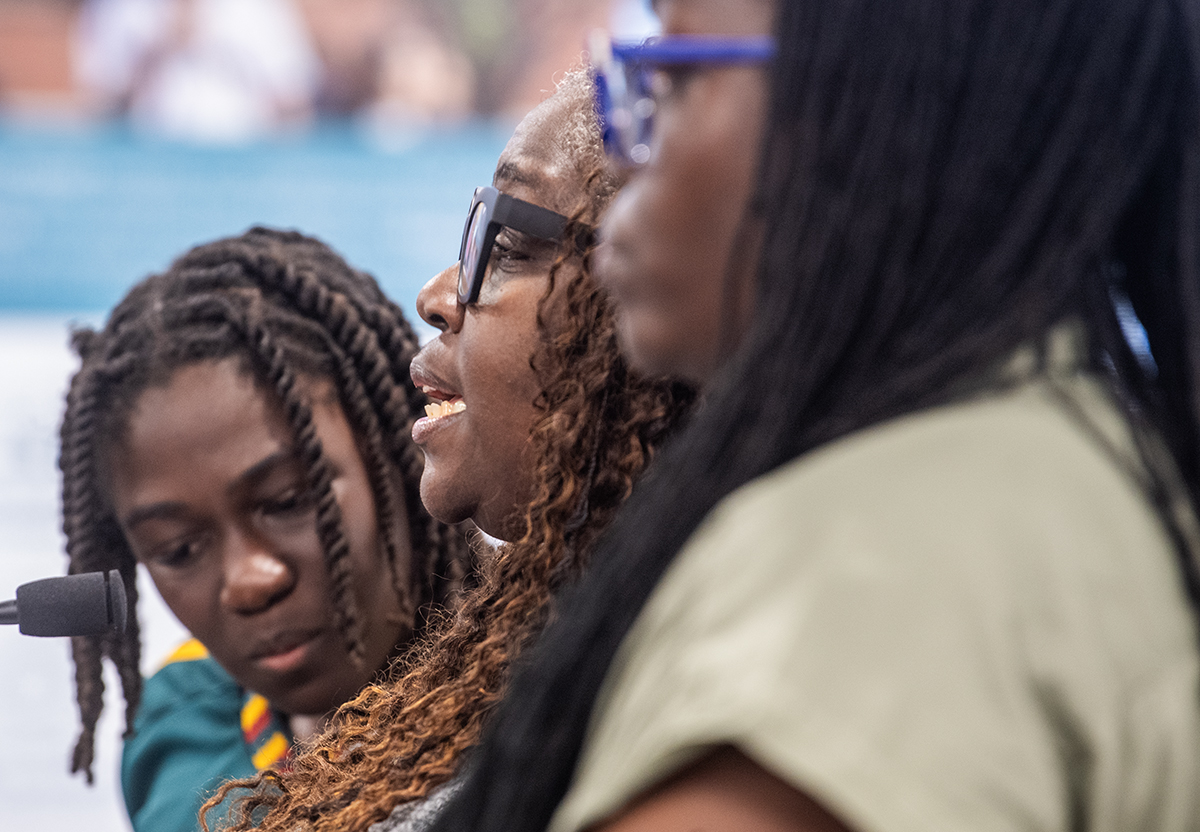
“You have stated that no student’s future should be decided by their ZIP code or their family’s circumstances,” said Ruby Martinez, a dual immersion student at Stephens Middle School on the Westside, “but that’s what is happening to us.”
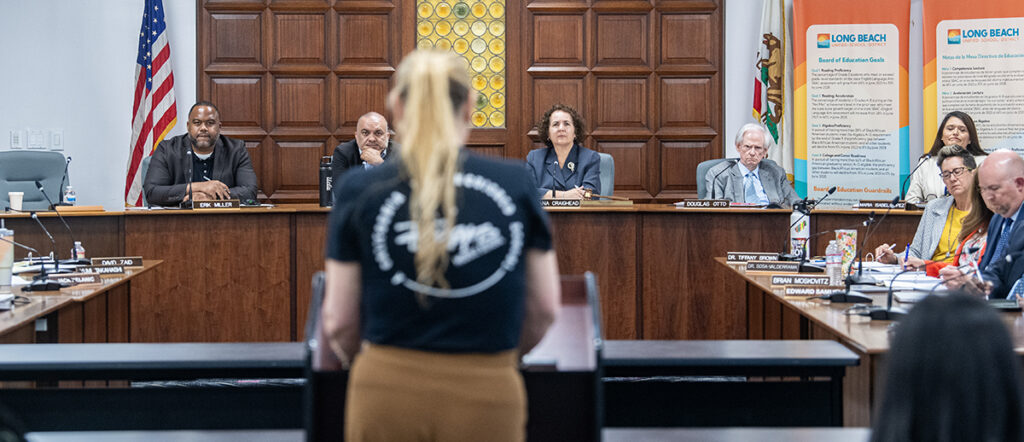
One Westside parent of three said that it is not possible to make multiple round trips to the new campus (the former site of Hoover Middle School) while balancing work and childcare. “Families should not have to choose between continuing their children’s education and having safe, reliable transportation,” she said.
If students choose to take public transportation, some will have to sit on city buses for hours every day to get to Hoover — a “huge chunk of time,” Stephens parent Tia Hart told the Long Beach Post.
She pointed out that Stephens students are performing well where they are. They improved in English, math and science over the last year, according to the California School Dashboard. And in 2024, Stephens was honored as a California Distinguished School, the first time in 19 years a Westside school earned the honor.
Taking away those opportunities from students in an underserved community on the Westside in “not an equitable situation,” Hart said.
Seventy-eight percent of students at Stephens are considered socioeconomically disadvantaged, according to the California School Dashboard.
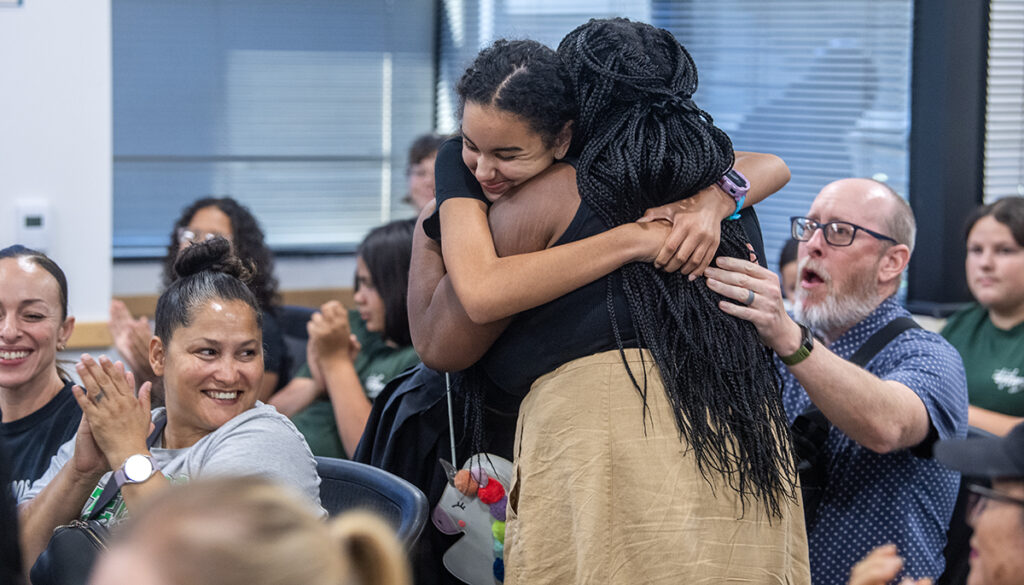
Parents added that the Westside program, which exists alongside English-only grades, has not yet had a chance to grow. The dual immersion pathway began at Stephens this past school year, enrolling 30 students, the district’s chief academic officer, Brian Moskovitz, said in a December board meeting.
Keller Middle School, an entirely dual immersion campus in East Long Beach, enrolled 545 students last school year, according to state data. Forty-one percent of Keller students are considered socioeconomically disadvantaged.
As elementary dual immersion programs continue to expand, the district will not be able to accommodate the number of families who want their children to attend Keller, Moskovitz said.
“We could continue to try to accommodate at Stephens,” he said in December, “but we know that families are seeking the school-wide model.”
Yet families who spoke with the Post said the nurturing staff and welcoming culture at Stephens is precisely what drew them there.
Thenera Bailey said her son is “thriving” in the Stephens dual immersion program, improving not only in Spanish, but in math, where he previously struggled. On the Stephens playground, Bailey’s son speaks Spanish with students who are not in the dual immersion program, she said.
“Some of that comes from being a neighborhood school,” which may be hard to replicate at the new, dual immersion-only campus, Bailey said.
Stephens parents have been posting flyers and speaking at board meetings in an effort to gain the attention of board members and district administrators, who they said left them out of the decision to end the program at Stephens.
On Wednesday, former city councilmember Tonia Reyes Uranga sent an email to the district’s new superintendent, David Zaid. Uranga raised questions about the district’s decision-making process and expressed support for the parents requesting the program remain at Stephens.
Zaid responded to say that the district will hold future meetings for families and community members to ask questions. In a statement to the Post, district spokesperson Eric Mitchell added that LBUSD “remains committed to listening to families and acting on our values while keeping students at the center of every decision.”
Crystal Ramirez said that the district’s dual immersion taught her daughter, a rising seventh grader at Stephens, Spanish — “the only way she would communicate with her grandmother.”
Yet because Ramirez doesn’t have a car, she fears she’ll be forced to take her daughter out of the program and that all the Spanish she learned will be lost.