

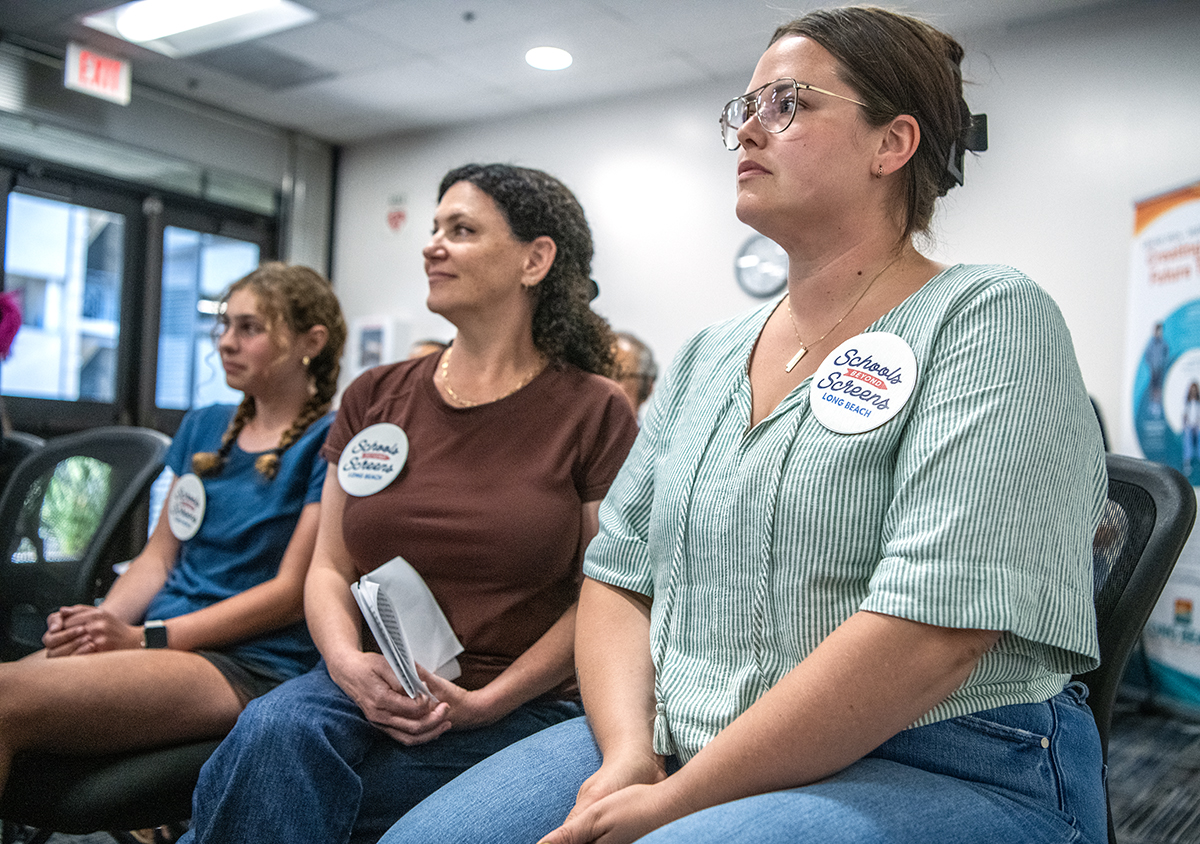
A group of parents and students are asking Long Beach Unified to restrict screens and technology in classrooms, spurred by Los Angeles Unified’s recent move to strictly limit devices used in instruction.
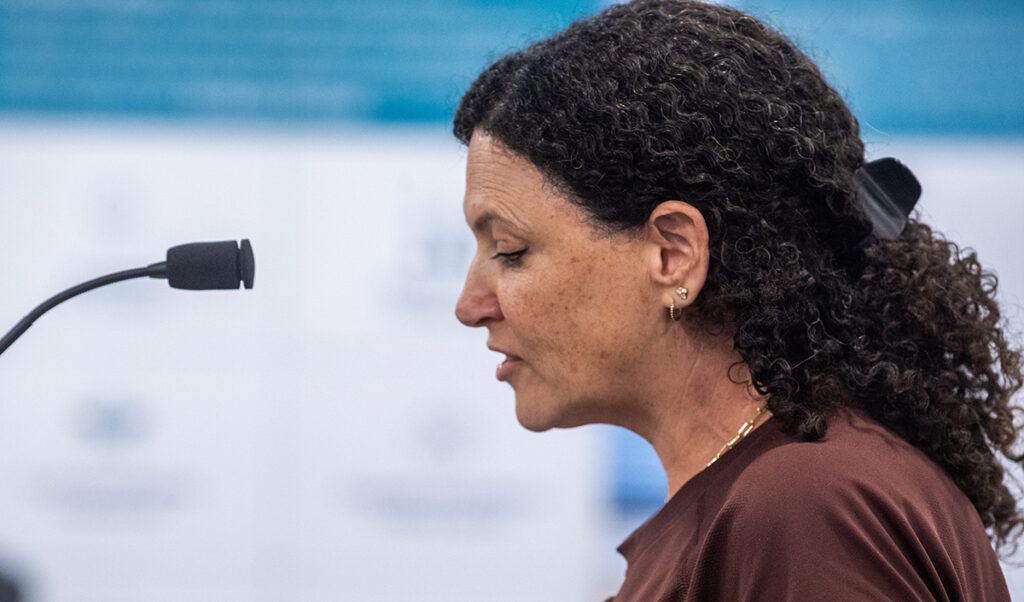
On Wednesday, Kim Tashkin, a parent of an LBUSD middle schooler, spoke before the board of education, raising concerns that screen use could be hurting students. “It is unfair to allow our kids to be used as guinea pigs,” she said.
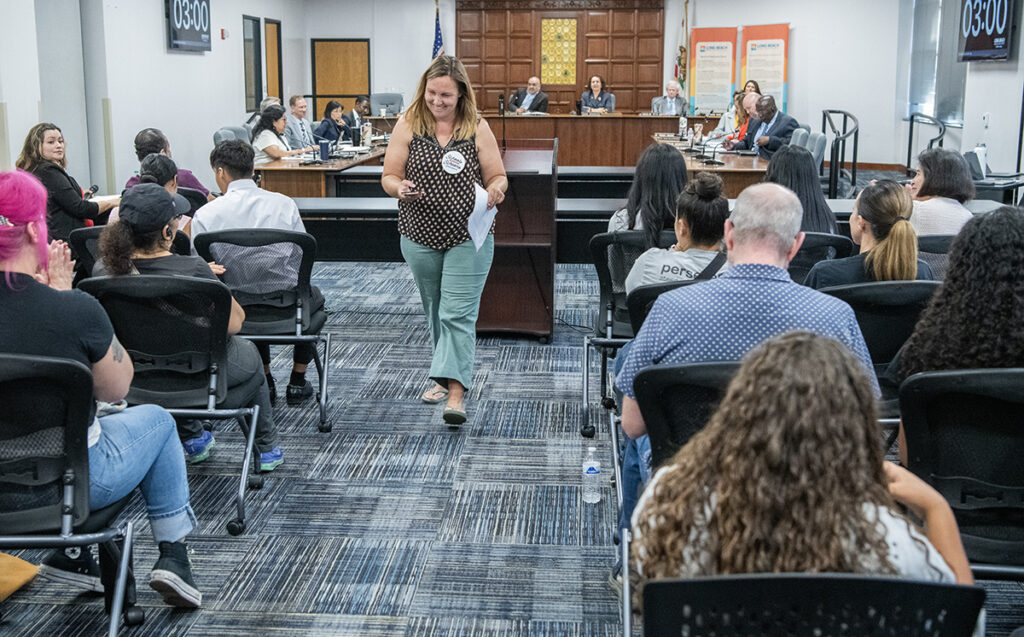
Tashkin is among several dozen Long Beach parents pushing for evidence-based tech policies in the district. On Wednesday, they pressed the board about educational technology spending, gamified learning, surveillance and data collection and impacts on students’ critical thinking, attention and socialization. LBUSD has taken steps to limit tech in the past, adopting a policy in 2025 to curtail phones and personal devices. But some parents say it isn’t enough, especially when research has not clearly shown that providing students with devices improves academic outcomes.
The Long Beach group is a chapter of a national Schools Beyond Screens movement, founded in 2025 by Los Angeles Unified parents, according to the group’s website. On the heels of LAUSD’s recent policy, which eliminates laptops and tablets for students in first grade and below and caps screen time for older students, Long Beach’s chapter is gaining momentum, Tashkin said.
She formed the local chapter when she noticed that her daughter spent much of her class time on the computer, she said. District-issued paper workbooks remained untouched at the end of the school year, she said.
Across the country, screens have become integral to American education, even as educators and researchers debate whether they have improved students’ learning. Tashkin grew alarmed as she dove into the research. Some types of digital instruction have been found to promote learning, particularly for certain subjects and age groups. But some research also shows that excessive tech use poses risks to students’ development. Broader research links high overall screen exposure with poor mental health outcomes.
Tashkin’s daughter Lea, who recently finished sixth grade, told the Long Beach Post in an interview that she spends about two and a half hours on screens during the school day. “It feels so lonely” being in a silent classroom with headphones on, she said, and noted that she has used a laptop in school since kindergarten.
Indeed, laptops and tablets are available for the district’s youngest learners. Becky Peterson, who retired this spring after more than 25 years teaching in LBSUD, said her kindergartners all had access to laptops but that she only let her students use them for about 20 to 30 minutes once a week. “I use technologies very, very sparingly,” she said.
And while there is no requirement that she use tech, much of the curriculum guide and suggested activities rely on screens, she said. Creating her own lesson plans without screens requires more time, she added.
That choice reflects her teaching philosophy (“kindergarteners needed me to be interacting with them,” she said), as well as her fear that as students grow habituated to the engaging pace of screen learning, she increasingly has to compete for their attention. “I’m expected to put on a show,” she said, adding, “I’m not nearly as fascinating as a screen of animated characters.”
Still, Peterson said she sees the utility of more technology use as students get older, and that it would be a disservice not to prepare students for our technologically driven world.
In interviews, parents said they are not asking for a prohibition on tech. Dismantling the entire system would cause “a lot of growing pains,” said Mo Baker, one of the co-leads of Long Beach’s SBS chapter.

Yet, parents asked for more transparency on how district money is being spent on technologies — from the devices themselves to the contracts with ed tech companies like Curriculum Associates (which makes the i-Ready reading and math assessments), ST Math (a visual program using puzzles and games) and Amira (an AI-powered tool that assesses students’ reading).
One parent, Elizabeth Jackson, suggested a return to a computer lab model, rather than integrating laptops and tablets directly into the classroom. Other parents asked for clearer guidelines about how their children will be protected from potential harms.
A spokesperson for Long Beach Unified, Eric Mitchell, said the district “encourages families with questions or concerns about their child’s classroom experience, including the use of instructional technology, to work directly with their child’s teacher or school administrator.”
Referring to the reliance on tech in schools, parent Brittany Hart Scholten said, “It’s a train that’s really hard to stop.”
Los Angeles Unified provided a template to change course, parents said, one they’re motivated to replicate in LBUSD.