

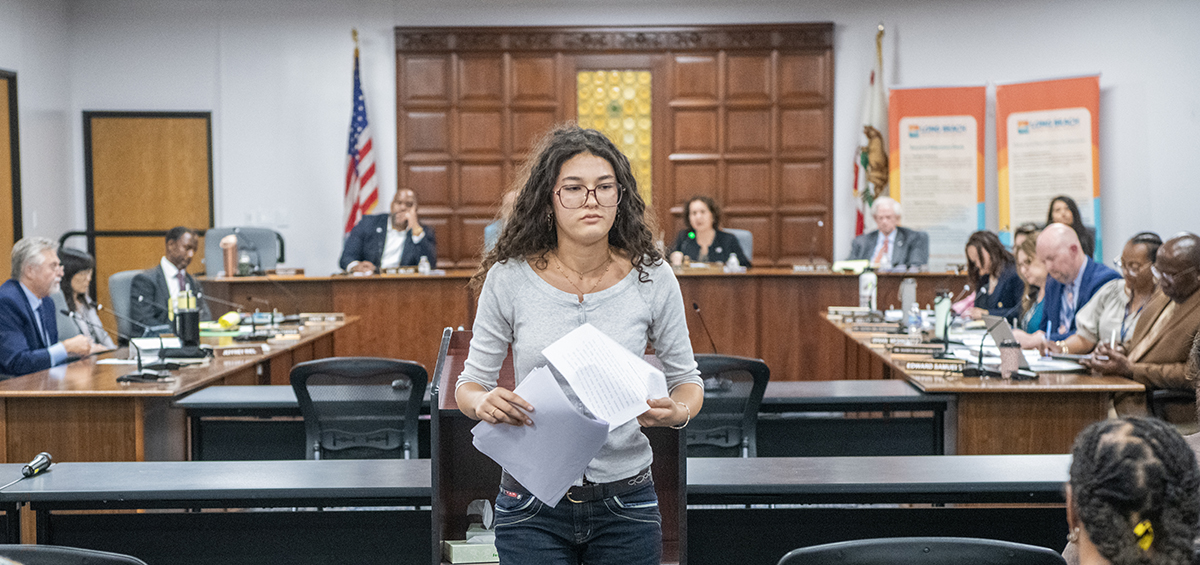
Long Beach Unified high schoolers are using performance art to press the district to ban the use of artificial intelligence, saying the technologies pose threats to their safety and development.
Sarah Rudman, a senior at Wilson High School, is leading the charge. As she observed AI use proliferate in her school, what she saw alarmed her — from teachers using chatbots to grade assignments to a culture of AI-assisted cheating among students, she said. AI use has become commonplace in the classroom, she said, and a suite of negative effects are emerging.
“I was just filled with intense rage,” she said.
In response, she formed the Anti-Generative AI Campaign earlier this year, an effort to organize students and lobby the district to ban AI in schools. Currently, the district shares general guidance on the use of AI in education, tips for teachers and students and a list of authorized AI tools on its website.
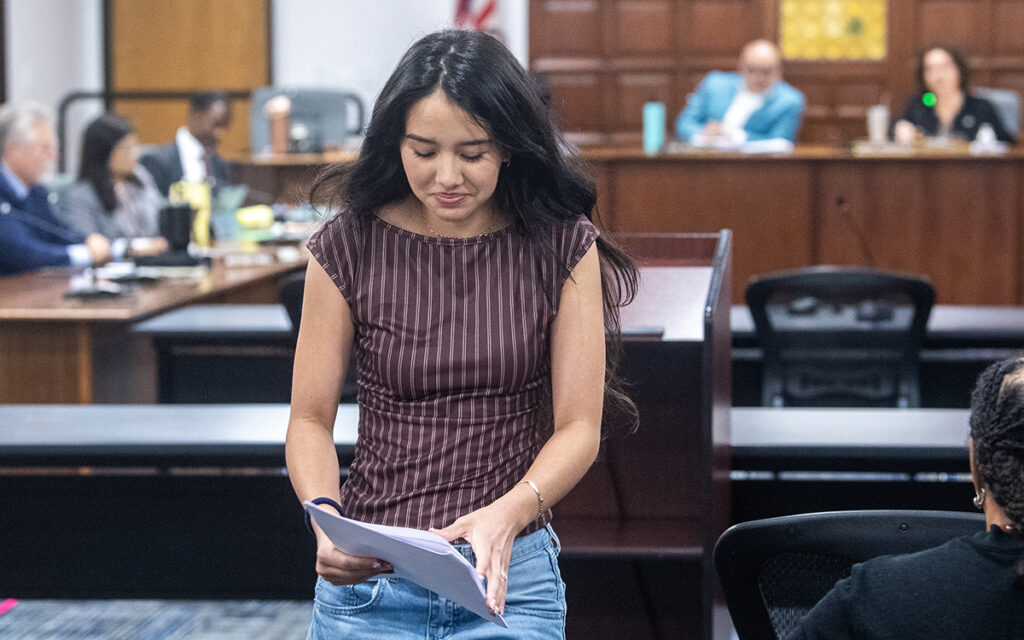
Rudman interns for the district’s media services division, and when she shared her concerns with other interns, many joined the campaign, which now includes about 10 students across Poly, Renaissance, Sato and Wilson high schools, Rudman said. In recent weeks, the students have been speaking at board meetings, cleverly communicating their concerns through short skits performed during the public comment period.
In September, Rudman stood before the school board with a backwards baseball cap and sunglasses, cosplaying as a barely-literate super senior repeating a year of high school. “Now I can finally graduate with the help of a chatbot and become what I was born to be: a college frat leader,” she facetiously told the board.
Paolina Cummings, a Renaissance student who thought up the idea to perform skits, addressed the board next. She took on a “ditzy” persona to flippantly address grave concerns about AI use, she said. She explained that everyone was concerned about “global warning, or is it global warming?” drawing a connection between the resource demands of AI and climate change, but that an AI had told her not to worry. “Who needs literacy and nuance and critical thinking anymore? Those things are of the past,” she said, in character.
Other members followed, illustrating the dangers of deepfakes, fears about the bastardization of art and the risks of using AI for mental health support, concluding each public comment with an “end scene.”
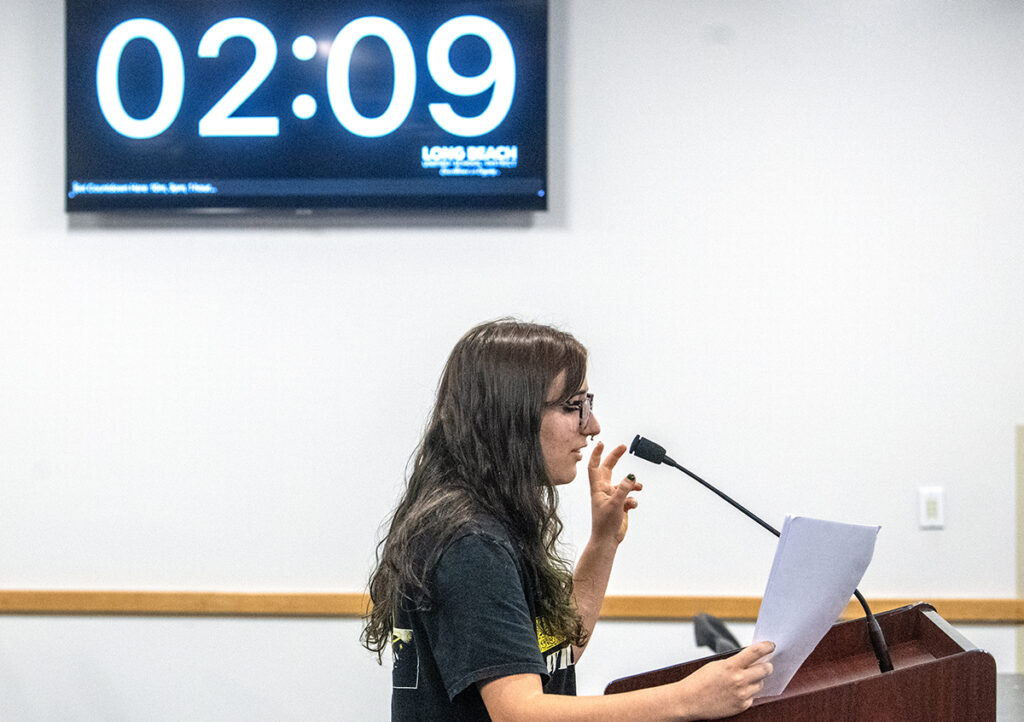
The students returned to the boardroom in October, this time armed with data they had collected from a few dozen students across the district. They reported that 91% of their survey respondents said they had used (or seen someone use) AI to cheat on assignments; 85% of respondents had seen (or heard about) their teachers use it. Students said it was common to see ChatGPT open on district-issued Chromebooks.
One member of the campaign said her advanced placement history teacher provided such disjointed lessons and incomplete information that most students used chatbots and AI summaries to complete assignments by their due dates, what she called a “tempting solution” to alleviate the stress of a demanding academic schedule. She got an A in the class, but she failed the AP exam — a wake-up call that moved her to join the campaign and commit to learning without the aid of an AI, she said.
The students, alongside Schools Beyond Screens, another group that has been pushing to limit tech in schools, are asking the district to pass an AI moratorium and return to pen and paper, when possible. The alternative is dire, the students warned. Mio Ruckman, a junior at Wilson High School, said that while most students are graduating from LBUSD, far fewer are prepared for what comes next.
In 2026, 91% of LBUSD students graduated, but just 62% were considered college and career ready, according to the California Schools Dashboard. AI use is not only stunting students’ cognitive development, the campaign managers said, but limiting their artistic expression, even exploration of their interests.
Kim Tashkin, one of the leaders of Long Beach’s Schools Beyond Screens chapter, said her group is now working with the district to advance a screen policy, and she hopes for an accelerated ban on AI. Parents and administrators can read research on how screens and AI affect students, Tashkin said, but hearing from the students themselves is especially powerful. “They’re living it right now in real time,” she said.