

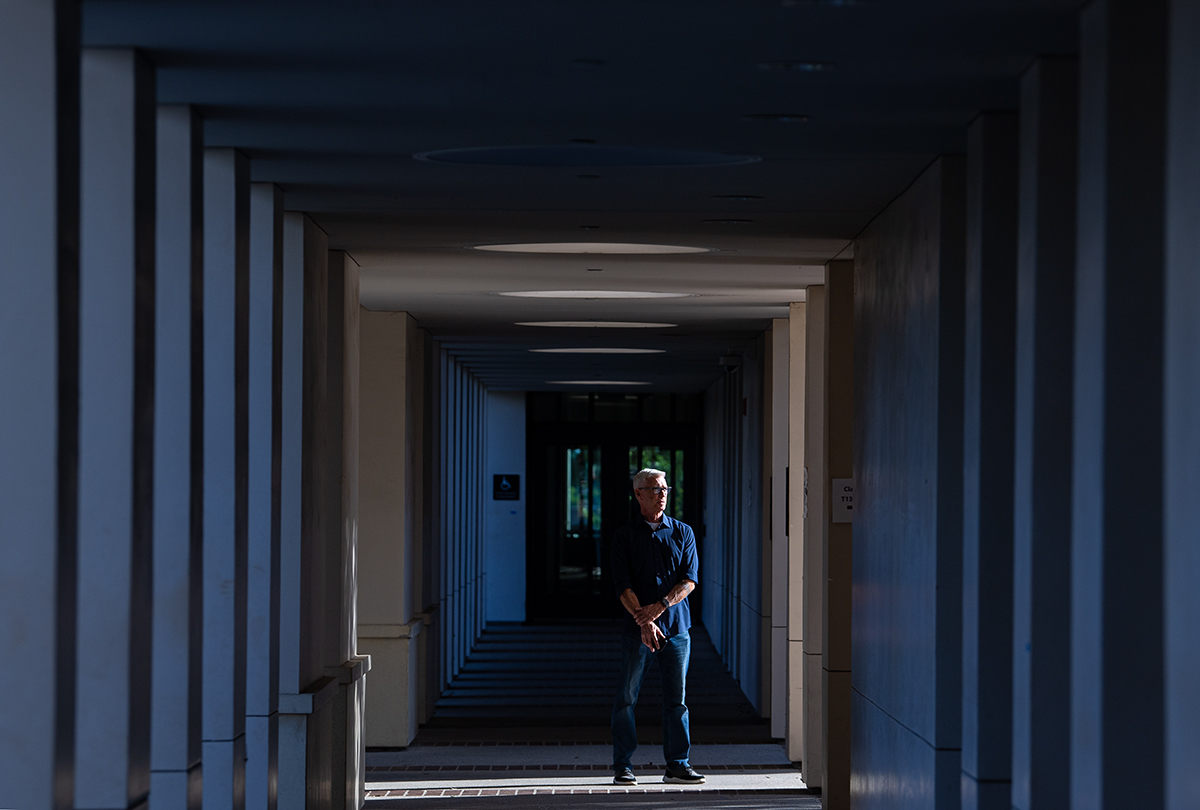
In the year and a half since Long Beach City College began offering courses in trauma studies, enrollment has exploded, more than doubling from 68 students in spring 2025 to 180 students this fall.
LBCC psychology professor Kyran Barr, who has led the effort to bring trauma studies to the college, was initially surprised by the level of interest, but it reflected a comment he said he heard across campus: “This is much needed.”
Now, Barr is helping the college take the work further. This fall, LBCC launched one of the country’s first undergraduate degrees in trauma studies, a way to educate students on what trauma is — “an event or a series of events that overwhelms a person’s capacity to cope,” Barr said — and build the next generation of workers in mental health fields and beyond. The effort to bring a trauma-informed lens to the campus hasn’t stopped there. The college is now training faculty and staff with the goal of giving everyone the tools to see trauma, address it and understand how it affects individuals and societies.
Barr’s efforts were born from a 2018 trip to Northern Ireland. There, he observed the scars of the Troubles, a thirty-year political conflict that killed more than 3,000 people. Artifacts of the violence — including the peace walls, which separated predominantly Catholic and Protestant neighborhoods — remain intact.
“I started thinking about what a great living laboratory Northern Ireland is to study the impact of trauma on mental health,” Barr said.
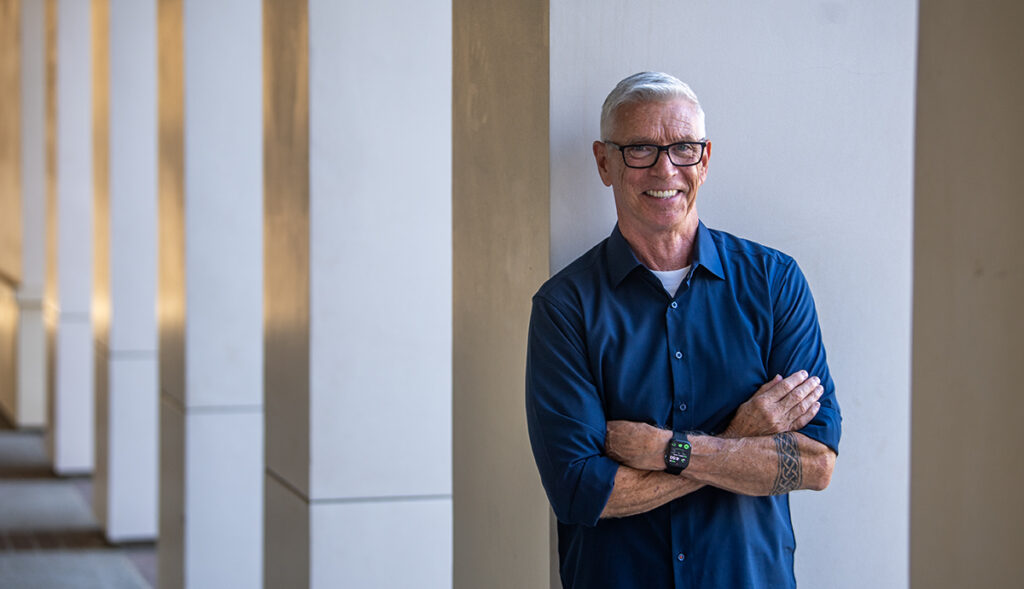
Soon, Barr learned about the WAVE Trauma Centre, a charity founded in 1991 by women whose partners were murdered during the Troubles. Since then, WAVE has grown into an organization that helps thousands of trauma survivors heal, operating on the principles of safety, trust, collaboration and empowerment, said Paul Gallagher, the director of trauma education at WAVE.
Gallagher first came to WAVE as a client, after gunmen entered his West Belfast home in 1994 and shot him six times, leaving him paralyzed. The psychological injuries came later, he said, but he didn’t have the language for his experience.
It would take years before he had the “realization that what I was experiencing over the years was because of something that happened to me, and not that there was something wrong with me,” he said. That launched him on a journey of wanting to understand trauma — and sharing that knowledge with others, he said.
Barr borrowed that multi-pronged approach to trauma education and adopted it at LBCC, a campus that serves “very vulnerable students,” many of whom have been traumatized, he said.
Barr wanted to make the classroom a safer place for them. Over his career as an educator, Barr had noticed that sometimes students disappeared from class and guessed it wasn’t the right fit or they’d gotten busy at work, he said. But he realized there might be other reasons students stopped attending: “It’s very possible that we’re triggering students,” he said.
Now, LBCC staff and faculty are learning how to avoid retraumatizing students as well as how to cope with their own overwhelm, he said. The trainings have been received with enthusiasm and gratitude.
At the same time, the trauma studies program continues to grow, and students are coming from across the country to enroll, Barr said.
Henry Soo Hoo is one of them. Soo Hoo spent years working as a banker in New York City and volunteering as a crisis counselor in his spare time when he realized he was tired of feeling disposable in the finance industry and wanted to pivot into a helping profession, he said.
As he was preparing for a career change and speaking to friends who worked as therapists, “they all said you have to make sure that you protect yourself” while listening to trauma, Soo Hoo recalled. LBCC’s trauma studies courses were perfect, he said, because they emphasized that he needed to have a “strong foundation in order to be a strong provider.”
Yet Barr sees many applications for trauma studies outside of treating patients. “I’m not trying to make people clinicians,” he said. “What we want to do is make people aware of how much trauma exists already” and give them the lens to begin to understand it in any career.
It has become a mission for him, he said, adding that he gets energized when he sees the light go on for other people.
For Angelina Larosa, that happened when she visited the WAVE Trauma Centre as part of a study abroad program with Barr’s class. There, she was surrounded by people who had experienced “capital T trauma,” she said, including a man who lost friends during the Troubles and said he had taken to the streets with a gun when he was Larosa’s age.
Despite the gravity of what she heard, Larosa left the trip with a sense of shared humanity. Trauma “affects them, yes, but it’s a piece of a much bigger puzzle,” she said. “They’re just people trying to live their lives.” Understanding that can bring everyone closer as a community, she said.
That’s one of the pillars WAVE’s work is built upon — and one that LBCC has adopted. “Trauma isolates us,” Gallagher said. “It’s very hard to recover from trauma by yourself. You need to do it with other people in a community setting, in a social setting, and that’s the beauty of this type of work.”