

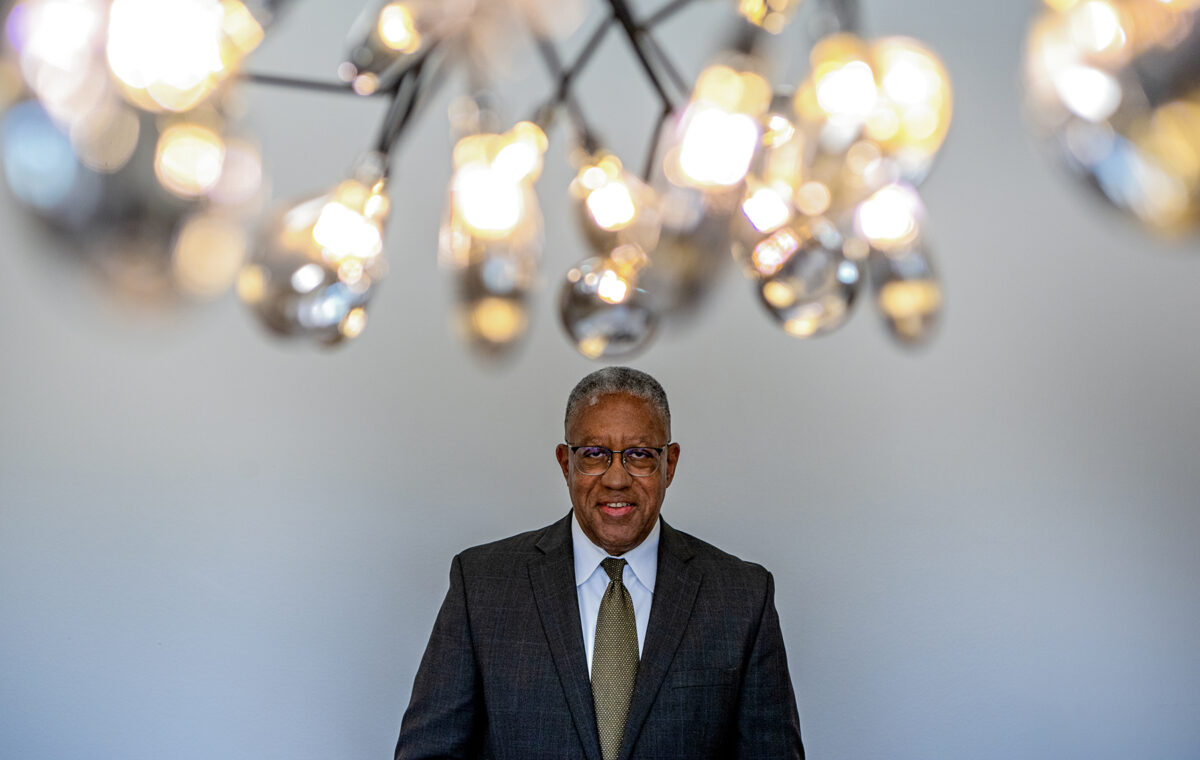
In early May, Loren J. Blanchard assumed the presidency at Cal State Long Beach. He’s coming off a successful tenure as president of the University of Houston-Downtown and six years working as executive vice chancellor for academic and student affairs. Barely a week into his new role, the Long Beach Post sat down to discuss his priorities and approach — from tuition to artificial intelligence to student success.
Responses have been edited for length and clarity.
Long Beach Post: Some people may not know that much about your background. What should people know about you?
Loren Blanchard: I am elated to be here at California State University, Long Beach. It has everything to do with the consequential impact that this university makes on students and the larger community. Many other universities have learned a great deal about how to effectively implement student success strategies through their observations and time at CSULB.
I am a first-generation student, and we’ve got a sizable number of students here that are also first-generation. I can see myself in the same shoes as students here — understanding the importance of support to ensure that students get their college degrees and understanding the kind of knowledge and skills that will prepare students to be leaders in their professions and communities.
What are you hearing from students, faculty and staff about what they want CSULB to focus on? Set out your agenda.
Let’s be clear, this is day seven. I have a lot more listening and learning to do.
That said, students are excited about understanding how we are going to move this university even further. I had a good conversation with students studying to become teachers about how the university is preparing them to effectively teach the next generation of students — and how they can start applying that knowledge as early as possible.
Faculty and staff are looking at how they can be of the best support to students by understanding barriers that students have in place, and how faculty and staff can help address those. We have quite a few academic support systems in place, and we’re really looking at the mental health side as well. We think about basic needs — looking at food insecurities and housing insecurities, childcare, transportation — all of the things that really can stand in the way of a student getting a degree.
What do you see as the major challenges higher ed is facing right now, and how do you plan to address them at CSULB?
One is artificial intelligence. We certainly have to focus on academic integrity and ensuring that there won’t be misuse or unethical use of AI, especially in the learning environment. But by the same token, we are looking at: How do we prepare students with the competencies that they need, especially for the workforce? It’s not universal, meaning that if you’re going to be a psychologist, how you might use AI is different than if you’re going to be an engineer. The California State University system is allowing students to specialize in areas around AI that make them ready for the workforce.
One of the ways that I’ve actually seen college students use AI is to augment their own learning. Students don’t always grasp concepts in the same way and at the same pace. I have seen students use AI after class to get stronger explanations of a mathematical concept, for example. They are not only applying this information to their own learning, but they’re getting better grades as a result of it.
Also, when they’re going out to do the experiential learning (an internship, for example), they’re seeing how companies use AI, and then they come back here and they’re able to explain exactly how AI is being used in their profession, and they’re working with faculty to better understand how the curriculum can be shaped to include these AI concepts.
There’s a lot of angst around unethical use and academic dishonesty using AI — that’s one side of the coin, but the other side of the coin is really watching how masterfully students are using AI. It’s a building and flying the plane process that’s happening not only at this campus, but throughout the CSU.
How are you thinking about supporting students who are either undocumented or have undocumented family members?
We continue to provide the support for them, not only in terms of academics, basic needs, etc., but also on the legal front. If we find that they’re having challenges psychoemotionally because they’re seeing other families being deported, then we point them in the direction of mental health services that we have. In the case of their family members, we can point them in the direction of resources with our external partners.
A lot of our students really take advantage of our food pantries — many students and their families are afraid to go grocery shopping. And having food access has been very helpful to a number of students and their family members.
Nearly two decades ago, Cal State Long Beach agreed to guarantee CSULB admission to students who graduated from Long Beach Unified and met the standards for CSU admission — called the “Long Beach College Promise.” Since then, CSULB has raised the standard for acceptance as its pool of applicants has grown. How are you thinking about upholding this promise to LBUSD students?
Recently, the university raised its admission standards, and as a result, a number of Long Beach high school students who had strong GPAs and had passed all their A-Gs were not being admitted.
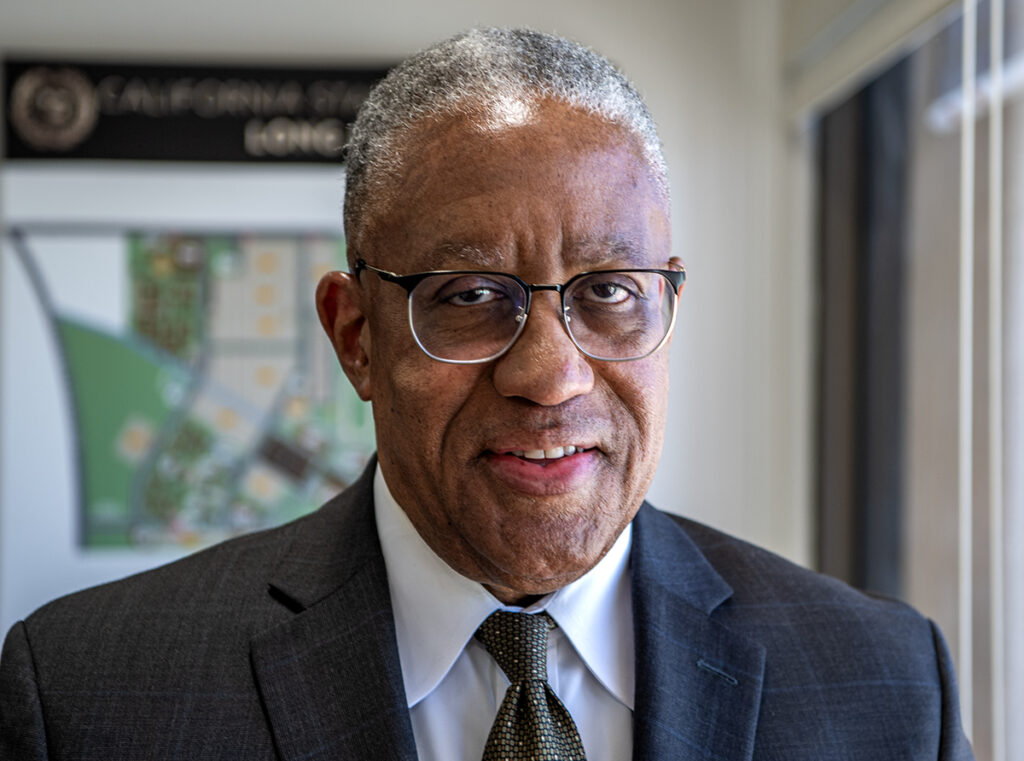
I’m really excited that CSULB began a new program called Promise To The Beach, a pilot program to admit Long Beach Unified students who did not meet the higher standards. In looking at the first cohort, many students have performed very well.
We have a strong commitment to continuing the College Promise Program. I’m exploring ways that we can even deepen it further. A large number of our graduates who have been a part of the College Promise program are now working at the Port — a great sign of how higher education can partner with K-12 as well as the community colleges and local industry to make a difference.
Many people are grappling with the value of higher ed. And while the CSU system is a high-value education, students are also facing tuition increases. How will you balance keeping education affordable while also covering the university’s costs and reducing the structural deficit?
The California State University system itself has done an incredible job over the years in trying to keep the tuition rate as affordable as possible. And by the same token, I’ll say that in order to offer quality programs, attract the very best faculty and staff and provide the best support services, it does require resources.
We’ve been very fortunate over the years in terms of state appropriations, and we’re also very fortunate because we are a highly-enrolled university.
We do have students that have financial challenges, and we work very diligently with them to help them fill that gap. But with the understanding that social mobility is our ultimate goal, so that they won’t feel that financial pressure by the time that they leave here.
How are you thinking about federal pressure on higher education around curriculum, diversity, equity and inclusion and research priorities?
With the loss of federal funds and with the DEI changes, there’s still a focus on outcomes. A number of strategies and practices that were associated with discontinued programs have significantly increased graduation rates.
More importantly, we’re getting students to timely degree completion — students across the board, not just minority students. A lot of universities have implemented and scaled these strategies because they have been so successful for all students. Many universities that have lost these funds are finding internal resources to help to continue those programs because they don’t want to see a decrease in their graduation rates, and more importantly, they don’t want to see any problems with students not reaching the finishing line and moving into greater social mobility and leadership roles that they absolutely deserve.
What’s something people should know about you that isn’t immediately apparent from your resume?
I love playing Scrabble. I love musical performance. I come from a family with a musical background, and I’m really drawn to any form of performance, theatrical or musical.
I value the importance of community and how a university can partner with the city and region to impact the quality of life of people who live there. On top of that, individual people come to a university in search of community — and the university serves as a powerful place to make that happen.