

Groups of Long Beach Unified staff and parents are pressuring the school board to reverse layoffs and programming reductions that the district says are necessary to stabilize its budget.
For months, they have shown up at district meetings, gathered signatures and written to their elected officials. They’re imploring the school board to reconsider planned cuts to social workers, library staff, parent-support workers, nurses and teachers. This is unlikely to happen given the district’s $70 million deficit, declining enrollment and expiring pandemic relief funds, but petitioners say they feel compelled to highlight what students stand to lose when they’re gone.
School board meetings have become ground zero for this community organizing. School library staff members have consistently attended since December to speak against the cuts that eliminated 30 of the 55 centrally funded positions. Behind the scenes, they circulate their speeches in advance, sharing research and resources in an effort to cover as much ground as possible during the three minutes allotted for public comment.
Even if the reductions go through as they’re scheduled to at the end of the school year, Jamie Vallianos, a teacher librarian at John Muir Academy, said she hopes this work increases pressure on the school board to make different choices next year and encourages others to “keep making noise.” Other teachers have told Vallianos they have been inspired to be more vocal because they’ve watched her and others step up to the podium so many times.
Parents, including Maria Loeza, have also become familiar faces at board meetings. Earlier in March, Loeza and other parents arrived at a board meeting wearing green ribbons, representing mental health awareness. There, they presented a petition, signed by 750 people, against the closure of mental health centers in elementary schools, the decrease of social workers by almost half across middle and high schools and the elimination of 42 parent engagement facilitators. The cuts will disproportionately impact multilingual families who rely on this support, they said.
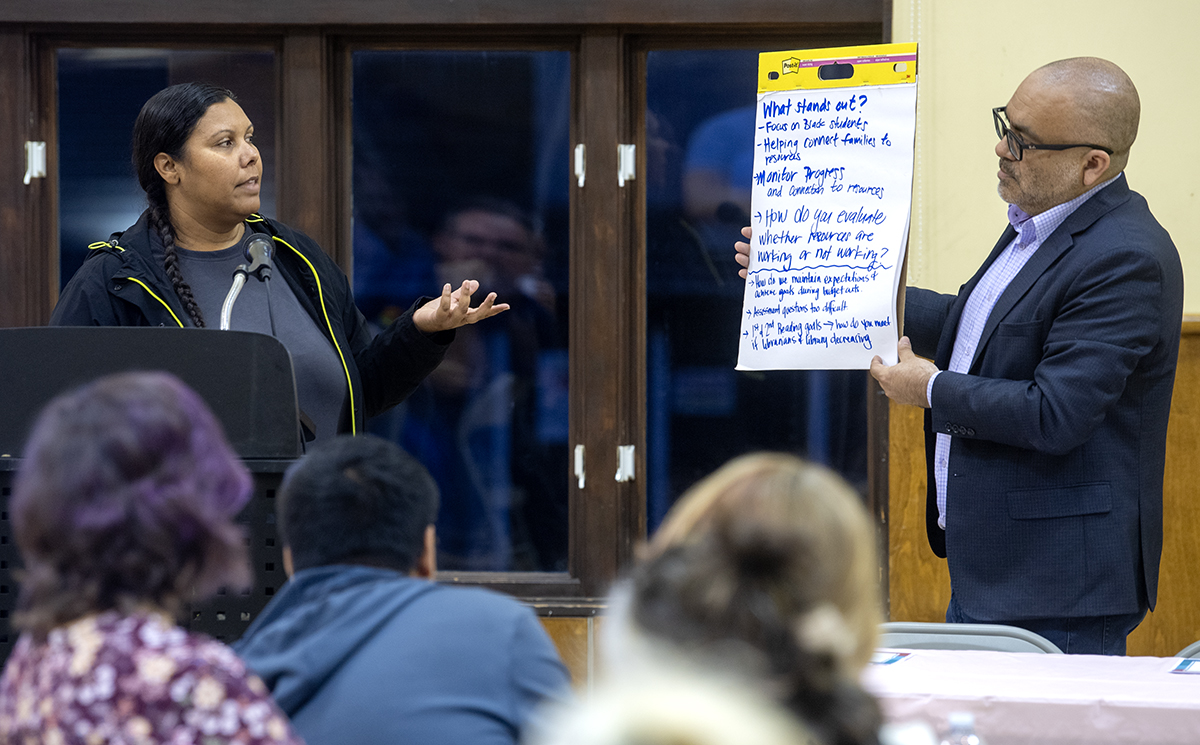
Their work is gaining momentum. On Tuesday, school board members Juan Benitez and Diana Craighead hosted a community meeting focused on the board’s goals of increasing literacy, proficiency in reading and algebra and college and career readiness by 2028, which the district is not currently on track to meet.
Meeting attendees — far more than normal, according to Benitez — sat through a 15-minute video and subsequent slide deck explaining the goals. One parent whispered in frustration, nearly halfway through the community meeting, as her son lost interest in his sticker book, “We haven’t heard from community.”
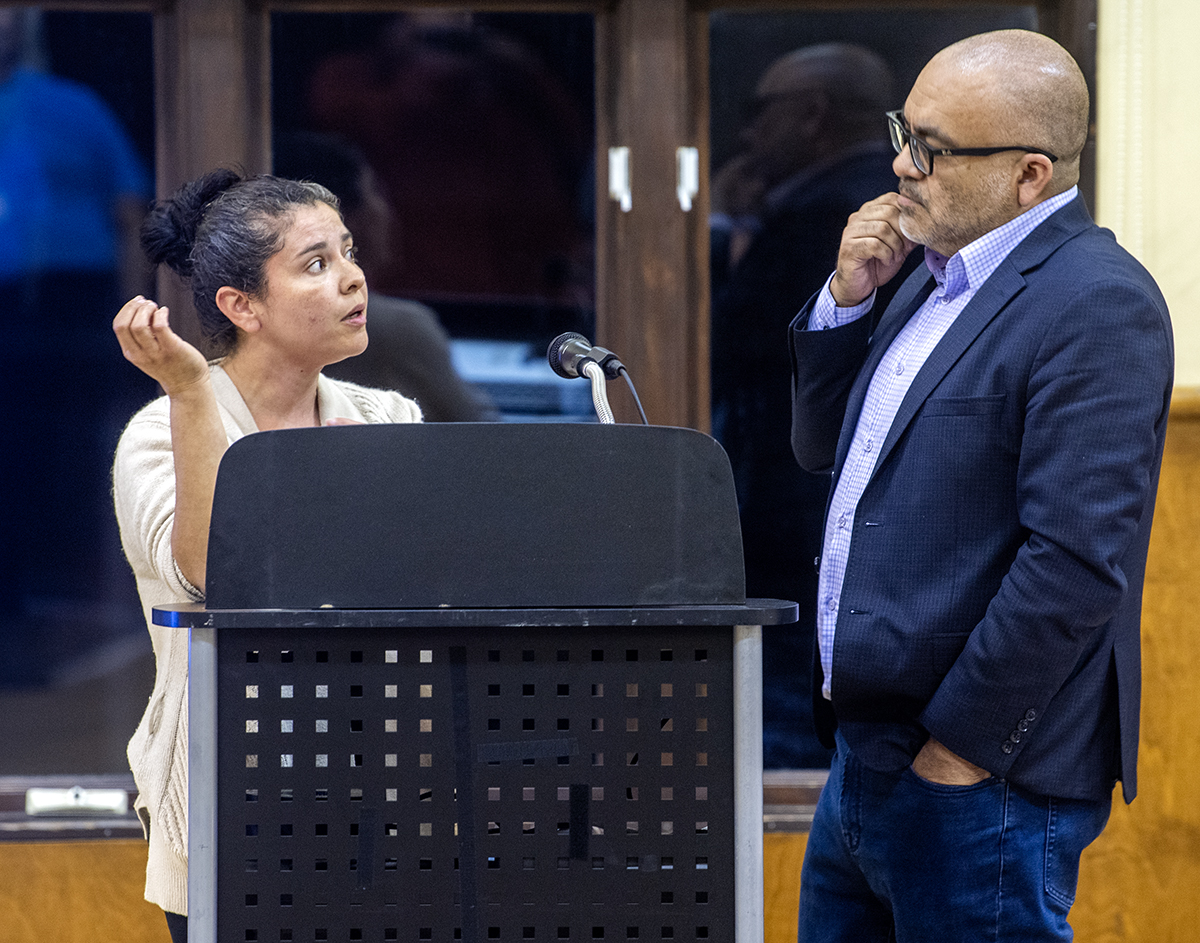
Parents were then invited to speak at the podium. Nearly all asked versions of the same question: How can we meet these goals while cutting the staff and programs that help our students reach them?
Board members and district administrators acknowledged the pain of cuts and layoffs amid state and federal defunding that has resulted in “a broken public education system,” said Benitez, who represents District 3, including downtown. “We have a tough budget ahead of us,” he said, and indicated he would be making decisions on what to cut and preserve based on “what has the most impact.”
In response, the district is lobbying for a change in the state’s funding formula. In recent months, Superintendent Jill Baker has joined the leaders of other major districts to publish open letters urging the governor to invest in public education and calling for “sustainable funding for California’s public schools.” As student enrollment continues to decline across the state, the current model, which ties revenue to attendance, means districts, including Long Beach Unified, are hemorrhaging money, the superintendents wrote.
With the expiration of federal money that provided relief during the pandemic and costs that continue to rise at an unsustainable pace, the situation is only worsening, Baker has warned.
The Public Policy Institute of California published a report in December finding that allocating funding to districts by enrollment rather than attendance would benefit high-need districts. Yet the state’s nonpartisan policy advisor, the Legislative Analyst’s Office, demurred, instead recommending the state maintain the current model of doling out funds based on attendance.