

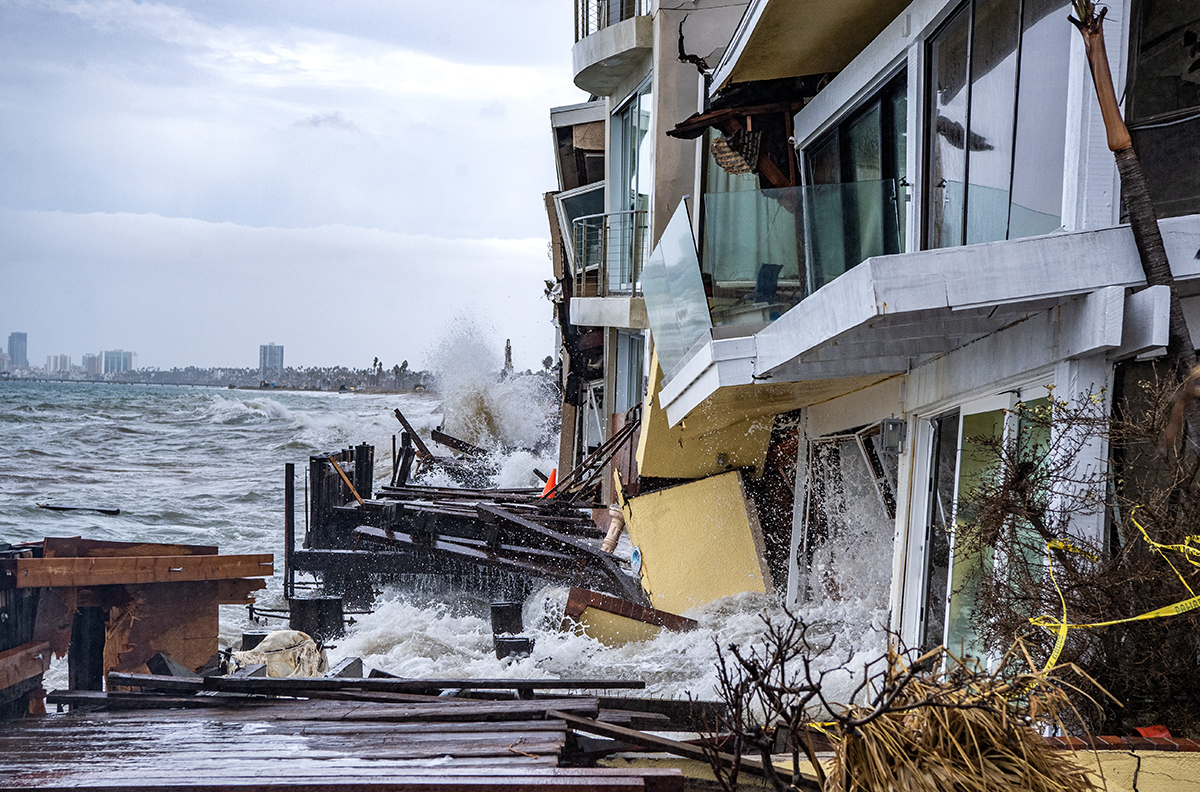
Tropical Storm Rachel brought dangerous surf to Long Beach’s oceanfront but little of the rain forecasters had warned about, as conditions are expected to gradually improve through Tuesday. While relieved, city officials reiterate that the Peninsula is far from in the clear, with major cleanup and emergency repairs underway as several seaside homes are still too dangerous to reenter.
The Peninsula was inundated with mud, sand and plenty of cameras, as onlookers and national news outlets clustered in tight side streets to get a good angle at the wave-damaged homes, as well as the splintered timber bulkhead and boardwalk. With waves and tides high but not quite at levels seen Saturday, crews pumped out excess water in the streets and shoveled sand and debris out of the storm drains.
Kristan Lund, a National Weather Service meteorologist, said Rachel moved through Southern California faster than anticipated, limiting the amount of time Long Beach and nearby cities were exposed to its rainfall.
The center of the storm moved onshore in northern Baja California on Saturday night, according to the National Hurricane Center. Forecast tracks shifted south in recent days, but the storm then veered north-northeast toward Las Vegas, widening the gap between Long Beach and its reach.
Expected to get up to half an inch of rain starting as early as Saturday, Lund said the city shouldn’t expect more than a tenth of an inch through Monday, though a weather pattern Sunday evening may bring drizzles through the night.
The worst-case scenario also failed to materialize. Lund said peak swell, high tide and wind direction never lined up. “The high surf, you know, we were expecting it to come up on the backside of the high tides,” she said. “And thankfully, it ended up being a little too late.”
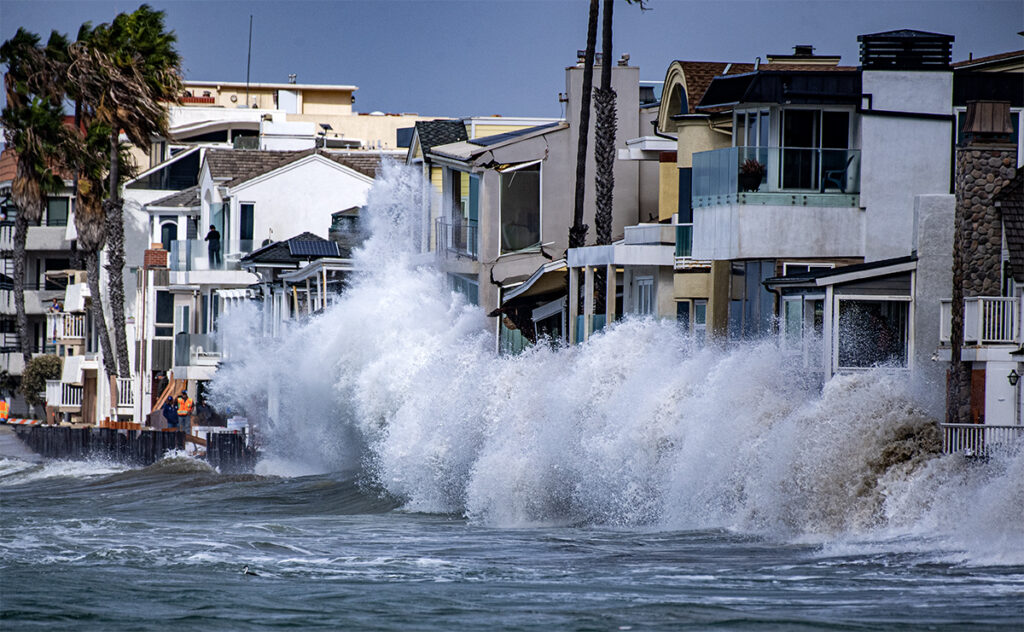
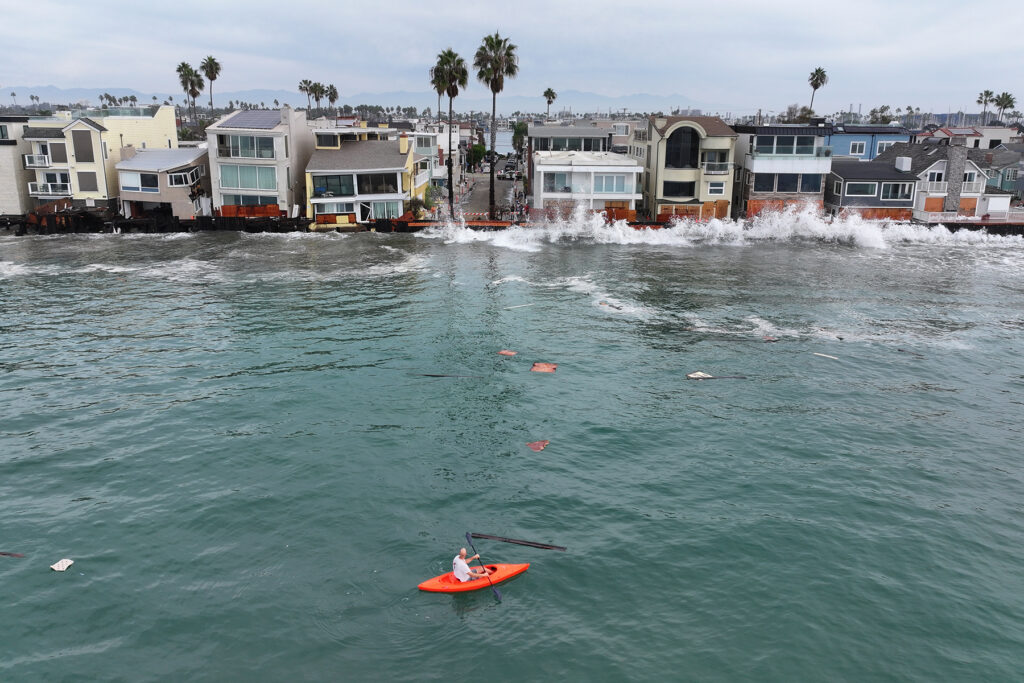
Monday morning tides are expected near 7 to 7.5 feet, with surf of 4 to 6 feet. Water levels were still 1 to 1.8 feet above predicted tides, driven by El Niño-related thermal expansion, a Kelvin wave and elevated astronomical tides. Lund said a lingering southerly swell may shift westerly, putting west-facing beaches at some risk of coastal flooding.
The NWS said a coastal flood warning for Los Angeles and Catalina Island areas — which include Long Beach — was scheduled to drop to an advisory at 3 p.m. Sunday. Minor to moderate flooding is still possible through Tuesday afternoon, though it’s expected to be less severe than on Friday and Saturday.
Even so, the damage along the Peninsula’s Seaside Walk is extensive. Waves topped the boardwalk’s protective bulkhead and sent water into homes and streets. Inspectors have red-tagged nine buildings across 13 addresses, a designation meaning they are unsafe to enter. One building has a yellow tag, which restricts use.
A mandatory evacuation order covering homes between 64th and 66th places runs through noon Tuesday, and 39 more residences are under an evacuation warning.
Residents are not being allowed back inside. Assistant Fire Chief Jake Heflin said many have asked to retrieve belongings. “That’s the emotional side of it,” he said, but firefighters cannot send anyone into a building that could be on the verge of collapse.
At a control post they set up in the Claremont parking lot, firefighters gathered in front of a screen reviewing drone footage from the day that looked at the cracking and shifting homes.
Several of them pointed while others took note, looking for signs to suggest which building is closest to collapse and comparing their worsening conditions over the past couple of days.
If one falls, Heflin said, responders have bullhorns to sound off, then seal the area and conduct searches.
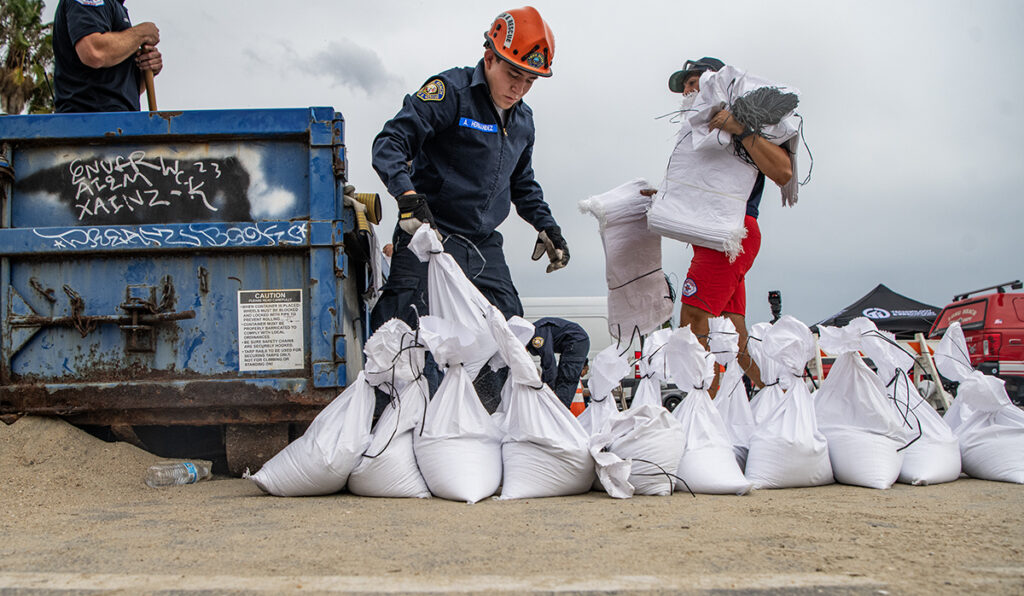
Crews are reinforcing the bulkhead and boardwalk with lumber beams and plan to place about 30 heavy-duty sandbags, each about 3,000 pounds, with a crane on 65th Place. City Spokesman Laath Martin said life safety remains the city’s top priority.
In response to the storm, the city has spent more than $1 million on one-time costs from its Tidelands emergency reserves, which are set aside for only coastal uses. Long Beach has also fast-tracked a multimillion-dollar plan to rebuild the Peninsula’s beach.
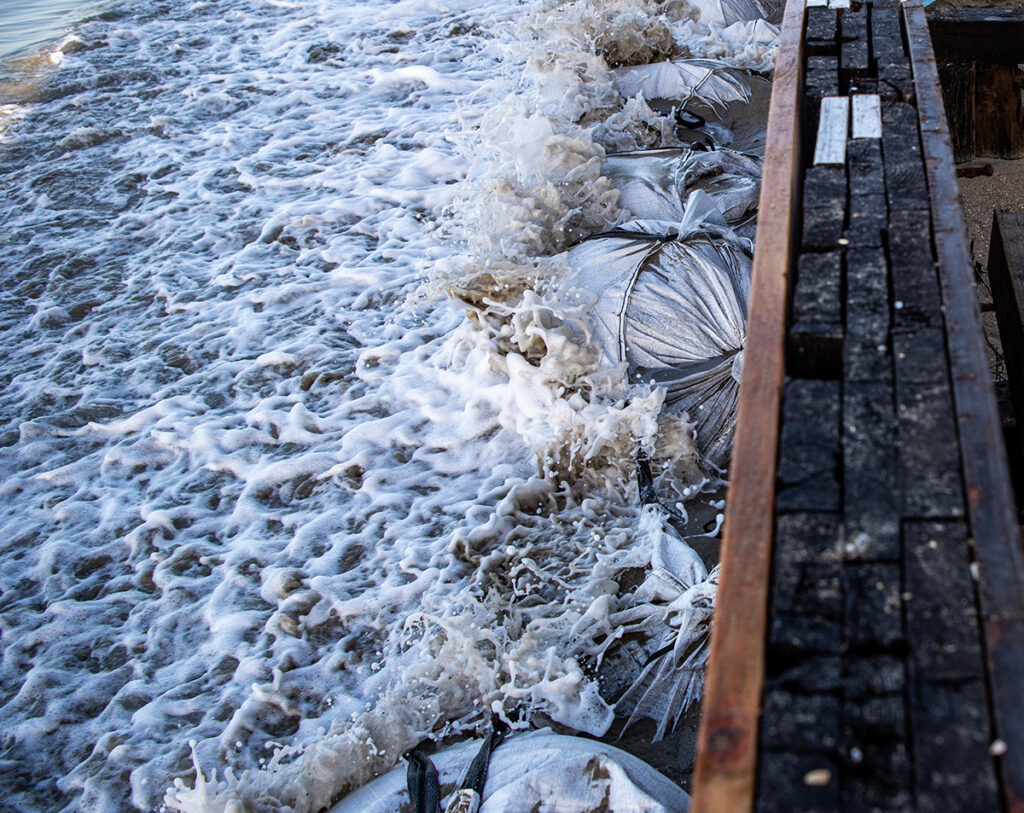
Over this week and the next, city officials say, they hope to start trucking in 50,000 to 100,000 cubic yards of sand, followed by a $11.4 million dredging project that could add another 415,000 cubic yards of sand — the most moved in decades.
Officials are pursuing outside funding aggressively and are in talks with the governor’s Office of Emergency Services for reimbursement to public projects, sand restoration, coastal work and emergency bulkhead repairs.
“We will be working with the state closely to identify any kind of reimbursement,” Martin said.
For private homes, the city is urging owners to contact their insurers right away. Long-term demolition and cleanup are the property owners’ responsibility, they say.