


Learn more about what storm season means for Long Beach and how you can be prepared at LBPost.com/elnino. Support useful, community-centered reporting like this with a donation.
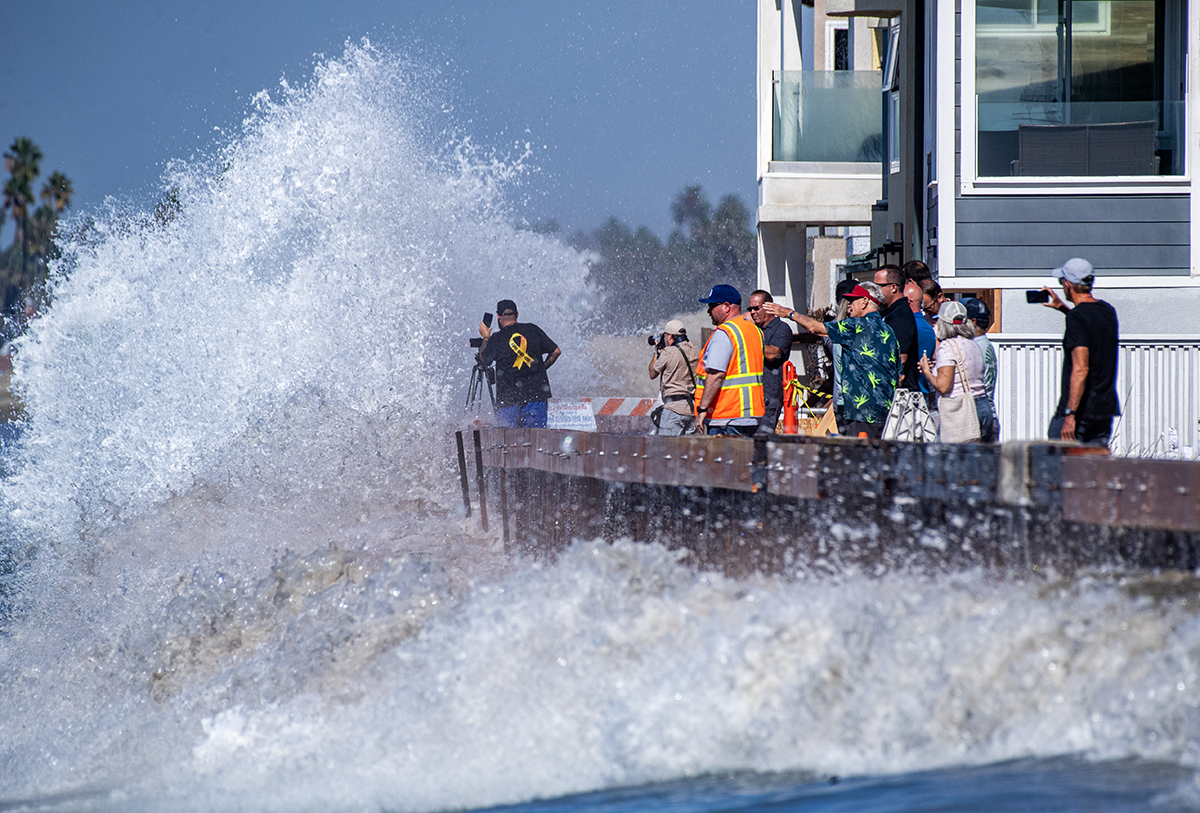
Long Beach is famously surrounded by a breakwater to protect its harbor, but that massive barrier hasn’t been able to shield homes on the city’s Peninsula from hurricane-charged swells recently.
Over the last few weeks, strong waves have repeatedly stripped away sand, broken through a boardwalk bulkhead and threatened to collapse beachside homes by clawing away the sand underneath them. All of this keeps happening in a narrow stretch of homes along the Peninsula, mostly between 62nd and 69th places.
Those few blocks are vulnerable to swells coming from the south because of an opening in the breakwater and jetty that allows boat access to Alamitos Bay.
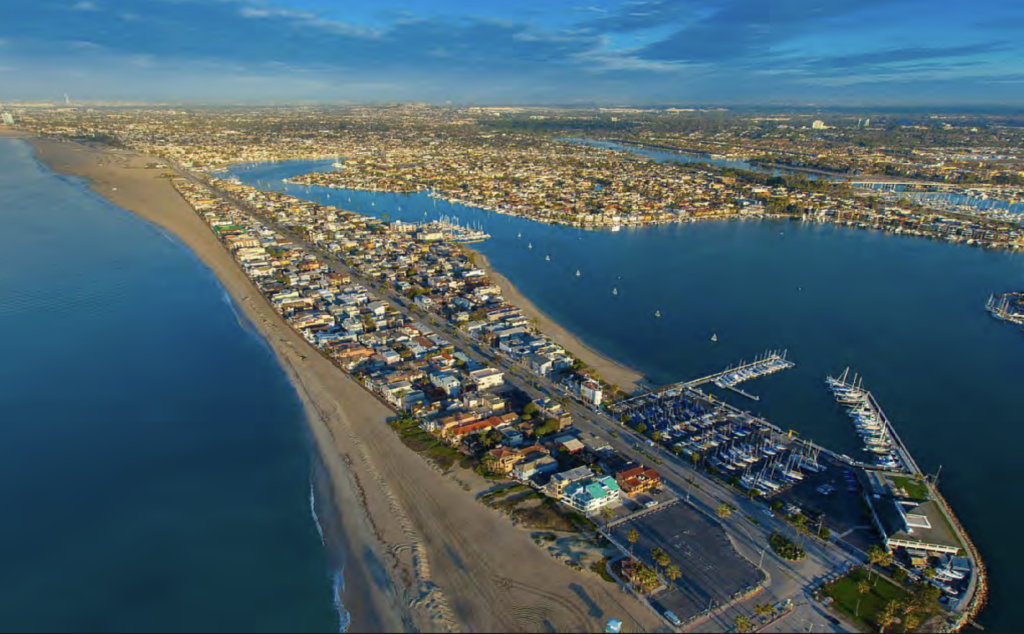
In order to protect those homes, Long Beach typically builds a sand berm to block waves. When waves rip it away, the breakwater keeps it from washing out to sea, and it instead piles up to the west near downtown (a phenomenon called littoral drift.) The city spends $1 million to $1.5 million a year on trucking that sand back to the Peninsula and rebuilding the beach.
This year, it hasn’t been enough.
El Niño’s warm waters have supercharged high tides. That, combined with hurricane-driven waves coming up from the south, has stripped so much sand away from the Peninsula’s beach that the wooden bulkhead under the coastal boardwalk has been exposed.
At high tide, breakers now slap directly against the wood, repeatedly splintering it.
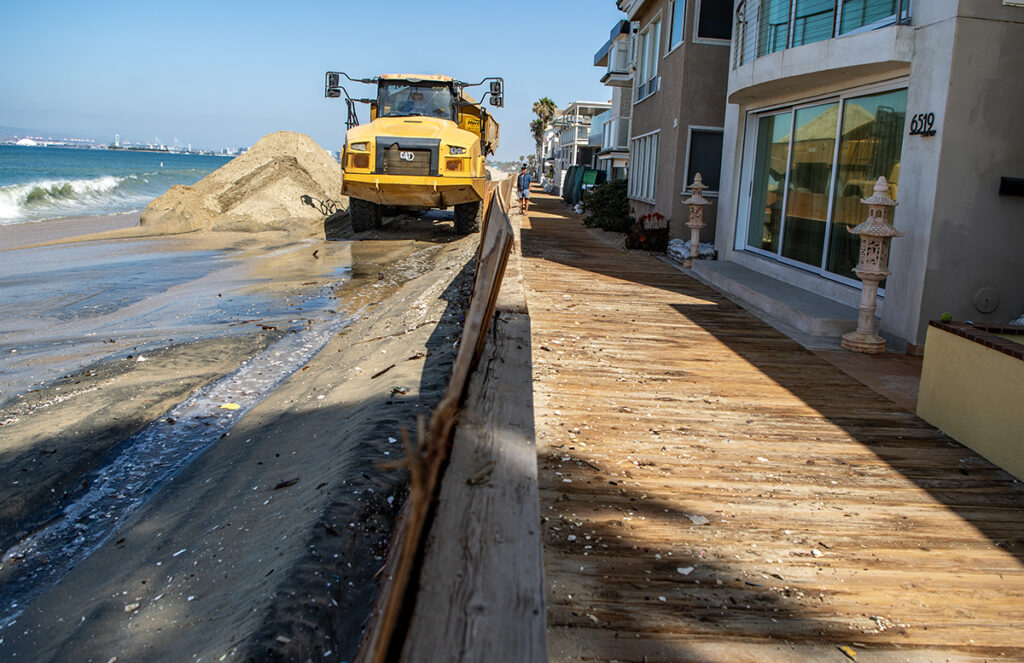
The city is hoping to soon start a $11.4 million dredging project to gather enough sand to rebuild the beach and protect the boardwalk, but that can’t happen while it’s getting pounded by the surf.
There may be some relief soon. Hurricane season in the eastern Pacific runs from mid-May through November. Hurricanes later in the year are much more likely to form in the western Pacific — as opposed to the southeast — and the federal breakwater that shields Long Beach’s harbor blunts the swells that originate from the west. That’s why much of California’s western coast may still see dangerous waves through the winter, though Long Beach is usually safe.
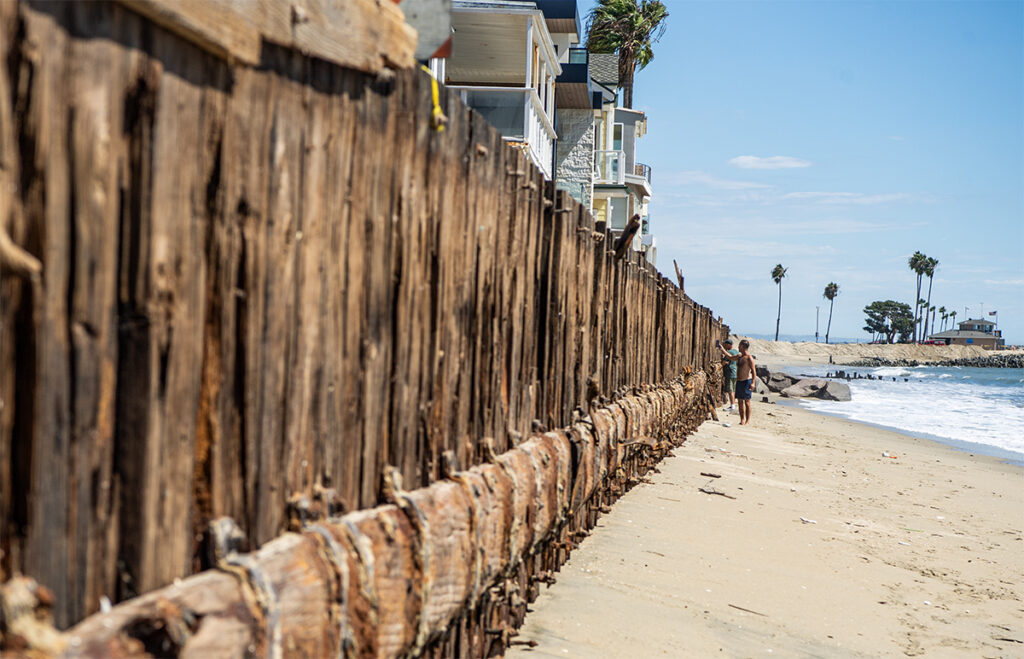
To bolster the Peninsula’s defenses, Long Beach is now considering a $6.8 million plan to build a rock revetment — a wall of boulders that would sit behind the beach as a backup.
But for a long-term solution, officials say it may cost $150 million to $350 million for a full habitat and shoreline restoration — funded partly by state mitigation credits.
It’s the kind of project that would take massive amounts of approvals and planning and likely some delays. The city council, for now, has approved $30,000 to look into it further.