


Learn more about what El Niño means for Long Beach and how you can be prepared at LBPost.com/elnino. Support useful, community-centered reporting like this with a donation.
Forecasters say an El Niño could bring stronger-than-usual storms to Southern California throughout the fall and winter seasons, and in Long Beach, that means the risk of flooding and downed trees.
Low-lying areas prone to flooding during heavy rain include Ocean Boulevard and Second Street east of Livingston Drive, Appian Way north of Second Street, the area near Fourth Street and Colorado Avenue, 10th Street between Orange and Temple avenues, plus a portion of West Long Beach south of Pacific Coast Highway, according to a city flood map based on the likelihood of being inundated.
But just because your home isn’t on that map doesn’t mean there’s no risk. Problem spots from past rainstorms have also included Willow Street near the Terminal Island Freeway, the parking lot at Rosie’s Dog Beach and Long Beach Boulevard near the 710 Freeway. If there’s a chance of flooding, you should consider taking advantage of the city’s free sandbags and signing up for emergency notifications through Alert Long Beach.
Long Beach’s Public Works Department has plans ready for when a large storm rolls in, according to spokesperson Jocelin Padilla. The city does regular maintenance on 5,600 catch basins, which feed storm drains, and it prioritizes street sweeping and cleaning of catch basins and storm drains in flood-prone areas during wet weather, she said.
If you see a blocked catch basin or backed-up storm drain, you can report it through the GoLongBeach app or by calling 562-570-2700.
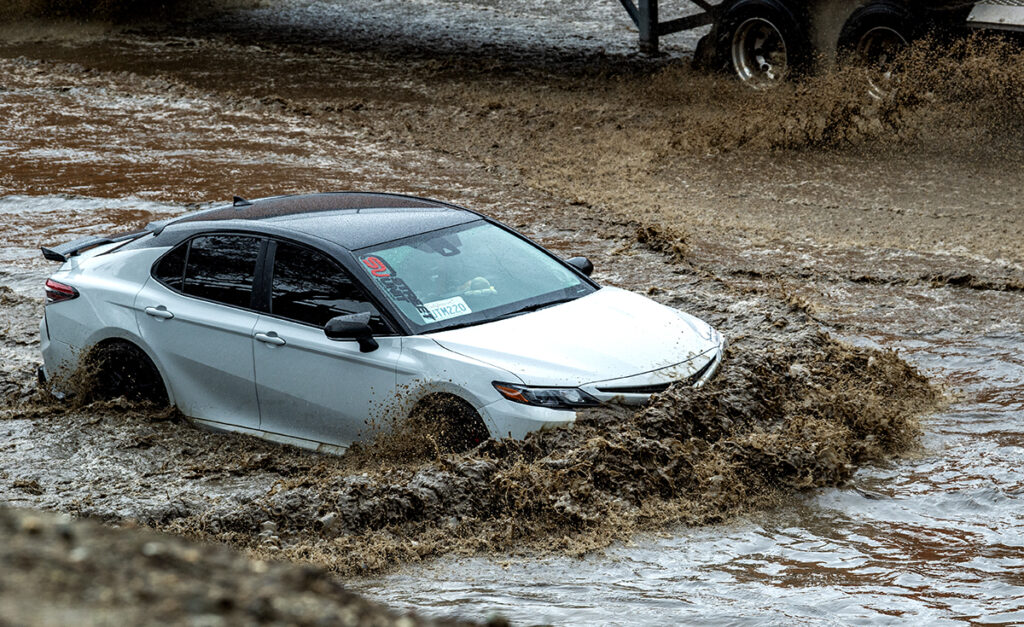
Officials advise people not to walk or drive through flooded areas, as the water can be deeper than it appears.
If your home is flooded, officials advise you to turn off all utilities until emergency officials say it is safe to turn them back on.
Downed trees and branches
Long Beach has 126,000 trees — 94,000 of which are maintained by the city. When wet, windy weather arrives, some of them inevitably drop branches or get uprooted. And the problem could get worse as the city is pulling back on tree maintenance because of a budget crunch.
In general, the city advises people not to park under any tree that appears “damaged, compromised or otherwise unsafe.”
Residents who notice a tree or limb that looks unsafe can report it through the GoLong Beach app or by calling 562-570-2700.
During a storm, Public Works crews typically respond to fallen trees and storm damage within about a day.
Residents can also submit photos of broken tree limbs, hanging branches and blocked traffic signals any time. Those requests are typically addressed within a week or two, according to the city.