

This article was originally published by LAist on Oct. 21, 2026.
Longer droughts, more extreme heat, greater wildfire risk and more beach erosion: A new state-commissioned report finds that climate change is likely to reshape the Southern California landscape and way of life.
The study, which comes as part of California’s fifth statewide climate change assessment, includes more detailed models than previous reports.
“What we want to highlight with this report is not how doom and gloom everything is, but just to look at climate change in the L.A. area as something that is inevitable, but which we can adapt to, and in particular, protect the most vulnerable,” said UCLA climate researcher Jesse Norris, the lead author of the report focused on Los Angeles.
Sea level rise and beach erosion
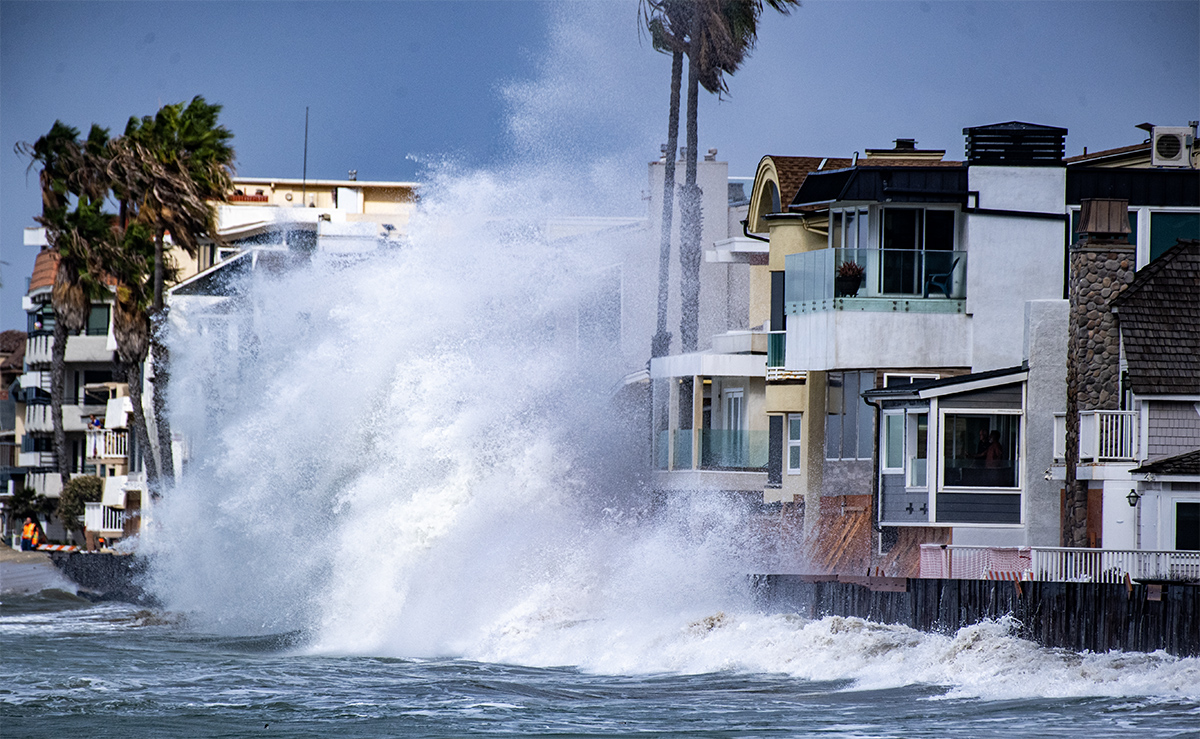
If the recent stories of beach and coastline erosion have you concerned, buckle up. The report notes local coastal erosion rates are expected to triple by 2050.
Citing past research, the authors also note that coastal flooding is expected to quickly intensify in the mid-2030s and become a yearly event by the mid-21st century.
Between one-third and two-thirds of the region’s beaches are expected to be lost in the next 75 years.
Get advice on preparing for extreme weather at LBPost.com/elnino.
Researchers found that in L.A. County, about 1,700 housing units are at risk of being permanently inundated. But if sea levels rise by 3.3 feet — which is possible by 2100 — 9,000 units would be at risk of being permanently flooded.
And if sea levels rise by 6.6 feet, which researchers described as an “extreme” scenario, flooding could be widespread during a 100-year wave event. In this scenario, large swaths of urban L.A. and Orange counties could be flooded, though it’s important to note the projections don’t account for any future infrastructure that may be built.
Extreme heat
Temperatures are expected to rise 4 degrees Fahrenheit between 2041 and 2070 — adding to the 4 degrees of warming that have already happened since 1900.
Researchers say those effects are more pronounced in inland areas, which are also projected to see more days of extreme heat. The average hottest day of the year is expected to rise to 115 degrees by midcentury.
Microclimates play a role
Most of the hazards predicted in the report will be familiar to Southern Californians, even as the effects are expected to intensify and become more common during climate change.
“It was quite striking to see how much more vulnerable certain locations are than others to different climate hazards,” Norris said. “In particular, the more inland areas being far more vulnerable to the increase in extreme heat, mountain communities being far more vulnerable to the impacts of extreme rain and flooding as well as reduced snowpack, and coastal areas being obviously far more vulnerable to the impacts of rising seas.”
Planning
Norris stressed that planning for these effects can be undertaken now. One example: increasing tree cover to mitigate heat.
“A lot of inland cities are thinking very seriously about increasing their tree canopies, increasing the ability for people to have shade as they’re going about their business,” Norris said.
Norris highlighted the importance of protecting the most vulnerable in these situations, including people experiencing homelessness and those who work outdoors, and ensuring access to air conditioning and cooling centers.
Norris also said continuing and improving initiatives like active wildfire management, water management and coastal adaptation will be vital in the years to come.