

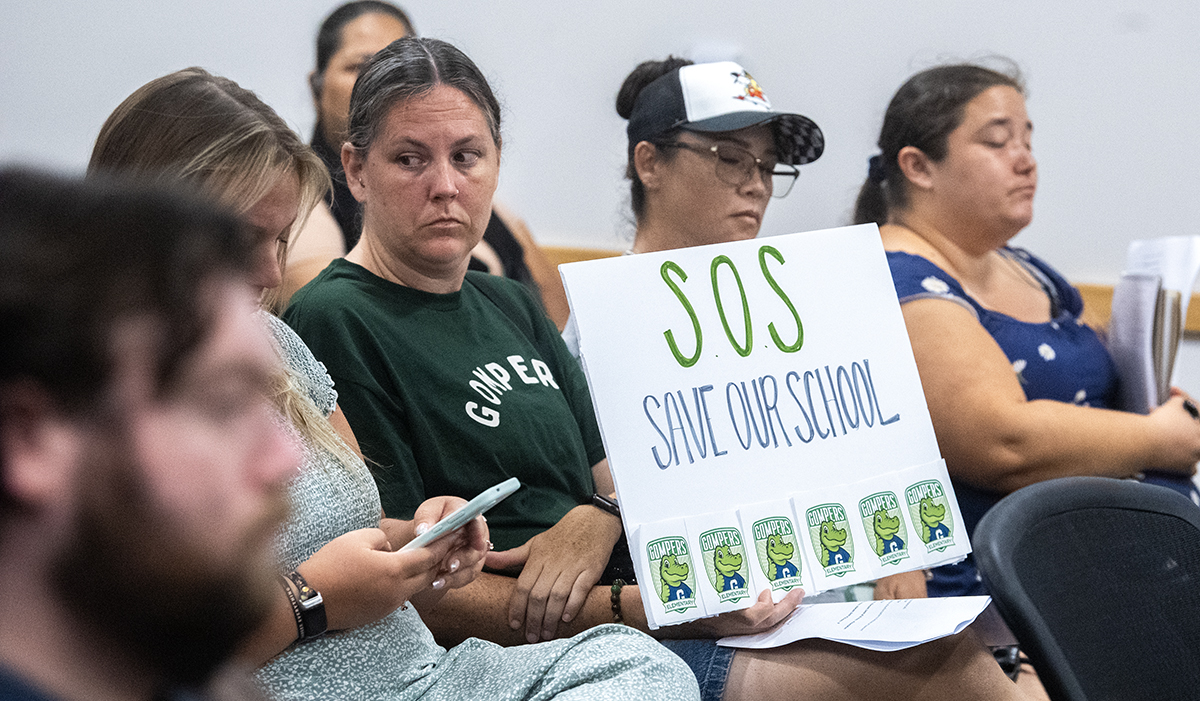
The Long Beach Unified School District’s Board of Education voted Wednesday to close Gompers and Edison elementary schools at the end of the 2026-27 school year, a symptom of the district’s declining financial health and likely not the last tough decision on the horizon.
“Responsible stewardship of district resources requires us to look at the big picture,” board president Diana Craighead said. “How do we provide the best educational experience for our students with limited funds?” The answer for her and three other board members was school closures. Maria Isabel López voted to keep the schools open.
The closures stem from the district’s steady loss of students. LBUSD’s enrollment has dropped by tens of thousands in recent decades, draining dollars from the district because state funding is tied to enrollment. After years of this pattern, the district says it has more schools than it needs and can afford for its 59,781 students. As a result, the district evaluated all LBUSD schools and flagged Gompers and Edison as underutilized: each had room for more than twice the number of students enrolled, administrators said.
“LBUSD must consider school consolidations and closures to continue to be fiscally responsible and maintain quality programs,” the district wrote in its recommendation for the school board.
The closures are expected to save $2.8 million, about a tenth of what the district needs to cut this year, Superintendent David Zaid said. To slash another $27 million, the district will begin with services furthest from the classroom but will also consider cutting contracts, Zaid said. He added that the district is also exploring revenue generation, including by emphasizing attendance.
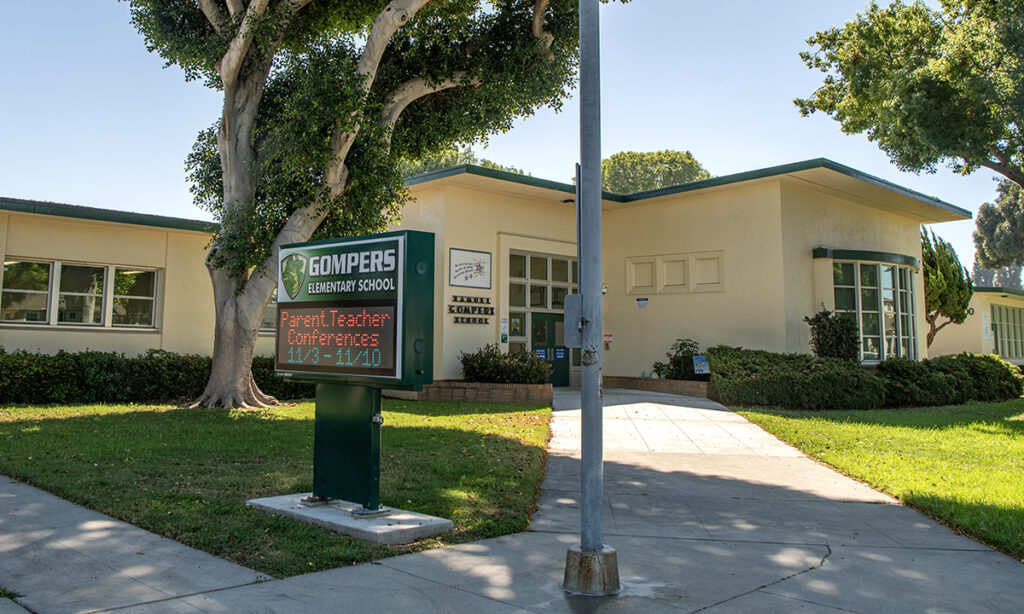
Gompers and Edison parents launched campaigns to keep the schools open — speaking at board meetings and staging protests — but school board members ultimately voted for the closures, even as they acknowledged the effect on the LBUSD community.
The vote elicited tears, anger and boos from families. “I feel like the board let us down,” said Alivia Elias, who works at Gompers and has a younger brother attending. Other parents said they felt disappointed and discouraged, even “strung along,” according to Joanna Kotrba, a Gompers parent.
It’s an early sign of what is expected to be a painful budget season. Board members approved a slew of cuts last academic year: closing Hoover Middle School and reducing library services, mental health resources, parent-support workers and certificated and classified staff.
Board member Juan Benitez previously signaled those cuts were just the beginning, as the district is now in its third year of deficit spending. Although LBUSD has taken aggressive action (with some success) to shrink the gap between revenues and expenditures, the district still expects to end this school year with a $45 million deficit, according to a recent budget presentation by Yumi Takahashi, LBUSD’s chief business and financial officer.
The problem of declining enrollment is unlikely to improve. Not only are families having fewer children in Long Beach — mirroring a national trend — but a smaller share of those children are enrolling in the district. A decade ago, 90% of the babies born in the district enrolled in LBUSD when they reached school age, according to Margaret Lam, executive director of fiscal services. Now, only 78% of the children born in the district actually enroll by the time they reach school age, she said.

According to IRS data, more families are moving out of Los Angeles County as the cost of living rises, Lam said. Other families may be choosing to homeschool or enroll elsewhere. Some families worried the closures might prompt more students to leave LBUSD.
Each year, the district’s enrollment loss — about 1,600 students — equates to four elementary schools, Zaid said at Wednesday’s board meeting. The district has to make changes to keep up with those losses, he said.
“I did not become superintendent to close schools,” he said. “I became superintendent because I believe in the transformative power of public education.” Still, he emphasized the district and board’s responsibility to make difficult decisions.