

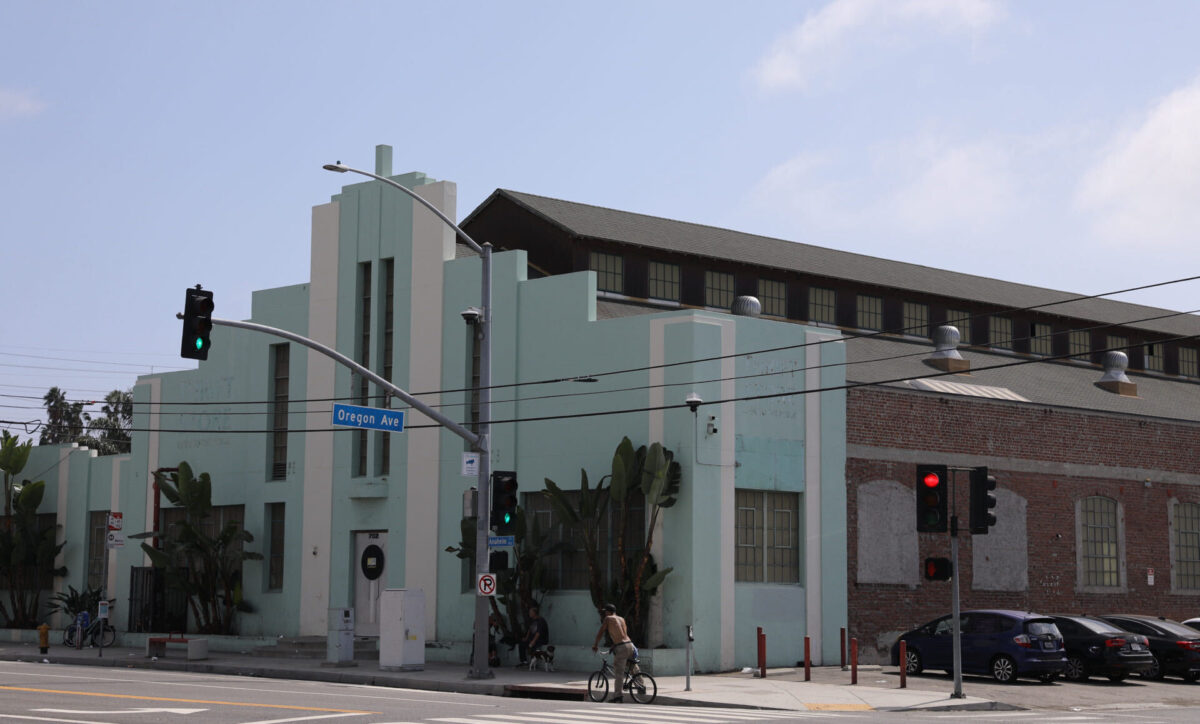
The Long Beach City Council on Tuesday approved an $8.6 million contract to renovate one of its four homeless shelters, a project that will expand the year-round facility at 702 W. Anaheim St. from 85 beds to 126 to meet persistently high demand.
Since buying the 106-year-old building from the Long Beach Rescue Mission for $7.2 million in 2023, the city has made only $399,000 worth of repairs to its roof. Renovations under this contract will bring major changes, including to the facility’s layout, as well as the installation of an HVAC system (the building only has a heater), using a $500,000 state grant and $400,000 from the Port earmarked for energy efficiency.
Crews will install 16 showers — 10 for men, six for women — to replace the temporary trailers long used in the back lot. In the sleeping area, currently an open space with lines of cots, they will install dividers between beds for privacy and put up partitions for areas meant for couples or those needing gender-affirming privacy. They will also build out a new family room and multipurpose lounge, as well as new entrance ramps into the building and a reconfigured parking lot.
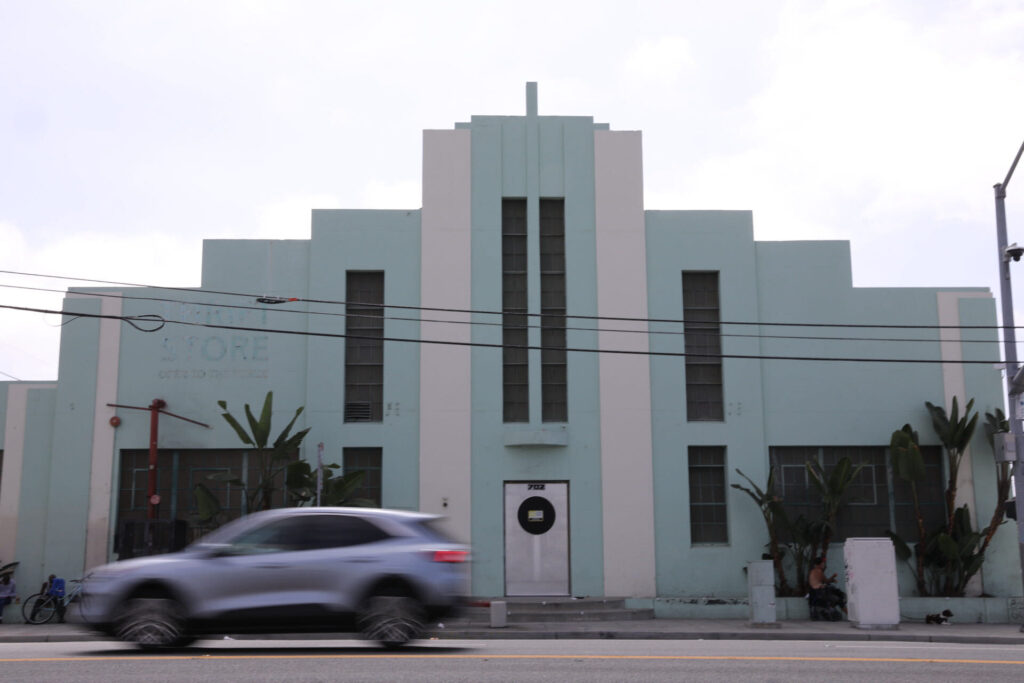
The city says renovations are needed to keep up with an increase in demand they’ve continued to see, citing the 3,729 homeless people counted in January — a 3.7% bump from the prior year and the second consecutive increase. The number of people staying in shelters or interim housing rose from 989 to 1,141 in the latest tally.
Occupancy at the shelter has run between 85% and 95% in the past six months, said Paul Duncan, director of the city’s Homelessness Bureau, with many nights hitting capacity. “We’ve mostly been full,” he said.
Within the next two years, Duncan said the city wants to find the money to add a dining hall with a warming kitchen, laundry room and a kennel space for pets.
When renovations are underway, the city will use a warehouse at 1827 E. Spring St. for sheltering people. Long Beach bought the site earlier this year for city police to eventually use as a storage facility, as part of their plans for a new crime lab. The building can hold 81 beds and is near public transit, officials say.
Prior to the move, the city will spend about $100,000 on upgrades for the site, mostly for the fire alarm system, a permanent fence along the perimeter and a rented shower trailer.
Work will start on the warehouse this fall, followed by the start of renovations at the shelter in late 2026 with plans to finish before the end of next year.
The Police Department has given the city one year to finish, and Duncan said a delay past December 2027 would interfere with the department’s move, adding they haven’t yet outlined a backup plan in the event that work runs over the timeline. Duncan said most of the work is indoors, which should limit weather delays.
Councilmember Megan Kerr pressed city staff to keep the project on schedule. “We know that building is an important part of our public safety infrastructure as well,” she said. “I’m really begging you to keep a close eye on our contractors to make sure they’re moving as efficiently as possible.”
For those needing help: People seeking shelter at the 702 W. Anaheim facility or any other city shelter must first get a referral by visiting the city’s Multi-Service Center at 1301 W. 12th St. The center is open 8 a.m. to 4 p.m. Monday to Wednesday and Friday; 8 a.m. to 2 p.m. on Thursday. It is closed daily from noon to 1 p.m. You can also call the center at 562-570-4500. The Anaheim shelter provides three meals a day, showers, restrooms, space for pets and case management. For more information, visit here.
Another potential complication is who will have authority over the shelter going forward. Los Angeles County is now moving to take over the contract that funds its day-to-day operations, leaving it unclear how much say the city will have.
LA County funds the shelter, through the Los Angeles Homeless Services Authority, known as LAHSA, at about $89 per bed per night. Long Beach uses that money to pay the shelter’s nonprofit operator, PATH. But that arrangement may change, as the county continues to pull away from LAHSA after an audit found the agency mismanaged contracts, paid providers late and failed to track whether services were delivered.
Duncan said the county has made clear it would rather contract directly with PATH than go through the city. Later this year, he continued, the city expects the county to propose a transition grant, though it’s still unclear how and whether it will change controls over the shelter.
In an emailed response Thursday, Duncan said the city “is not looking to change ownership of this building and will continue to own and ensure priority for the building is operating as a shelter.”