

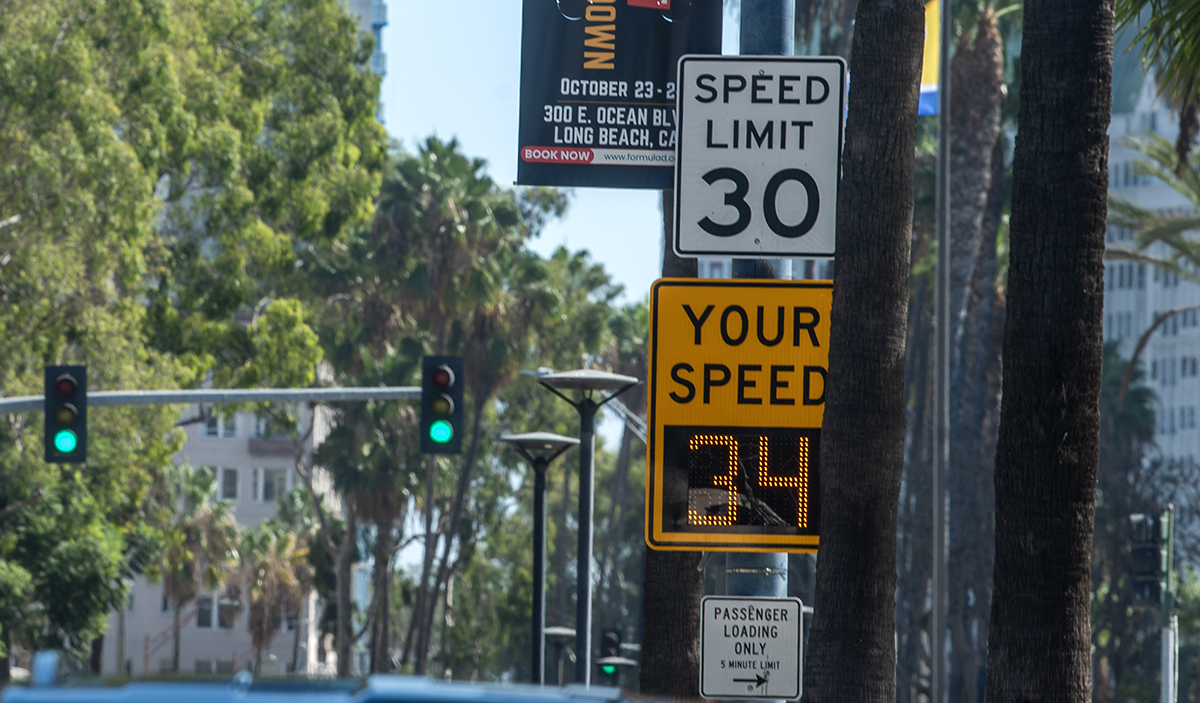
Long Beach’s automated speed cameras have begun issuing warnings to drivers going 11 miles or more over the posted speed limit.
Warnings will be issued for two months, ending Dec. 7. After that, anyone who drives by a camera at least 11 mph over the speed limit will get a fine ranging from $50 to $500 based on speed. If a driver didn’t get any warnings during the 60-day warning period, then the first speeding offense will be only a warning.
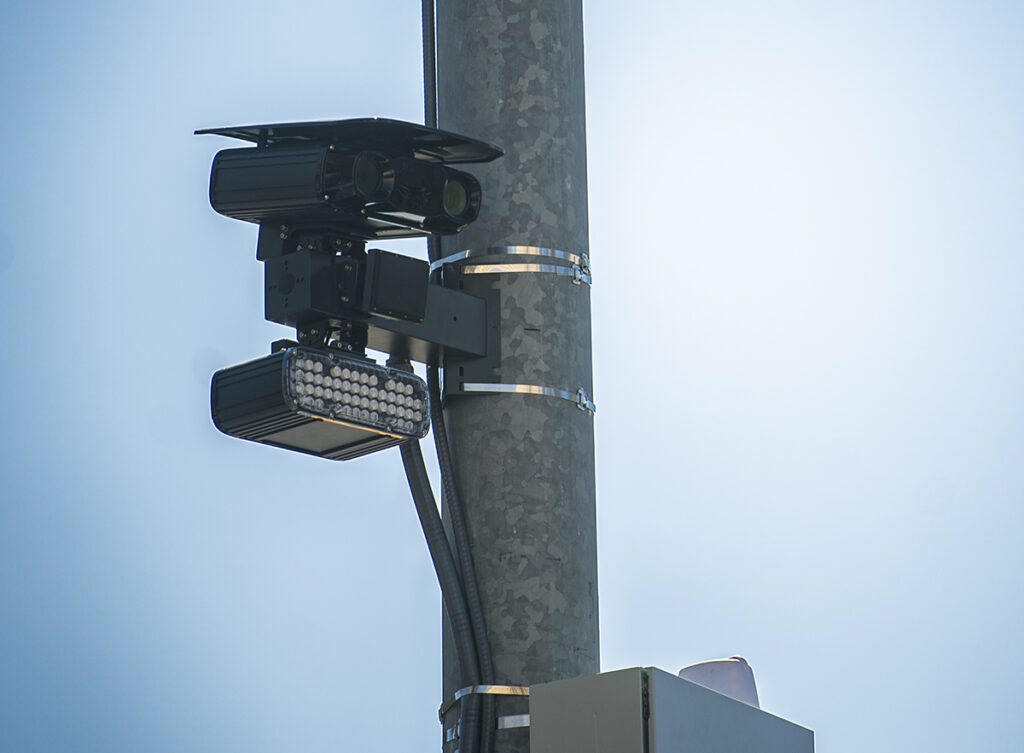
The cameras have been installed at 18 locations throughout the city, two in each City Council district, with a camera facing each direction of traffic.
You can find a map of the camera locations here.
Half of the cameras are on streets where deadly or severe crashes have occurred most often. The other half are in school zones or in areas where street racing is a problem.
Long Beach has struggled to reduce a surge of deadly crashes in recent years. There have been 38 so far this year — more than double the number of homicides locally.
Local officials see the cameras as part of the solution. They lobbied to get authorization from the state to install them under a pilot program that also includes Los Angeles, San Francisco, Oakland, Glendale, Malibu and San Jose. Citations are already being issued in San Francisco and Oakland.
Through a separate state bill, Long Beach also recently got approval to install two additional speed cameras along Pacific Coast Highway, a state route that’s seen an uptick in deadly wrecks.
How the cameras work
The cameras capture only the rear license plates of vehicles, said Joshua Hickman, director of the Long Beach Public Works Department, and the data will not be shared with any law enforcement agencies, including Long Beach police.
Based on the license plate information, a citation will be issued to the car’s owner at the address where the car is registered.
| Speed Over Limit | Fine Amount |
| 11–15 mph | $50 |
| 16–25 mph | $100 |
| 26+ mph | $200 |
| 100+ mph | $500 |
Payment is due within 30 days, but payment plans and diversion programs are available.
You can find more info on those here.
How will the money be spent?
Long Beach officials estimate that half of the annual speeding ticket revenue, roughly $2.5 million, will cover the costs of administering the camera program.
The other half is earmarked for traffic-calming measures in neighborhoods where traffic studies have determined they’re needed most. The state law allowing for the pilot program dictates that the money can’t be spent on anything else.
Those safety measures could include things like crosswalks, no-turn-on-red signs and speed humps. In January, the city began receiving a sharp influx of requests from residents asking for a safety measure in their neighborhood.
Last year, Long Beach recorded its deadliest year on the roadways in more than a decade – 53 fatal traffic collisions.
Traffic deaths this year have kept pace, despite Long Beach City Council directing Public Works to hire third-party contractors to speed up the rate at which they install quick-build safety measures.