

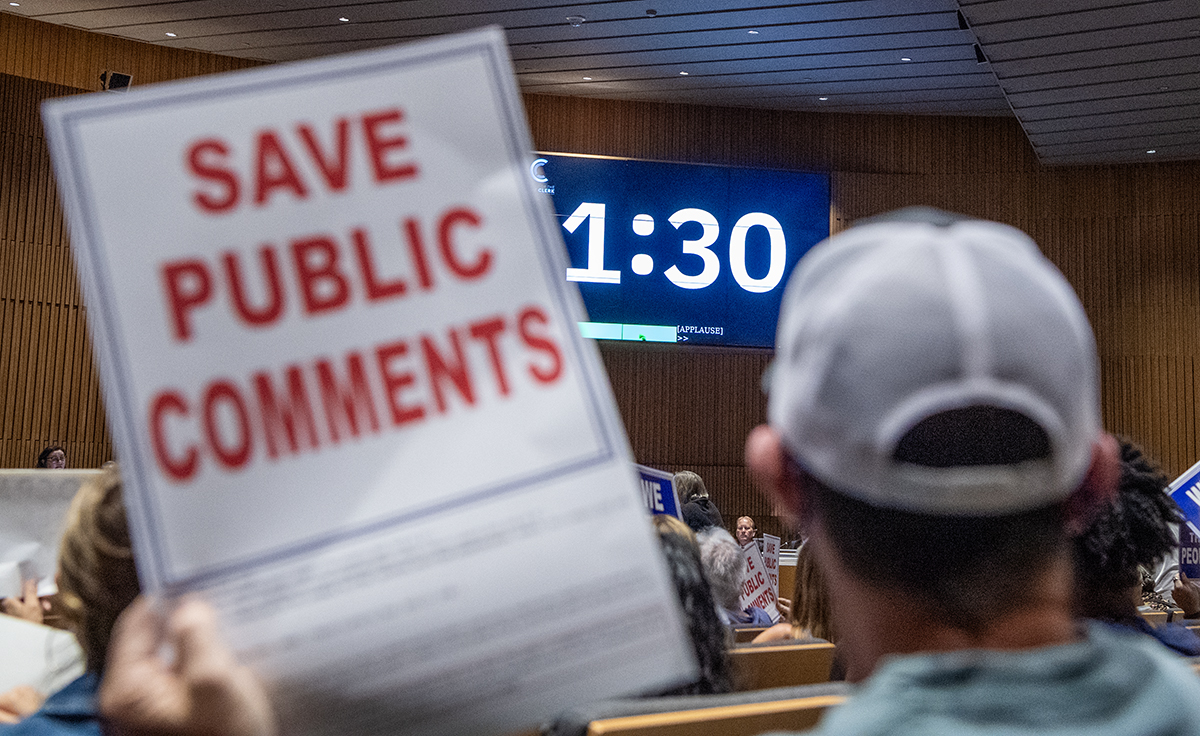
Despite a fusillade of public criticism, the Long Beach City Council on Tuesday passed a more restrictive comment policy that consolidates most public feedback to the start of the weekly council meeting.
The final vote was 6-3, with Councilmembers Kristina Duggan, Cindy Allen and Megan Kerr dissenting. The vote came after a sometimes raucous two hours of mostly negative comments, shouts and interruptions that prompted several warnings from Mayor Rex Richardson.
Assuming the ordinance passes a procedural vote next Tuesday, public comments will in most cases be condensed in a 90-minute period at the start of the 5 p.m. meeting instead of sprinkled throughout when the particular item is outlined by city staff.
The council members who supported the change said they heard from constituents with children or disabilities or busy schedules that made it hard to comment on items late into the night. “We’re changing the way we’re doing commenting,” said Councilmember Surely Saro, “we’re not taking it away.”
8th District Councilmember Tunua Thrash-Ntuk said she has constituents who work three jobs and can’t come to council meetings and comment when they have no idea when they’d get a chance to speak. She and others remarked on the decorum of this meeting and others. She said she “repeatedly heard from residents who are not comfortable, are afraid to be in the chamber based on the way people are acting” — before she was drowned out by chants of “vote them out!”
“I understand our meetings run long,” said 3rd District Councilmember Kristina Duggan, but she said “listening to constituents is one of our most basic” functions and suggested cutting down ceremonial items at the beginning of the meetings to save time instead. She argued shortening meetings by removing opportunities for people to speak moves council “in the wrong direction.”
Numerous speakers agreed, sometimes vehemently.
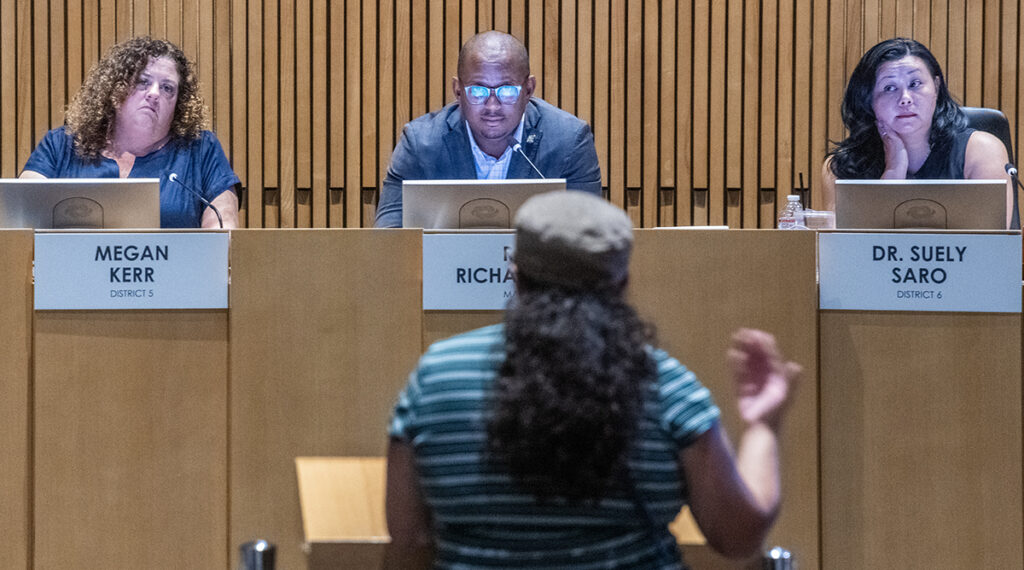
Long Beach resident Stuart Galloway quoted California’s Brown Act law that guarantees opportunities for public feedback “before or during consideration of the item.”
“It does not say “before a whole agenda full of items. … it cannot get any clearer than that!”
He added: “I am astounded by the sheer, unmitigated arrogance shown by members of this council and city administration.”
Under the old system, public comments were spread throughout the meeting, giving people a chance to praise or condemn the city’s plans item by item. Residents could speak on anything they like after the roll call, ceremonies and presentations, again during the consent agenda, on each regular agenda item and once more near the end of the night.
Under the new rules, nearly all of that would fold into a 90-minute timeframe, which the presiding officer — Mayor Rex Richardson, unless he’s absent — could extend in 30-minute increments if people are still waiting. People would have 3 minutes to speak, but that could be trimmed down by the presiding officer if too many are waiting.
Public hearings — which cover zoning and land use — ordinances, certain budget or tax items and appeals, would maintain their own comment periods.
Former City Council member Rae Gabelich said comments made at the beginning of a meeting, often hours before the agenda item comes up, will dilute the public’s influence on important votes.
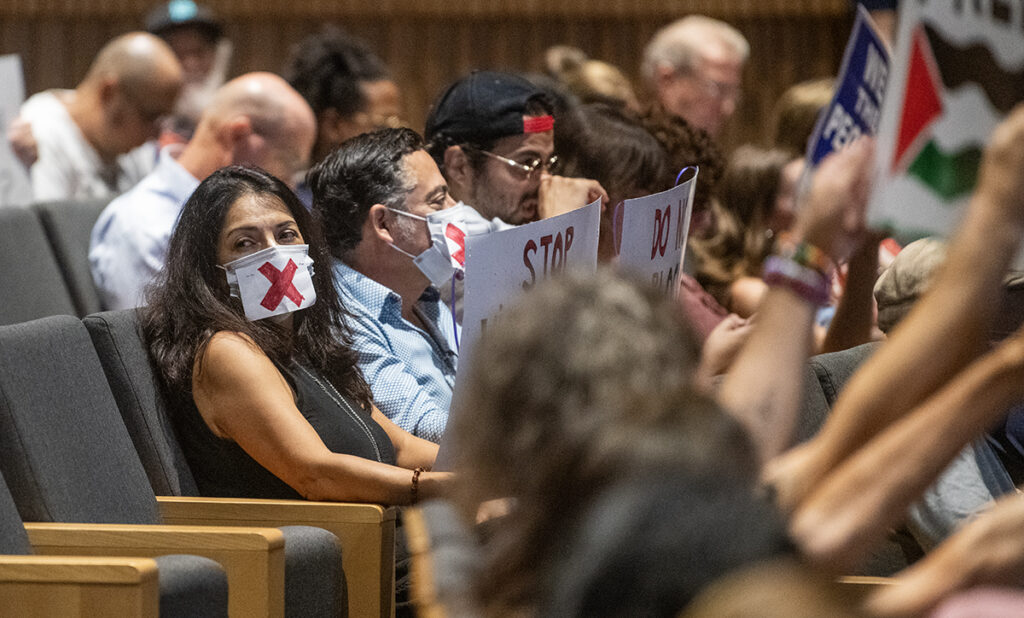
Anyone wanting to address a staff report, contract, resolution or appointment would have to speak at that time, often hours before the council hears the item. Each person could speak only once in the 90 minutes.
Gabelich, who was a council member from 2004 to 2012, helped lead the opposition, encouraging opponents to fill the chamber.
“You’re taking away the people’s right to speak in a timely manner,” Gabelich said in an interview before the vote. “Three hours later you’re going to remember what the public said to you while you’re just now listening to staff reports? “
Said resident Laura Selmer: “What if we said you, city staff, you do all your presentation before all the agenda items? You’d think I was crazy.”
Some speakers veered into profanity and defended their right to hurl insults at the council. Resident Dave Shukla urged opponents to make the council members’ “lives hell and their names radioactive.”
Karen Reside, a retired president of the seniors advocacy group called the Gray Panthers, was one of several who asked for more decorum and said she trusted the council and supported the resolution. “Part of this process is to listen to each other; I’m not hearing listening,” she said in response to some public commenters.
Kyle Patterson of the Carpenter’s Union noted that “a lot of folks are not giving respect,” as he was being shouted down by the audience, prompting another warning from Richardson. “Change is hard,” Patterson said. “A lot of people believe some of this will be beneficial for the city.”
CSULB student Evan James said a set comment time at the start of a meeting would allow him to participate in a way “that doesn’t impact my education. … When it’s pushed late, it can make it difficult to continue our responsibilities.”
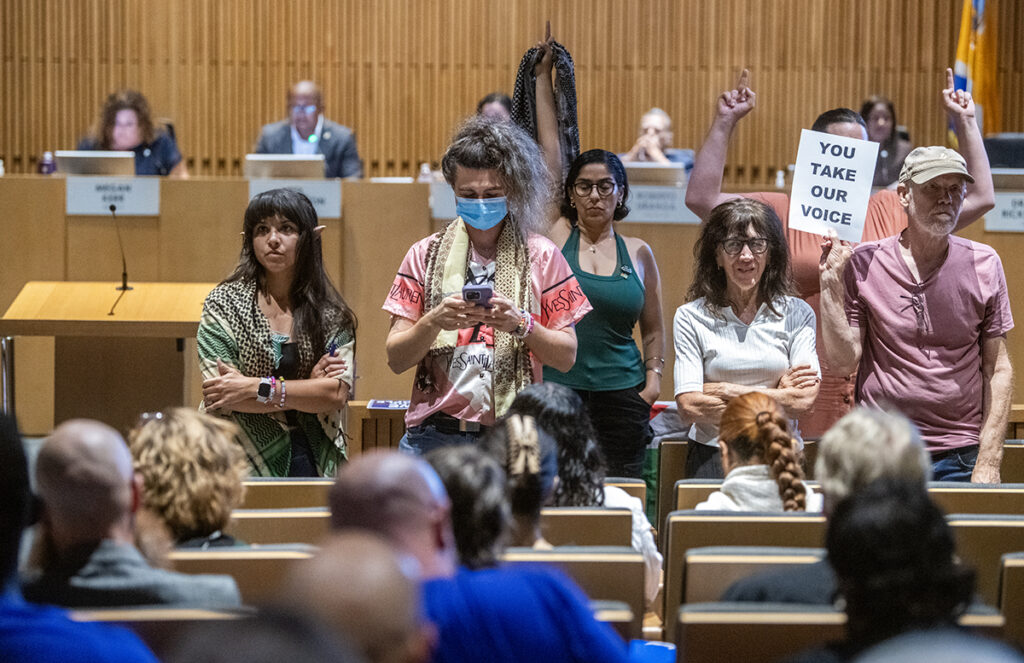
After the vote, the many opponents of the change shouted and yelled, flipping off council members, turning their backs on speakers and prompting police to stand by while council members left the dais before the meeting resumed.
“Stay tuned,” said Gabelich as she walked out of the chamber Tuesday. “There will be a lawsuit.”