

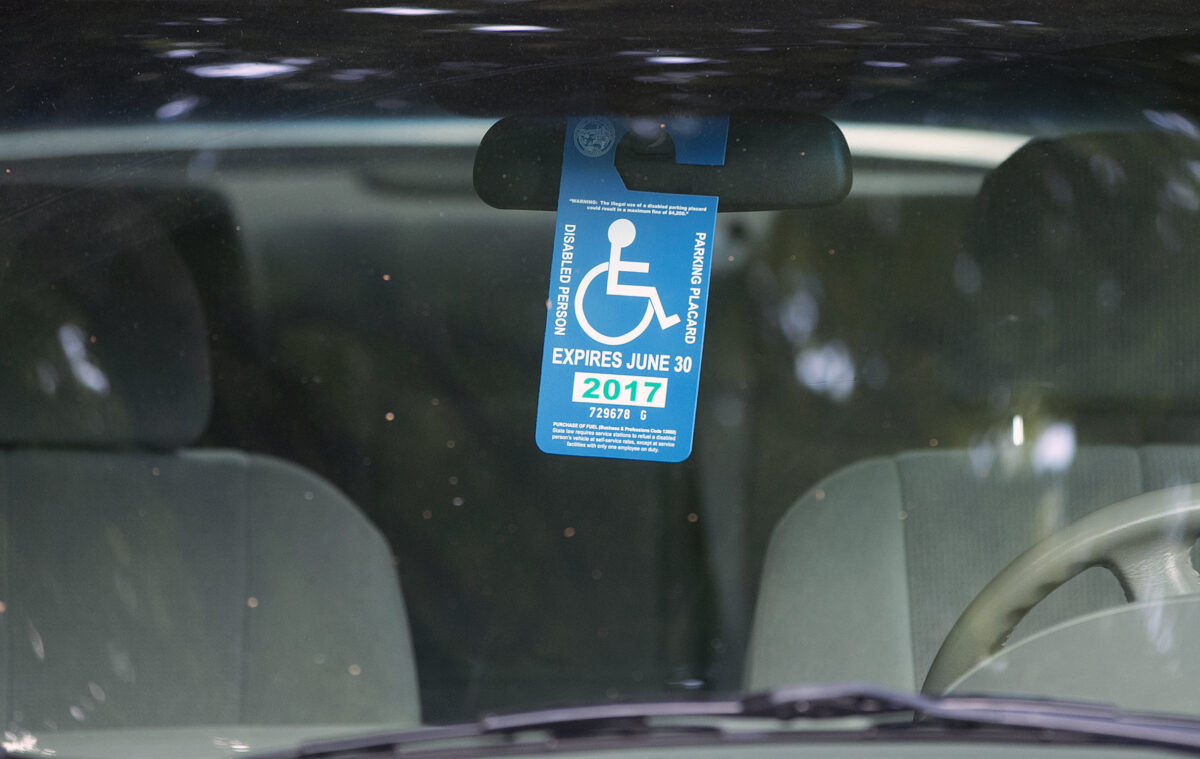
For years, state Sen. Roger Niello has attempted to address what he sees as a persistent issue: predatory law firms and their disabled clients suing swaths of small businesses for disability access violations.
It started when he heard about Scott Johnson, a quadriplegic man in his district who filed thousands of lawsuits against small businesses in Northern California, enriching himself in the process. Since then, Niello, a Republican from Fair Oaks who also helps run his family’s group of auto dealerships, has been pushing for change. His latest proposal, Senate Bill 84, would have given small businesses 120 days to correct violations of the Americans with Disabilities Act before they could get sued.
It didn’t die by a vote of legislators. Senators overwhelmingly approved it last year, and a bipartisan majority signed on as authors or co-authors. It died by procedure in the Assembly, where a committee chair declined to take it up for a hearing, a rare occurrence in the California Legislature.
Instead, the Assembly Judiciary Committee molded and endorsed a separate bill with a different approach to addressing serial ADA lawsuits, which would require businesses to be more proactive and spend more money up front to get indemnity against lawsuits. That bill squeaked through its last policy committee in the Senate last week, and is headed to the appropriations committee.
Why wasn’t the bill heard?
The committee chair is Assemblymember Ash Kalra, a Democrat representing South San Jose. The former defense attorney is a former chair of the Legislative Progressive Caucus and was appointed chair of the judiciary committee in 2023.
Kalra said in an interview with CalMatters that he didn’t schedule the bill for a hearing because Niello didn’t agree to the amendments his committee suggested in conversations outside of the public process.
“Having a piece of legislation that completely undermines the ADA without taking any amendments is a slap in the face to the disability rights community,” he said.
It was the second time a “Right to Cure” proposal from Niello was ignored to death by Kalra. In 2023, Niello’s Senate Bill 585 encountered the same fate.
Again this year, disability rights groups vehemently opposed Niello’s bill, which they contended would discourage proactive compliance with the law and make it harder for disabled people to hold businesses accountable.
Business groups, including the California Chamber of Commerce, the California Restaurant Association and roughly 50 local chambers of commerce, supported the bill. In a letter to the Senate Judiciary Committee, a coalition of supporters said small businesses have been targeted by a limited group of attorneys seeking settlements for technical violations “regardless of whether the alleged violation actually impedes physical access to the facility for patrons with disabilities.”
Lawmakers often discuss how they want bills to change before public hearings, and secret negotiations can cause lawmakers to pull their bills. But longtime lobbyist Chris Micheli said it’s rare for a bill to be killed in this way outside of its house of origin.
“The Assembly will sometimes decline to hear a bill of their own house, and maybe the Senate might do the same to a (Senate bill), but it is rare that it would occur for a second house bill,” he said. Micheli represents the Civil Justice Association of California, which supported Niello’s legislation.
But Kalra’s committee had just finished shaping Assembly Bill 649 on the very same subject. Long Beach Democratic Assemblymember Josh Lowenthal had worked with the committee to create a proposal building on the existing Certified Access Specialist program. Businesses that get inspected for existing ADA violations and correct them, a process that can cost thousands of dollars, currently have 120 days to correct additional issues before they can be sued. Lowenthal’s bill would extend the buffer to six years.
Niello said the problem was philosophical. The committee wanted his bill to be exactly like Lowenthal’s, which he didn’t feel was workable, given what he says is a shortage of Certified Access Specialist inspectors in the state. His Senate colleagues had approved of his approach, and he didn’t understand why Kalra wouldn’t hear it out.
“I said to (Kalra), let both bills move forward and let the bill with the best merit win, and if they both pass the Legislature, then let the governor decide, and I’m perfectly happy to cast my fate to that particular whim, but he’s not.”
Kalra described Niello’s continued advocacy for the bill as “bullying.”
“Just trying to push a chair into having a hearing without any consideration about other opinions is not how business is done,” he said.
Niello said it was “frankly offensive” that Kalra would describe the situation as bullying, and said he did speak with the disability rights community about the bill. Disability rights groups remain opposed.
“No civil rights law requires an aggrieved person to first send a warning letter to the violator and wait months to see if the violator changes its ways before the aggrieved person is allowed to file a lawsuit in court to enforce their rights,” Disability Rights California and its coalition partners wrote in a letter to the Legislature. After initial opposition, the groups now support Lowenthal’s bill, which they say strikes a better balance between business interests and those of disabled people.
Kalra is closely aligned with the Consumer Attorneys of California, which also opposes Niello’s bill. He has voted with the group on 97% of the 281 bills it took a position on since he was elected to the Legislature in 2016, and has received over $62,000 in campaign donations from the group in that time, according to the Digital Democracy database.
When asked whether those campaign donations affected his decision, Kalra said he “had almost zero conversation” with the consumer attorneys about Niello’s bill, but had held several conversations with members of the disability rights community.
“To suggest that somehow I’m being influenced by a group that I’ve hardly ever talked to about this bill at all is just flatly not true.”
Other legislation in the pipeline
Lowenthal’s competing bill is moving forward and will be heard again later this summer. It barely passed out of the Senate Judiciary Committee, with several of Niello’s Democratic co-authors voting against it.
“I appreciate the Senate, you know, as last minute as things can get, I appreciate that we’re having this hearing and then we’re taking a vote on your bill,” state Sen. Henry Stern told Lowenthal during a hearing.
He added he felt that with the amount of support Niello’s measure received, he’d have expected “at least a vote on that concept too.”
For his part, Niello said he’s thinking about reintroducing the issue if he’s reelected in November.
“SB 84 is dead, but the idea is not dead.”