

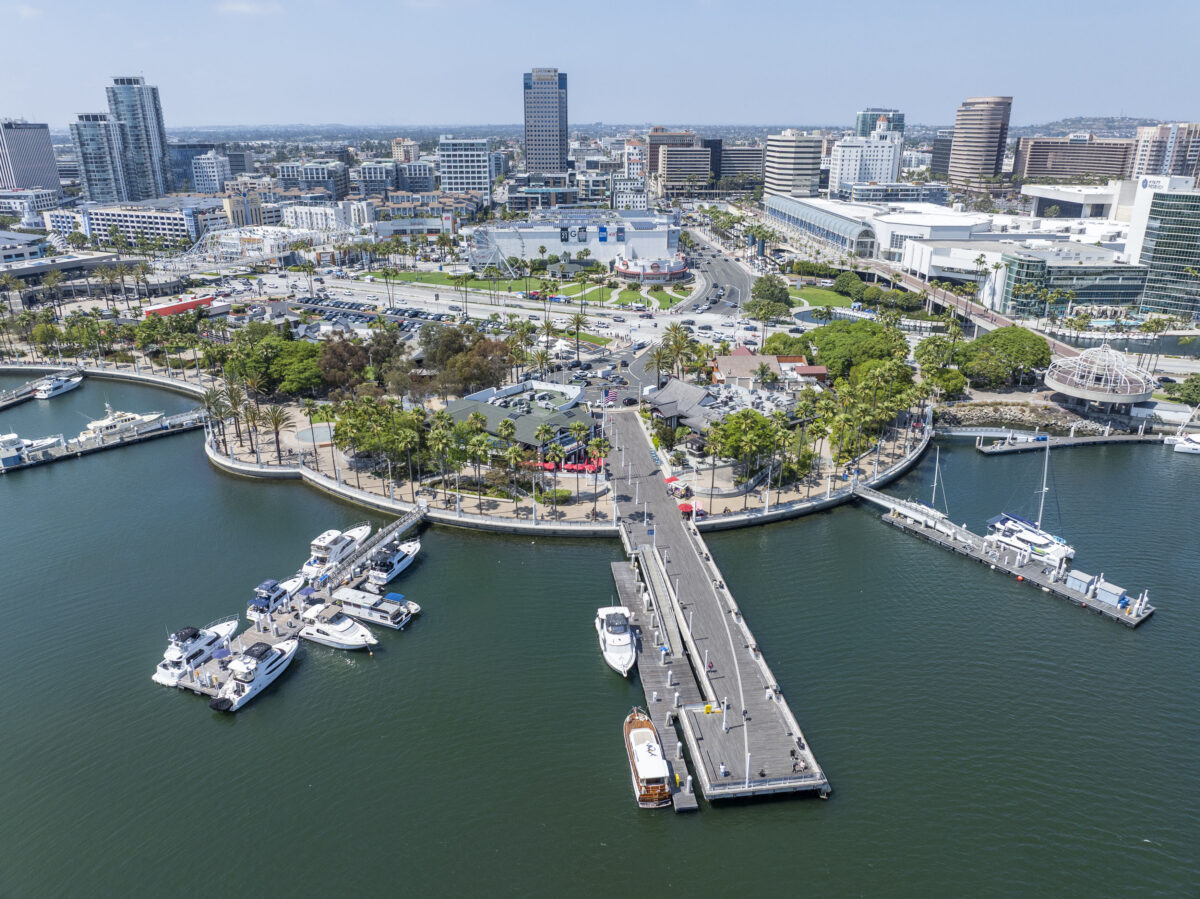
The Pike at Rainbow Harbor, an expansive outdoor shopping center in the heart of the city’s downtown shoreline, has sold for $50 million, with plans advancing for a multi-million-dollar makeover ahead of the 2028 Olympics.
The mall, built in 2003 on the former grounds of a seaside amusement park at a cost of $130 million, is one of the largest outdoor shopping centers in the region, with more than 40 shops and restaurants and a 14-screen theater on 18 acres of city-owned property, interspersed with a courtyard, 2,200-car parking structure and a pedestrian bridge over Shoreline Drive.
The 394,616-square-foot open-air mall attracts about seven million visitors annually and averages a 91% occupancy rate, according to the buyer. It has several prominent retailers, including a Nike Factory Store, H&M, Levi’s, P.F. Chang’s, Gladstones, California Pizza Kitchen, and Starbucks, among others.
A deal for the property was first announced in May, following a targeted sale process to a small group of potential buyers; closing of the sale is expected by the end of September.
Its new ownership is a venture led by Newport Beach real estate company Redwood West and Panattoni, which recently bought the 1.2 million-square-foot Victoria Gardens in Rancho Cucamonga for $530 million.
Colby Cyburt, a managing partner of Redwood West, said Tuesday the Pike is a “one-of-a-kind piece of waterfront property” that should be better geared toward Long Beach locals.
“Currently, we do not feel that the Pike has adequately embraced local residents and we are embarking to change this through adding service offerings as well as a market,” Cyburt said.
As part of the sale, Cyburt said the companies will spend another $20 million on improvements to make it “Olympic Ready,” including “revamping the main center courtyard, adding inviting gathering spaces that will include the ability to add events and live music, enhanced landscaping, new FF&E, directories, signage, and targeted Olympic activations specifically.”
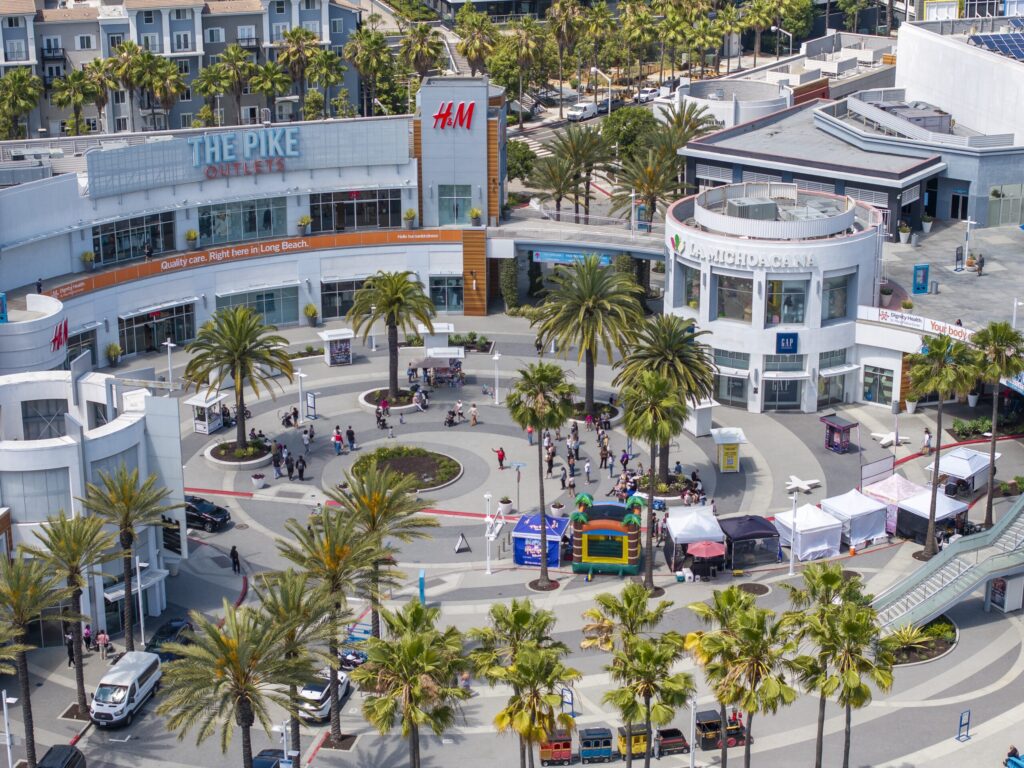
When it was built, the mall was envisioned as a centerpiece of a coastline revival plan meant to lure visitors back to downtown Long Beach at a time when it struggled to cope with the closure of the Naval shipyard and the loss of about 50,000 jobs.
The mall was intended as a junction for tourists and locals alike, with shops amenable to everyone’s budget. It’s also an easy stop for the many visitors to other downtown attractions like the Queen Mary, Aquarium of the Pacific and newly built amphitheater.
“Our primary focus is to provide a local offering to the residents of Long Beach,” Cyburt said. “The offering will continue to cater to convention goers, aquarium visitors, cruise ship travelers, and folks who travel from outside of the City of Long Beach to enjoy the waterfront, however we would like to also bring an offering that will serve as an amenity to those who live, work (and) stay in the Downtown Long Beach area.”
The seller of the mall, SITE Centers, owns properties in Chicago, Chapel Hill, N.C., Portland and Florida. This was its only California property. The sale price was disclosed in a Securities and Exchange Commission filing by SITE Centers.