


Want more Long Beach-focused voter guides to the June 2 election? Get everything you need at LBPost.com/elections. Help us keep producing important, nonpartisan work like this by donating to our nonprofit newsroom.
Los Angeles County voters are being asked to decide: Do they mind paying a little more at the register to keep their neighborhood clinics and health centers afloat?
Measure ER, a proposition on the June ballot, would raise the county sales tax by a half percent — from 9.75% to 10.25% — for five years to replenish hospital and clinic budgets slashed by federal cuts to Medi-Cal. In Long Beach, that means the city’s cumulative tax rate would rise to 11% in October and then 11.25% when a previously scheduled local tax increase kicks in next year.
The money from Measure ER would go to community clinics, school-based centers and Planned Parenthood facilities across Los Angeles County, including facilities that operate in Long Beach. Because Long Beach is one of only two cities in L.A. County with its own health department, the city would also get a direct allocation based on its population — about $8 million annually to help offset federal cuts, according to Mayor Rex Richardson.
Richardson and other proponents say the measure is incredibly important, potentially raising $960 million annually for the Los Angeles County health system reeling from federal cuts approved in the “One Big Beautiful Bill Act” that President Donald Trump signed into law last July.
The bill is expected to slash $800 million annually from the county’s health department — more than $2 billion through 2028 — and force up to 1.1 million Californians to lose their insurance coverage from Medi-Cal, the state’s version of Medicaid. That includes around 120,000 residents in Long Beach, about 26% of the city’s population.
Some officials point to early signs of the cuts’ impact, including the closure of seven community clinics across L.A. County and 200,000 fewer Medi-Cal enrollees since last year. In Long Beach, the city health department has reported losing $18 million in federal funding, forcing it to cut 44 jobs and programs like nutrition classes and mobile HIV testing.
Many people countywide are expected to lose dental insurance starting in July due to state budget cuts, but the most noticeable drop in healthcare coverage will happen in January. That’s when new Med-Cal requirements like proof of employment or education, more frequent eligibility renewals, and the introduction of new monthly premiums will limit who can keep their federally subsidized insurance. There will also be more rules around who can qualify to be medically exempt from work requirements.
Louise McCarthy, with the Community Clinics Association of Los Angeles, said it may take years to have people’s coverage restored. “We’re going to do everything we can to keep them on,” she said. “There’s going to be hiccups. Folks are going to fall off, and we’re going to have to spend time trying to get them back on.”
Under the county’s plan for Measure ER, people who lose their coverage would immediately enroll with a community clinic and treat it as their primary care. From there, they would get referred for specialty care within the county health system. Money would be awarded as reimbursement to qualified centers, similar to how facilities are already repaid through Medi-Cal.
If Measure ER passes, collections for the new sales tax would start in October, with funding available in January.
“So it’ll be there just in time,” said Jim Mangia, president and CEO of St. John’s Community Hospitals.
Without Measure ER, experts warn, there will be mass layoffs, hospital closures and dangerously high wait times in emergency rooms across L.A. County.
Elisa Nicholas, a pediatrician and CEO of TCC Family Health in Long Beach, said unabated federal cuts would force the nonprofit to lay off some of its 450 employees. The nonprofit clinic system serves about 40,000 people in Long Beach and provides care at the city’s Multi-Services Center, its hub for homeless services.
“We know what will happen if the funding doesn’t come: People will have to cut their services. We will have to lay off people, and people will not be able to access the care, and that will affect every single one of us,” she said.
The Long Beach City Council on Tuesday endorsed Measure ER.
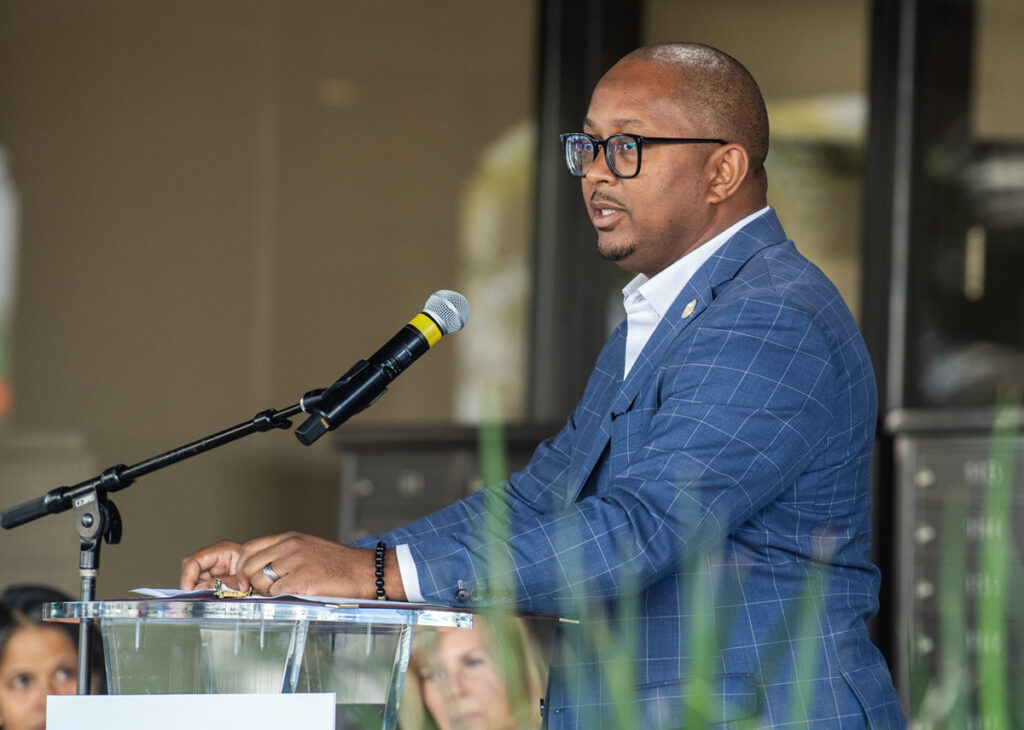
“Under this current administration, … we have not been able to count on the resources to provide those public health services to our city,” Richardson said. “This is not a game, this is incredibly serious, and in the next six months, we are going to begin to see real impacts from H.R. 1.”
But some council members objected, saying it was unfair to ask residents to pay more when Long Beach’s sales tax has already repeatedly risen to fund homelessness programs, infrastructure projects and public safety salaries.
“I understand the importance of these services, but not on the back of taxpayers,” said Councilmember Cindy Allen. “I know folks in my district are struggling to pay rent. We just saw today that gas prices went north of six dollars a gallon. I don’t think taxpayers should be responsible for footing the bill for the federal government.”
A poll last year found the local electorate had little appetite for new taxes.
The measure is also a general tax. That means money it yields will flow into the county’s general fund, which can be used for just about anything as opposed to a fund legally bound to healthcare. Opponents say it comes without the guarantee that money will be spent as promised.
Measure ER needs a simple majority of voters countywide to pass.
To read more about the measure, click here.
Editor’s note: This story was updated with more context about why Long Beach would get dedicated funding from Measure ER and in which county fund the money would be collected.